
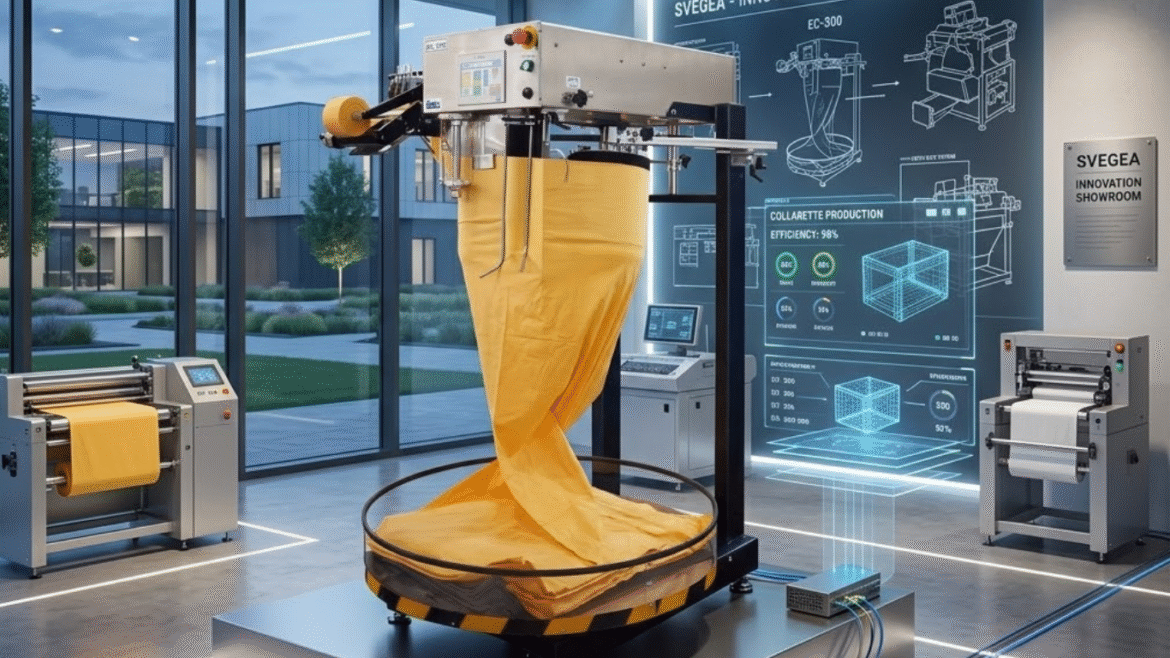
Key Takeaways: The modern apparel manufacturing floor is experiencing a massive digital transformation. Global shifts toward fast-turnaround production, volatile material costs, and rising sustainability mandates are forcing textile brands to rethink old processes. Historically, the cutting room relied almost entirely on manual calculations, mechanical setups, and historical operator intuition.
Today, the concept of the “Smart Factory” has moved from a buzzword to an essential operational strategy. At the core of this technical evolution is the integration of Industry 4.0 infrastructure. Cyber-physical systems, real-time cloud data, and automated textile machinery are changing how garments are constructed. For facilities specializing in underwear, sportswear, and basic apparel, optimizing the automated cutting of components like bindings and waistbands is critical to maintaining a healthy bottom line.
The Operational Bottleneck in Traditional Binding and Trim Production
In high-volume garment lines, small design elements often dictate overall production efficiency. Structural rib-knit bindings, waistbands, and collarette edges are perfect examples. These essential trims ensure elastic durability and structural integrity in everyday apparel. However, handling tubular knitted fabrics manually frequently creates major operational bottlenecks.
When factory operators rely on mechanical cutting tables or older, semi-automatic gear, maintaining precise tension is difficult. Tubular knit fabrics naturally stretch, curl, and warp depending on ambient room humidity and yarn composition. If tension fluctuates even slightly during the slitting process, the width of the cut binding varies.
The negative effects of inaccurate slitting ripple straight through the assembly line. Inconsistent strip widths lead to downstream sewing machine jams, broken needles, and misaligned seams. According to data tracked by the World Textile Information Network (WTIN), quality-related rejects and fabric reworks can drain up to 5% of a manufacturer’s annual revenue.
How a Modern Collarette Cutting Machine Fits Into the Smart Factory
A smart factory operates on a basic principle: every piece of machinery should function as an intelligent, data-driven node. A modern, automated collarette cutting machine addresses traditional trimming issues by replacing manual intervention with digital precision. Instead of treating fabric slitting as an isolated step, smart systems view trimming as an integrated part of the broader manufacturing workflow.
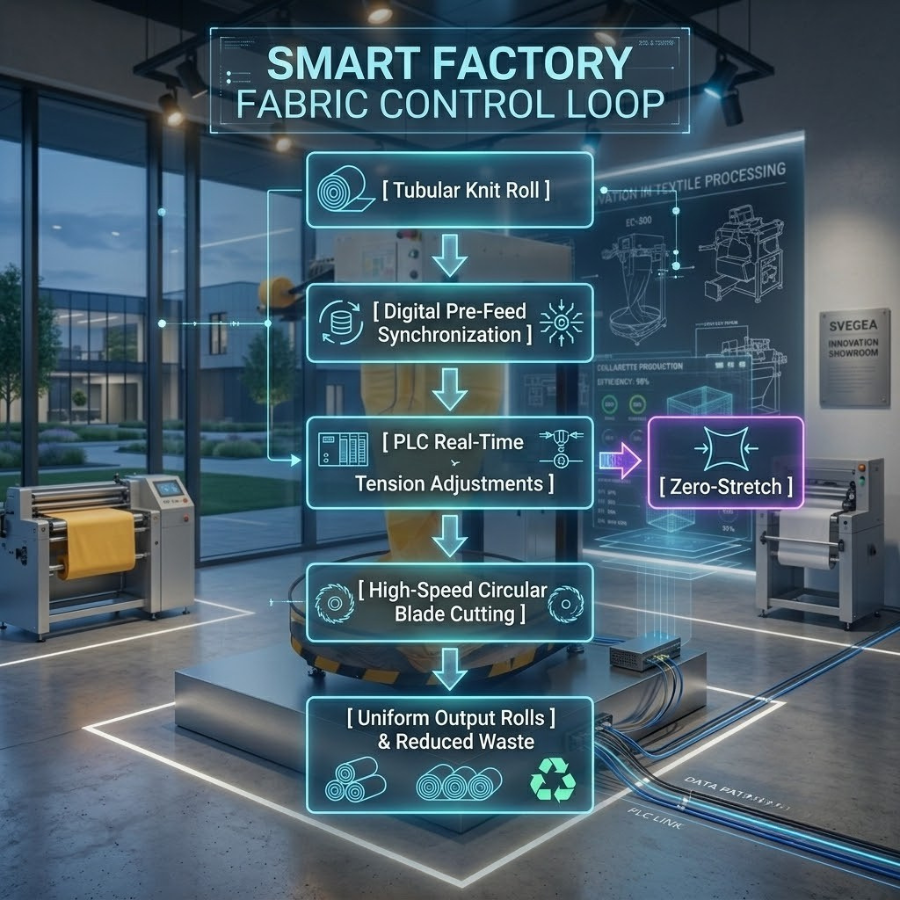
Modern automated cutters use Programmable Logic Controller (PLC) systems linked directly to internal network interfaces. This connectivity allows production managers to load cutting patterns and specifications instantly from central databases. The machinery automatically recalibrates for varying fabric weights or multi-band adjustments, minimizing human error during changeovers.
Furthermore, these smart systems rely on electronic speed synchronization. By coordinating the fabric turntable directly with the cutting drive, the material is fed to the circular blades at a perfectly consistent tension. This active control avoids the pulling and stretching that typically distort tubular textiles, ensuring uniform strips from the first meter to the last.
Reducing Textile Waste and Lowering Total Cost of Ownership
Material cost represents the largest percentage of an apparel factory’s operating expense. In traditional trimming rooms, scrap fabric—frequently referred to as “cabbage”—can average 15% to 20% of the total raw material roll. This volume of waste hurts profitability and directly conflicts with strict global sustainability criteria, such as standards outlined by the Sustainable Apparel Coalition (SAC).
Implementing automated cutting systems allows facilities to capture immediate material savings:
- High-Precision Edge Slitting: Automated guides minimize margin requirements, maximizing the usable width extracted from each tubular roll.
- Active Material Optimization: Synchronized feeding eliminates distorted fabric, saving material that would otherwise be discarded due to tension defects.
- Fewer Downstream Rejects: Delivering uniform, accurately cut strips directly to the sewing department prevents structural stitching errors and component scraps.
By minimizing fabric waste from 15% down to under 5%, high-capacity manufacturing lines can save tens of thousands of dollars annually on raw materials alone. Additionally, transitioning operators from tedious manual handling to managing advanced PLC interfaces creates a safer, more productive work environment.
Engineering Highlight: The Euro-Collarette Series
Engineers who want to bring these smart efficiencies onto their production floor often evaluate specialized Swedish machinery. The line of fully automatic cutters developed by Svegea of Sweden illustrates how automated design principles improve daily factory metrics.
For example, systems like the Euro-Collarette 300 Fully Automatic (EC 300) are engineered to handle high-demand production lines while maintaining tight tolerances. The equipment features integrated electronic speed synchronization and advanced touch-screen controls, allowing operators to quickly update parameters for multiple simultaneous bands.

These configurations use advanced control add-ons like the True-Drive II (TD II). This system uses a dedicated PLC interface and integrated digital yard counters to ensure fabric synchronization. Additionally, accessories like the Dust Phantom vacuum system keep the cutting environment free of lint and debris, protecting sensitive electronics and creating a cleaner workspace.
Integrating Intelligent Cutting Automation into Your Supply Chain
Transitioning to a smart factory framework does not require replacing an entire facility’s equipment overnight. Instead, smart scaling involves identifying and upgrading the specific production points where material waste and labor bottlenecks cause the highest financial losses.
When looking at waistband fabrication and binding preparation, updating to a modern automated cutting system represents a highly reliable process improvement. Protecting fabric margins before material enters the sewing assembly line ensures that downstream automated sewing blocks function continuously without unexpected disruptions.
As digital automation continues to shape global apparel manufacturing, companies using connected, precise machinery will maintain a distinct advantage. Embracing smart textile engineering protects your margins, reduces factory floor waste, and keeps your production schedules predictable in a competitive market.
Optimize Your Production Floor Architecture
To learn more about how automated cutting systems can integrate with your facility’s workflows, contact Håkan Steene at h.steene@svegea.se for technical consultation, detailed equipment specifications, or calculated ROI assessments.

Key insights:
- Digital twins are virtual models of machines or production lines, built from real-time data.
- The digital twin textile factory market was worth USD 1.42 billion in 2024 and is projected to reach USD 17.91 billion by 2033, according to Texpertise Network.
- Textile manufacturing sits below 30% adoption today, well behind aerospace and automotive, but the gap is closing.
- The cutting room is a practical starting point, since slitting and cutting machines already generate structured, usable data.
- New EU rules starting in 2027 will require Digital Product Passports. Manufacturers who track data early will be ahead of that curve.
For years, “digital twin” sounded like a term for car plants and jet engines. That is changing fast. In 2026, textile and garment manufacturers are asking a simpler question: could a virtual model of our own cutting room save us money? The answer is yes, and the technology required to try it is closer than most decision-makers think.
What a Digital Twin Actually Is
The term gets used loosely, so a clear definition helps. McKinsey describes a digital twin as a virtual model of a physical system. It connects to real data and updates in real time as the machine runs. There are three broad types. A plant twin mirrors an entire facility. A network model of the supply chain. An infrastructure twin covers things like buildings or roads.
Most textile manufacturers do not need a whole-factory twin right away. A smaller “process twin” works better as a starting point. It focuses on one line or one machine. This is also the version most relevant to the cutting room.
Why the Cutting Room Is a Logical Starting Point
The cutting room already runs on precision. Slitting and cutting machines track roll width, edge position, run speed, and material count every day. According to Texpertise Network, the trade publication run by Messe Frankfurt, a textile digital twin links physical machines to a virtual model through sensors, IoT devices, CAD/CAM data, and production software. Cutting and slitting lines already have several of these pieces in place.
Take automatic edge guiding and adjustable cutting widths. Both features appear on fully automatic roll slitting machines, such as Svegea’s FA-series strip cutters. These features were not built for digital twins. They exist to keep materials straight and cuts accurate. But they generate the same data a twin model needs: edge position, width, and run speed. That data can feed a model that simulates output and flags drift before it wastes fabric. Machines that already collect this data sit closer to “twin-ready” than older, manually adjusted equipment.
From Sensors to Simulation
Once data starts flowing, a twin becomes useful in two main ways: maintenance and quality.
For maintenance, a 2026 study in the World Journal of Advanced Engineering Technology and Sciences proposed a predictive maintenance framework built on digital twins. It covers textile and mechanical equipment like spinning machines, looms, motors, bearings, gearboxes, and conveyors. The researchers note that the model can adapt as new data arrives, which makes it useful for older equipment, not just new machines.
For quality, a twin loaded with historical production data can flag where defects are likely to happen. That lets a plant act before a flaw turns into a customer return.
Quick Stat Check
-
-
- Market growth runs about 32% a year through 2033.
- Aerospace and automotive sit above 70% digital twin adoption; textiles sit below 30%, per PatSnap.
- Across all industries, McKinsey reports that 70% of C-suite tech leaders are already exploring or investing in digital twins.
- Some manufacturers have cut development time by up to half.
-
The Adoption Gap, and Why It’s Closing
Textiles trail other sectors for clear reasons. Research from PatSnap points to two main barriers: cost and legacy infrastructure. Many cutting room machines were not built with sensors or connectivity in mind. That gap is real, but it is closing. Patent filings for digital twin technology rose sharply between 2017 and 2025, a sign that the underlying tools are maturing and becoming more affordable for mid-sized manufacturers, not just large industrial players.
A Regulatory Push Is Coming
There is also a compliance angle worth watching closely. Starting in 2027, textile products sold in the EU will need Digital Product Passports, according to reporting from Shijin Fashion. A 2026 study in The International Journal of Advanced Manufacturing Technology proposes a textile-specific digital twin framework built for this exact need. It pairs IoT data with circular-economy tools, such as Life Cycle Assessment and Digital Product Passport reporting. Manufacturers who already track data at the machine level will be ahead when full traceability becomes mandatory rather than optional.
Getting Started Without Overbuilding
A full, factory-wide twin is not the right first step for most manufacturers. McKinsey’s own case studies describe a staged approach: build a small proof of concept, confirm the data feeds are solid, then expand to a bigger model. Applied to a cutting room, this could mean starting with one slitting line, connecting its existing sensor data to a simple dashboard, running it for a few weeks, and checking whether the model’s predictions match what actually happens on the floor.
Older, manually run machines may need retrofitting first. That cost should be part of any pilot budget. It is often the real barrier, not the modeling software itself.
Where This Leaves Manufacturers
Digital twin technology in textiles is no longer just a trade-show buzzword. The market data, the maintenance research, and the new EU rules all point in the same direction. Factories that start capturing clean, machine-level data now will have an easier path later, whether that means less downtime, less waste, or easier compliance reporting.
The cutting room is a sensible place to begin. Well-built cutting and slitting equipment already produces usable data on its own, without extra hardware. That makes it a lower-risk pilot than trying to model an entire production floor on the first attempt.
Svegea designs cutting, slitting, and bias systems for manufacturers exploring this kind of process visibility, and the team is happy to talk through what twin-readiness looks like for a given setup, no obligation attached. For manufacturers who want to discuss what a more connected cutting room could look like for their operations, Hakan Steene (h.steene@svegea.se) is a good place to start the conversation.
Key Takeaway:
Not all slitting machines are built the same. Swedish manufacturing standards prioritize precision, durability, and long-term efficiency over short-term cost savings. For garment and textile producers, the right machine reduces fabric waste, improves cut consistency, and lowers the total cost of ownership. This article breaks down what separates high-quality slitting machines from cheaper alternatives—and why it matters to your bottom line.
Every roll of fabric that moves through your production line carries a cost. A clean, precise slit keeps that cost under control. A poor one bleeds money through waste, rework, downtime, and inconsistent output. For garment and textile manufacturers, the choice of a slitting machine is not a minor procurement decision. It’s an operational one.
The global market for textile machinery is crowded. Budget machines from low-cost manufacturing regions flood industry catalogs. They look functional on a spec sheet. But over months and years of production, the gap between engineered quality and engineered cheapness becomes very clear.
So what makes a slitting machine genuinely good? And why does Swedish engineering, in particular, continue to set the benchmark?
The real cost of precision—or the lack of it
Slitting machines are responsible for cutting fabric rolls into specific widths. The cut has to be straight, consistent, and clean. Even small deviations compound quickly at scale. A 1mm variance across a 200-meter roll can mean thousands of unusable centimeters of material.
According to the World Trade Organization, textiles and apparel represent one of the world’s largest manufacturing sectors. Margin pressure is relentless. In that environment, fabric waste is not just a technical problem—it’s a financial one.
High-quality slitting machines solve this with tight engineering tolerances, stable cutting heads, and reliable edge guidance systems. Cheaper machines cut corners—literally and figuratively. The result is more trim waste, more operator intervention, and more downtime for adjustments.
What Swedish engineering actually means
Sweden has a long industrial heritage built around precision manufacturing. Industries like aerospace, automotive, and medical devices have shaped a manufacturing culture that treats quality as non-negotiable. That culture carries directly into textile machinery.
Swedish manufacturers are held to strict standards under ISO 9001 quality management frameworks, meaning design, production, and testing processes are documented and audited. This matters when you’re buying a machine that will run shifts day in and day out for years.
The difference shows up in material selection, component tolerances, weld quality, motor performance, and software control. It also shows up in after-sales support—the ability to get parts, get answers, and get back to production when something goes wrong.
Semi-automatic vs. fully automatic: choosing what fits your operation
Not every factory needs the same solution. One of the more practical distinctions in slitting machine selection is automation level.
Semi-automatic machines offer flexibility for operations that run varied roll formats or smaller batch sizes. The operator is more involved in setup, which can actually be an advantage when you’re working with diverse fabric types—delicate knits, woven materials, non-wovens, and technical textiles each behave differently under the blade.
Fully automatic machines are built for volume. Once configured, they minimize operator input, maximize throughput, and reduce the human error factor. For high-production facilities running consistent materials, the productivity gains are significant.
The International Textile Manufacturers Federation (ITMF) tracks global machinery investment trends, and automation consistently ranks among the top priorities for manufacturers seeking competitive advantage.
Svegea FA 500 — Fully Automatic Roll Slitting Machine
A heavy-duty, fully automatic machine designed for open knits, woven fabric, PVC, vinyl, satin, polyester, paper products, and non-wovens. Built in Sweden for consistent high-volume performance with adjustable cutting widths and automatic edge guidance.
View technical details at svegea.se →
The hidden costs of buying cheap
A lower upfront price is appealing. It always is. But the total cost of ownership tells a different story.
Cheaper slitting machines typically present hidden costs in three areas. First, replacement parts. Budget machines often rely on proprietary components that are difficult to source, especially from overseas suppliers with slow lead times. Second, unplanned downtime. Less robust construction means more mechanical failures—and every hour a machine is idle is an hour of lost production. Third, quality rejects. Inconsistent cuts lead to unusable fabric, rework, and potential delays in customer delivery.
Research from the McKinsey Global Institute on industrial equipment has consistently shown that total cost of ownership—not purchase price—is the more relevant metric for capital equipment decisions.
A well-built slitting machine, properly maintained, can run reliably for 15 to 20 years. A cheap one may need replacing in five. Over a production lifecycle, the math is rarely close.
Material versatility: not all fabrics are the same
Here is something that often gets overlooked in machinery comparisons: the range of materials a slitting machine can handle cleanly.
Textile production isn’t a single-material industry. A facility may run jersey knit one day and non-woven technical fabric the next. A machine that handles one well but struggles with another creates a bottleneck. Good engineering accounts for this. Adjustable blade tension, variable speed control, and intelligent edge detection systems give operators the control to work across a broad material range without compromising cut quality.
The Textile Exchange Material Benchmark documents the growing complexity of material mixes in modern production. Manufacturers who invest in versatile, adaptable machinery are better positioned to take on diverse orders—and to pivot as market demand shifts.
Sustainability: precision reduces waste
There is an environmental dimension to slitting quality that is increasingly relevant to manufacturers. Fabric waste is material waste. For operations pursuing sustainability certifications or responding to customer pressure on environmental performance, slitting precision is a direct lever.
The Ellen MacArthur Foundation’s work on circular fashion highlights fabric waste as one of the industry’s highest—and most avoidable—environmental costs. A machine that cuts cleanly and consistently is also a machine that wastes less. That matters both commercially and ethically.
Key takeaway
Every millimeter of precision in your slitting process translates to less fabric waste, fewer rejects, and lower operating costs. Engineering quality isn’t an abstraction—it shows up on your P&L.
What to look for when evaluating slitting machines
When assessing slitting machine options, consider the following criteria beyond the sticker price. Build quality and materials used in the frame and cutting mechanism matter enormously for longevity. Precision and repeatability—the ability to maintain consistent cut widths across an entire roll, across every shift—is the core performance requirement. Edge guidance systems that automatically compensate for roll misalignment reduce operator burden and cut quality variance. Motor and drive reliability affect not just performance but noise levels, energy consumption, and lifespan. Finally, after-sales support—parts availability, technical documentation, and direct access to engineers—determines how quickly you can recover from the inevitable maintenance event.
These criteria apply whether you’re evaluating a Swedish machine, a German one, or anything else. The point is to evaluate the total operational value, not just acquisition cost.
Industry associations worth knowing
For manufacturers who want to stay current on textile machinery standards and developments, several industry bodies publish useful resources. CEMATEX (the European Committee of Textile Machinery Manufacturers) represents some of the industry’s most rigorous engineering standards. TMAS (the Textile Machinery Association of Sweden) specifically advocates for Swedish machinery excellence in global markets. Both are worth following for technical developments and trade event updates.
Svegea of Sweden is a member of both associations—a signal of its commitment to industry standards and international quality benchmarks.
Quality is not optional
In a competitive global market, textile manufacturers cannot afford to lose productivity to poorly engineered equipment. Slitting machines sit at a critical point in the production process. The quality of every downstream garment depends, in part, on the precision of that cut.
Swedish engineering brings a philosophy of building things to last, to perform, and to be supported long after the sale. That philosophy has practical consequences for operations that run demanding schedules with unforgiving margin requirements.
The decision is not simply about buying a machine. It’s about investing in production reliability, material efficiency, and long-term operational confidence.
Have questions about slitting machine specifications, material compatibility, or which configuration fits your operation? Reach out directly to Håkan Steene at Svegea of Sweden for a no-obligation conversation.
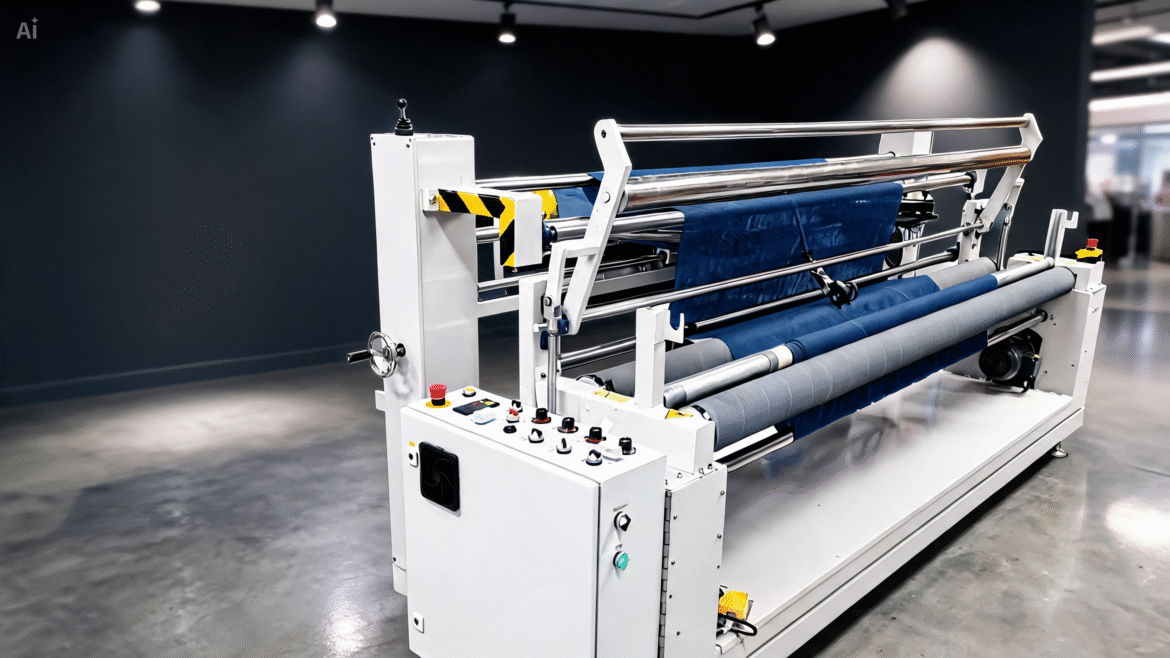
Buying a bias cutter winder system is not a small decision. For garment and textile manufacturers, it directly affects throughput, fabric waste, and finished product quality. The wrong machine costs you more than money — it costs you uptime, rework hours, and customer returns. Yet many production managers still approach the purchase with little more than a spec sheet and a price quote.
This checklist is designed to change that. Whether you’re replacing aging equipment or setting up a new bias binding line from scratch, these are the questions you need answered before you commit.
What is a bias cutter winder, and why does it matter?
A bias cutter winder opens previously formed tubular fabric — cut spirally at a bias angle — and rewinds it into a flat, single-ply roll. That roll is then fed into a strip cutter to produce bias binding tape. The process sounds simple. In practice, the machine must handle everything from lightweight jersey to heavy interlock without stretching, misaligning, or distorting the fabric grain.
Bias binding is used across garment types: necklines, armholes, hems, seams. According to Fibre2Fashion, bias-cut edges stretch to follow curved seams far better than straight-cut equivalents, which is why the technique remains standard in quality apparel production. A poorly wound roll creates tension inconsistencies that cascade through every downstream step. That single problem is often the root cause of a lot of quality complaints that get blamed on something else.
The checklist: 8 factors to evaluate
1. Fabric compatibility
Not all bias cutter winders handle all fabrics equally. Start here before anything else.
- Does the machine handle both knit and woven fabrics without retooling?
- What is the minimum and maximum fabric weight (GSM) the system supports?
- Can it process elastic or stretchable materials without distortion?
- Does it accommodate synthetic fabrics like polyester and nylon alongside natural fibres?
2. Cutting width range
Your product line likely spans multiple tape widths. The machine needs to match your full range, not just your most common SKU.
- What is the adjustable width range of the cutter?
- How quickly can width changeovers be made? Is it tool-free?
- Does the bias angle remain consistent across different widths?
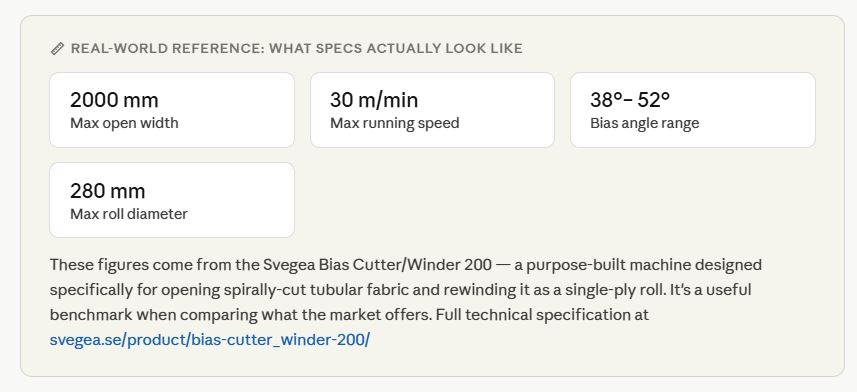
On the bias angle question specifically: the standard usable range on most production-grade machines sits between 38° and 52°, though some models extend down to 12° with optional kits. Know your required angle before you shortlist machines — it eliminates a lot of options quickly.
3. Winding tension control
This is where most lower-cost machines fail. Inconsistent tension during winding causes loose inner layers, tight outer layers, or roll collapse during storage. All three create downstream problems — and none of them are obvious until the roll is already on the strip cutter.
- Is tension control mechanical, electronic, or servo-driven?
- Can tension be adjusted during a run without stopping the machine?
- Does the system compensate for roll diameter growth as winding progresses?
- Is there a bow bar or anti-wrinkle mechanism built in?
That last point deserves more attention than it usually gets. Wrinkles introduced during winding are nearly impossible to remove cleanly downstream. A bow bar — a curved spreader that keeps the fabric flat and tension-even as it winds — is a feature worth specifically asking about in any demo.
4. Automation level and operator requirements
Labour costs and skill availability vary widely by region. The right level of automation depends on your specific floor conditions — not on what the brochure calls “efficient.”
- How many operators does the machine require per shift?
- Does it include automatic edge guiding, or is alignment manual?
- What happens during a fabric break — does it auto-stop safely?
- Is training documentation available in your operating language?
Out-of-fabric auto-stop is worth singling out. On a high-speed machine running at 25–30 metres per minute, a fabric run-out without an automatic stop can mean several metres of misaligned or empty winding before an operator catches it. That’s a waste, and on some fabrics, it’s damaged equipment too. The International Labour Organization notes that automation adoption in textile manufacturing is accelerating — but the right level of automation still needs to match your workforce structure.
5. System integration: Does it fit your existing line?
A bias cutter winder does not operate in isolation. It sits between a tube sewing unit and a strip cutter. Mismatched speeds or roll sizes between stations create bottlenecks that no amount of operator skill can fix.
- Does the machine match the output speed of your tube sewing unit?
- Is the finished roll diameter compatible with your downstream slitter?
- Can the supplier provide the full three-stage system from one source?
Sourcing all three stages from one supplier significantly reduces integration risk. When the tube sewing unit, bias cutter winder, and slitter are engineered to work together, speed synchronisation and roll handoff happen by design rather than by trial and error. It’s worth asking any supplier whether their machines have been validated together — not just tested individually.
At this stage, you should know: which fabrics you process, your required width and angle range, your automation preference, and whether you need a standalone machine or a full integrated system. If any of these are unclear, resolve them before requesting quotes.
6. Machine speed and throughput capacity
Speed is only meaningful relative to your demand. An oversized machine running at 40% utilisation is a capital allocation problem, not an asset. Equally, a machine that can’t keep pace with your sewing unit creates a bottleneck that expands under order pressure.
- What is the maximum operating speed in metres per minute?
- Does speed remain stable at both minimum and maximum cutting widths?
- What is the realistic throughput after accounting for roll changeover and operator time?
7. Maintenance, spare parts, and after-sales support
This is where many manufacturers get burned. The purchase price is visible. The cost of downtime waiting two weeks for a spare part from overseas is not until it happens.
- Are critical wear parts stocked locally or only available from the manufacturer?
- What is the standard lead time for spare parts delivery to your facility?
- Is remote diagnostics or video-based technical support available?
- What is the warranty period, and what does it actually cover?
The ISO 9001 quality management framework provides a useful lens for evaluating responsible after-sales support. Ask suppliers directly: What is your average response time for a technical fault? How many engineers can support our region?
8. Total cost of ownership, not just purchase price
The cheapest machine rarely delivers the lowest cost over three to five years. Factor in energy consumption, consumable parts, operator hours, and expected maintenance intervals. A well-built machine with a higher upfront cost often returns far more value per metre of fabric produced.
- What is the estimated annual maintenance cost at your expected utilisation level?
- What is the power consumption at full operating speed?
- Can the supplier provide references from manufacturers at a similar scale?
- What is the expected useful lifespan under your operating conditions?
On power draw: a machine like the Svegea Bias Cutter/Winder 200 runs on a 1.1 kW main motor plus a 0.18 kW cutter blade motor — modest by industrial standards. That kind of data is publicly available at svegea.se/product/bias-cutter_winder-200/ and worth benchmarking against whatever you’re comparing. Energy cost adds up over a five-year ownership cycle.
One more thing: ask for a demo run with your own fabric
Spec sheets show ideal conditions. Your production floor is not in ideal conditions. Before signing any purchase order, request a live demonstration — ideally using samples of the fabric you actually run. This is standard practice among reputable machinery suppliers. If a supplier can’t or won’t accommodate it, treat that as a signal.
Industry events like Texprocess Frankfurt and ITMA are also a practical way to compare machines side by side in a neutral environment, ask technical questions without a sales context, and talk directly to engineers rather than account managers.
Not a commodity purchase
A bias cutter winder is not a commodity purchase. The right system improves roll consistency, reduces fabric waste, and removes a recurring bottleneck in binding tape production. The wrong one sits on your floor, generating downtime and frustration.
Use this checklist as a starting point — not a final word. Every production environment is different. But if you can answer every item on this list before speaking to a supplier, you’ll negotiate from a far stronger position — and you’ll be far less likely to discover a deal-breaking incompatibility six months after installation.
Have specific questions about your bias cutting setup?
If you want to talk through your production requirements with someone who understands the machinery side, reach out to Håkan Steene at Svegea of Sweden. No hard sell — just a technical conversation about what makes sense for your line.
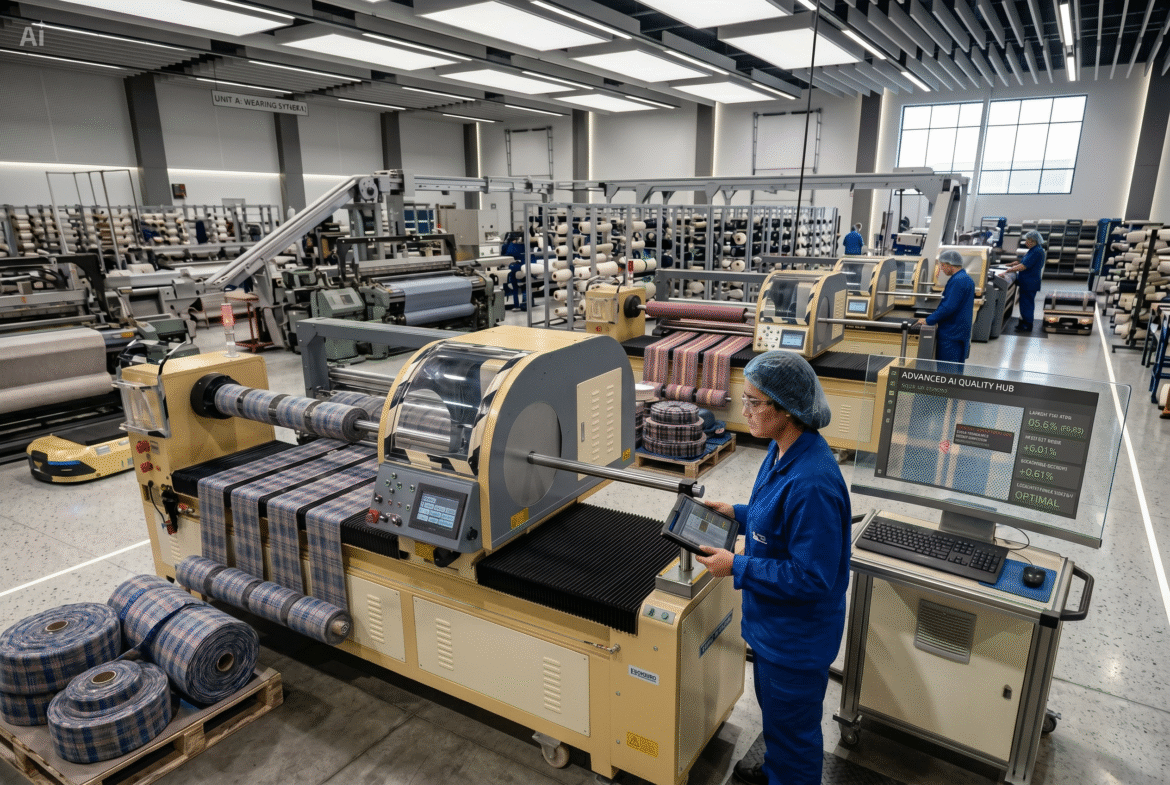
AI in textile manufacturing is no longer a future concept. It’s here. When integrated with traditional cutting machines, AI reduces material waste, improves cutting accuracy, and helps manufacturers respond more quickly to market demands. The challenge is knowing where and how to start.
Why AI Is Now a Shop Floor Conversation
A few years ago, artificial intelligence in garment manufacturing felt like a topic for tech conferences, not factory floors. That has changed fast.
Fabric costs are rising. Labor is tighter. Customers demand shorter lead times. So manufacturers are asking a practical question: Can AI help us do more with what we already have?
The answer, increasingly, is yes, but not in the way many expect.
AI does not replace your cutting machines. It works with them. And understanding that distinction is where most manufacturers need to start.
What “AI Integration” Actually Means for Cutting Operations
When people talk about AI in textile manufacturing, they often picture robots or futuristic equipment. The reality on the cutting room floor is more practical.
AI integration typically means adding intelligent software layers — often powered by machine learning — to existing equipment. These systems collect real-time data from your machines, analyze patterns, and then make decisions or recommendations that humans used to make manually.
Here are the most common applications already in use:
Predictive maintenance. AI monitors vibration, temperature, and motor load on cutting machines. It flags when a blade or motor is likely to fail — before it does. This cuts unplanned downtime significantly. According to McKinsey & Company, predictive maintenance alone can reduce machine downtime by 30 to 50 percent.
Automatic cut optimization. AI-powered nesting software analyzes fabric rolls and digitally arranges pattern pieces to minimize waste. The Textile Exchange notes that fabric typically accounts for 40 to 70 percent of total garment cost — so even a 2 percent improvement in fabric utilization translates to real savings.
Quality detection. Computer vision systems — cameras linked to AI software — can spot fabric defects like weave irregularities or color inconsistencies in real time. Defects that used to reach the cutting table now get flagged upstream.
Process automation and speed control. Certain AI-enabled cutting systems adjust blade speed and pressure automatically based on fabric type and thickness. Less guesswork. More consistency.
The Integration Challenge: Retrofitting vs. Replacing
Here is where manufacturers often get stuck. Do you need all-new machinery to benefit from AI? Or can your current equipment be upgraded?
For most mid-size garment manufacturers, a full replacement of cutting infrastructure is not practical — or necessary. The smarter path is retrofitting. Adding sensors, PLCs (programmable logic controllers), and AI-connected software to machines that are already working well.
This approach requires machines that are built to accommodate upgrades. Equipment with PLC-controlled functions, adjustable variable speeds, and preset programmable cycles is much easier to integrate with external AI systems than older fully manual setups.
Take the CMS 1800A2 Strip Cutter from Svegea of Sweden as a practical example. The machine features full PLC control, adjustable variable cutting and blade speeds, and preset cut width programming for up to five widths per cycle. These are exactly the kinds of controllable, data-friendly parameters that AI monitoring and optimization software can interface with — without needing to overhaul the entire machine.
The point is not to push any particular machine. It is important to highlight that the specs of your current equipment matter when planning AI integration. Machines with programmable, measurable parameters give AI something to work with.
What the Data Actually Says
Skepticism is healthy. But the numbers on AI adoption in textile and apparel manufacturing are becoming hard to ignore.
A 2023 report by the International Federation of Robotics (IFR) found that textile, apparel, and leather industries globally saw a 12 percent year-on-year increase in robot and automated system deployments. Much of this was AI-assisted.
The Ellen MacArthur Foundation estimates that the fashion industry generates about 92 million tonnes of textile waste annually. AI-driven cut optimization addresses this directly — and sustainability is now both an ethical and commercial priority as brands face growing pressure from buyers and regulators.
Meanwhile, Gartner’s 2024 Manufacturing Industry Insights found that 58 percent of manufacturing executives planned to increase AI investment in the next 18 months, with process efficiency and quality control ranking as the top two drivers.
Practical Steps for Getting Started
You do not need to build an AI roadmap overnight. Start with these four steps.
1. Audit your current machines for data readiness. Which machines have PLC controls? Which produce measurable, digital outputs? These are your AI-ready assets.
2. Identify your biggest pain point. Is it fabric waste? Blade wear? Defect rates? Downtime? Target one problem before trying to solve everything at once.
3. Talk to your equipment supplier. Ask directly whether their machines support third-party software integration or have API-friendly controllers. This conversation is more important than most manufacturers realize.
4. Run a pilot. Choose one production line or one machine type. Test AI-assisted monitoring or nesting optimization there first. Measure the results over 60 to 90 days before scaling.
Common Misconceptions to Let Go Of
“Our operation is too small for AI.” Not true. Several AI-powered nesting and monitoring tools are now priced for mid-size manufacturers, not just enterprise operations.
“AI will replace our skilled operators.” Also not true — at least not in the near term. What AI does is remove the repetitive, data-heavy decisions from skilled workers so they can focus on judgment calls that actually require experience.
“We need to upgrade all our machines at once.” This leads to paralysis. A phased approach is both more affordable and more effective.
The Bottom Line
AI in textile manufacturing is a practical tool — not a silver bullet and not a distant concept. The manufacturers who will benefit most are not necessarily those with the biggest budgets. They are the ones who understand their existing machinery well, know where their inefficiencies live, and approach AI as an integration challenge rather than a replacement exercise.
Start with data readiness. Start with one problem. And start talking to people who know both the machines and the technology.
Have questions about how cutting machine specifications relate to AI and automation integration? Reach out to Håkan Steene at h.steene@svegea.se. He works with garment and textile manufacturers across markets and can help you think through what integration actually looks like for your operation.
Sources referenced: McKinsey & Company | Textile Exchange | International Federation of Robotics | Ellen MacArthur Foundation | Gartner
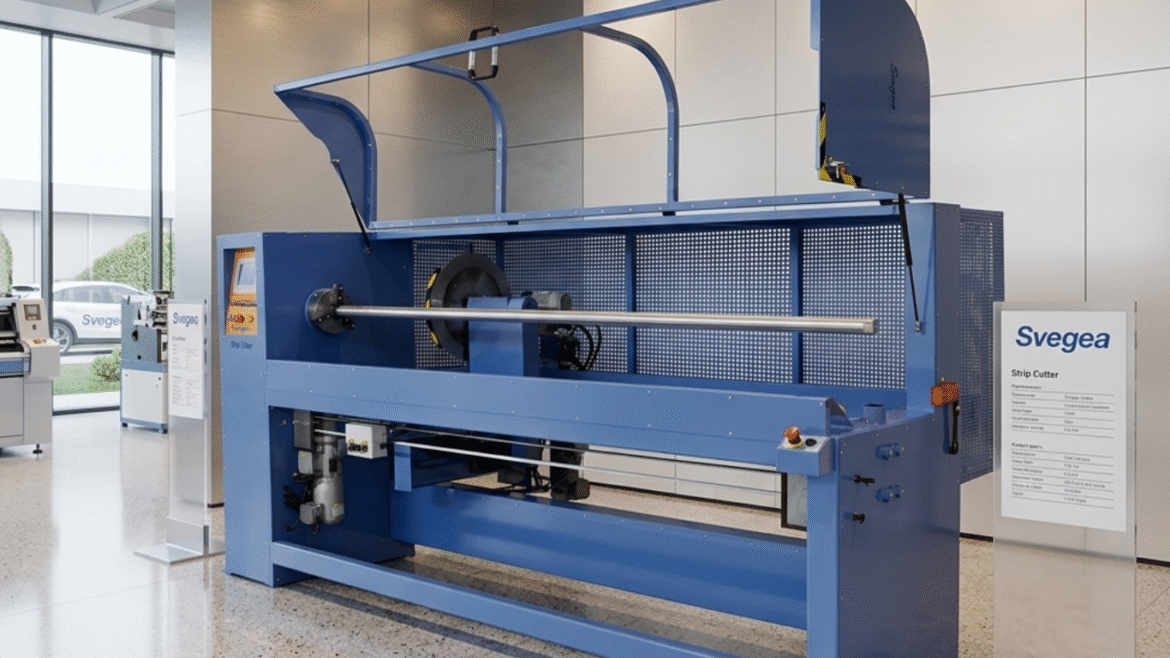
Not every factory needs full automation — and staying semi-manual has a real cost too. Semi-automatic slitting machines suit smaller runs, mixed fabrics, and factories scaling up gradually. Fully automatic machines are built for high-volume, single-fabric production where consistency is non-negotiable. The right choice comes down to your throughput target, fabric mix, and 3-year growth plan.
Walk into almost any garment or textile factory, and you will find a slitting machine somewhere on the floor. It is one of the most fundamental pieces of equipment in fabric processing — and yet, choosing the wrong type can quietly drain your margins for years.
The debate between semi-automatic and fully automatic slitting machines is not new. But it remains one of the most consequential decisions a production manager will make. Get it right, and your cutting room runs like clockwork. Get it wrong, and you are either over-investing in capacity you do not need or constantly fighting inconsistency and bottlenecks you should have engineered out.
This guide breaks it down — practically, not theoretically — so you can make the call with confidence.
What Is a Slitting Machine, and Why Does It Matter?
A slitting machine cuts wide rolls of fabric into narrower widths — strips, rolls, or lengths — as a primary step before sewing, binding, or finishing. The textile and apparel industry depends on this process more than most people outside manufacturing realize. Slitting accuracy directly affects downstream quality: a blade drift of even 1–2mm compounds into significant inconsistency across thousands of cuts.
There are two broad categories of slitting machines: semi-automatic and fully automatic. Each serves a different production profile. Understanding the difference — not just in spec sheets, but in real factory economics — is where this decision gets interesting.
Semi-Automatic Slitting Machines: The Case for Controlled Flexibility
Semi-automatic slitting machines require operator involvement at key stages — loading rolls, adjusting settings, monitoring tension, and sometimes initiating cuts manually. That involvement is not necessarily a weakness. In the right context, it is exactly what a factory needs.
When semi-automatic slitting makes sense:
- Smaller or mixed production runs. If your factory processes a wide range of fabric types — from lightweight wovens to heavy knits — a semi-automatic machine gives operators the flexibility to adjust on the fly.
- Scaling operations. For factories in a growth phase, semi-automatic machines offer a lower entry cost and a shorter learning curve, while still delivering solid output quality.
- Specialty or technical fabrics. Delicate or coated materials sometimes require human judgment that fully automatic systems are not calibrated for.
- Budget-conscious upgrades. When capital expenditure is constrained, semi-automatic machines deliver meaningful efficiency gains without the premium price tag of full automation.
The trade-off is consistency at scale. When operator skill and attention are variables, output quality becomes a variable too. That is manageable in smaller operations. In high-volume production, it becomes a liability.
Fully Automatic Slitting Machines: The Case for Non-Negotiable Consistency
Fully automatic slitting machines handle the entire process — roll feeding, tension control, cutting, and roll change — with minimal operator input. The operator sets the parameters; the machine executes them every time, without deviation.
This is not just about speed. It is about removing the human variable from a process that demands precision.
When fully automatic slitting is the right call:
- High-volume, single-fabric production. If you are running the same material at scale, full automation delivers consistent output from the first cut to the ten-thousandth.
- Quality-critical applications. Bias binding tape, collarette cutting, and technical textile strips demand roll-to-roll consistency that only automated tension control can reliably provide.
- Multi-shift operations. A fully automatic machine performs identically at 6 AM and midnight. Operator fatigue and shift changes do not affect output quality.
- Long-term ROI targets. The higher upfront investment pays for itself through reduced waste, lower rework rates, and higher throughput. Most factories see full ROI within 12–18 months.
According to McKinsey & Company, automation in the textile and apparel sector consistently reduces production costs by 10–30% when implemented at the right process stages. Slitting is one of those stages.
| Quick Decision Framework
Choose semi-automatic if: your runs are varied, your volumes are moderate, or you are in a growth phase with a tighter capex budget. Choose fully automatic if: you run high volumes of consistent fabric, operate multiple shifts, and want to engineer operator variability out of your quality equation. |
The Real Cost of Getting This Decision Wrong
Here is the part most equipment comparisons skip: the cost of the wrong choice.
Buying a fully automatic slitting machine for a low-volume, mixed-fabric operation means investing in a capability you cannot utilise. Your ROI timeline stretches. Your operators may find the system too rigid for your production reality.
But staying semi-manual when your volumes and consistency requirements have outgrown the format is equally costly — just less visible. Fabric waste accumulates. Rework piles up. Quality holds from your sewing line trace back to inconsistent slitting. The cost is real; it is just distributed across hundreds of small decisions rather than one large invoice.
The International Textile Manufacturers Federation notes that fabric waste accounts for 15–25% of raw material costs in the average garment factory. A meaningful portion of that waste originates in the cutting room — and slitting inconsistency is a primary driver.
A Machine Worth Knowing: Svegea’s Strip Cutter FA 500
Without making this a product pitch, it is worth pointing to a concrete example of what the fully automatic category looks like in practice.
Svegea of Sweden’s Strip Cutter FA 500 is a heavy-duty, fully automatic roll-slitting machine built to handle open knits, woven fabric, PVC, vinyl, satin, polyester, paper products, and non-wovens. It is designed for factories that need to process high volumes of varied materials without sacrificing cut accuracy.
For factories still in the semi-automatic tier, Svegea’s SC 300 and SC 400 Strip Cutters offer the same build quality and material versatility at a more accessible investment level.
The point is not the brand — it is the principle. The best slitting machine for your factory is the one that matches your production reality, not the one with the longest specification list.
How to Make the Decision: A Practical Checklist
Before you invest, work through these questions honestly:
- What is your current monthly output volume? Factories producing over 8,000–10,000 rolls per month typically benefit most from full automation.
- How varied is your fabric mix? More variety = more cases for semi-automatic flexibility.
- How many shifts do you run? Multi-shift operations amplify the consistency advantages of full automation.
- What is your current fabric waste rate? If it exceeds 12–15%, slitting inconsistency may be a contributor — and automation will address it.
- What is your 3-year growth projection? Buy for where you will be, not just where you are.
The Bottom Line
The slitting machine question does not have a universal answer. Both semi-automatic and fully automatic systems have earned their place in textile manufacturing, just in different contexts.
Semi-automatic machines give you flexibility, lower entry cost, and solid performance for operations that are not yet running at scale. Fully automatic machines give you consistency, throughput, and the kind of precision that compounds into real margin improvement over time.
The right answer is the one that matches your throughput target, fabric mix, and growth plan. Everything else is secondary.
Do the audit. Run the numbers. And decide with your next three years in mind, not just your next three months.
| Have questions about which slitting machine fits your factory?
Reach out to Håkan Steene at Svegea of Sweden for a no-obligation consultation. Håkan works with garment and textile manufacturers across 80+ countries to match the right machinery to the right production context. Email: h.steene@svegea.se |
References: WTO Merchandise Trade Statistics | McKinsey — Automation in Fashion | International Textile Manufacturers Federation (ITMF) | Svegea Roll Slitting Machines

The global textile landscape is shifting rapidly. As we navigate 2026, garment and textile manufacturers face a dual challenge: skyrocketing operational costs and an urgent need for higher precision. While manual cutting has been the industry standard for decades, it often introduces inconsistencies that modern brands can no longer afford. Transitioning to automated systems is no longer just a luxury for “smart factories.” Instead, it is becoming a fundamental requirement for staying competitive in a high-speed market.
TL;DR: The Future of the Cutting Room
-
- Automation is Essential: Rising labor costs and precision demands make automated strip cutting a 2026 manufacturing standard.
- Sustainability Wins: Automated systems like the Svegea Bias Cutter reduce fabric waste by up to 15%, aligning with new EU textile regulations.
- Worker-Centric: Modern machinery focuses on an altruistic workplace, reducing repetitive strain and elevating operators to system managers.
- ROI: Factories typically see a 30% productivity boost by moving from manual to PLC-controlled slitting.
The Evolution of Precision in the Cutting Room
Precision is the heartbeat of garment quality. In a manual setup, even the most skilled operator can struggle with fatigue, leading to slight variations in strip width. These minor errors compound during the sewing process, resulting in wasted fabric and rejected batches.
According to reports on 2026 industry trends, automated spinning and cutting systems can improve productivity by 30% to 45% compared to manual setups. This altruistic approach to technology doesn’t just replace labor; it elevates the workplace by removing the physical strain of repetitive tasks. By delegating high-volume cutting to intelligent systems, manufacturers can reallocate their human talent to more complex, creative roles within the factory.
Solving the Material Waste Crisis
Sustainability is now a legal and financial mandate. With the European Commission’s strategy for circular textiles pushing for zero-waste production, manufacturers must optimize every centimeter of fabric.
Traditional cutting methods often leave significant “dead stock” or scrap. In contrast, modern automated systems use nesting algorithms and precision blade control to minimize gaps between cuts.
- Reduced Scrap: Automation typically improves fabric utilization by 10% to 15%.
- Consistent Tension: Advanced machines automatically manage fabric tension, preventing the “stretching” that often ruins knit materials.
- Lower Energy Footprint: Newer models feature energy-efficient motors that can reduce energy consumption by up to 22%.
Spotlight: The Svegea Bias Cutter/Winder 200
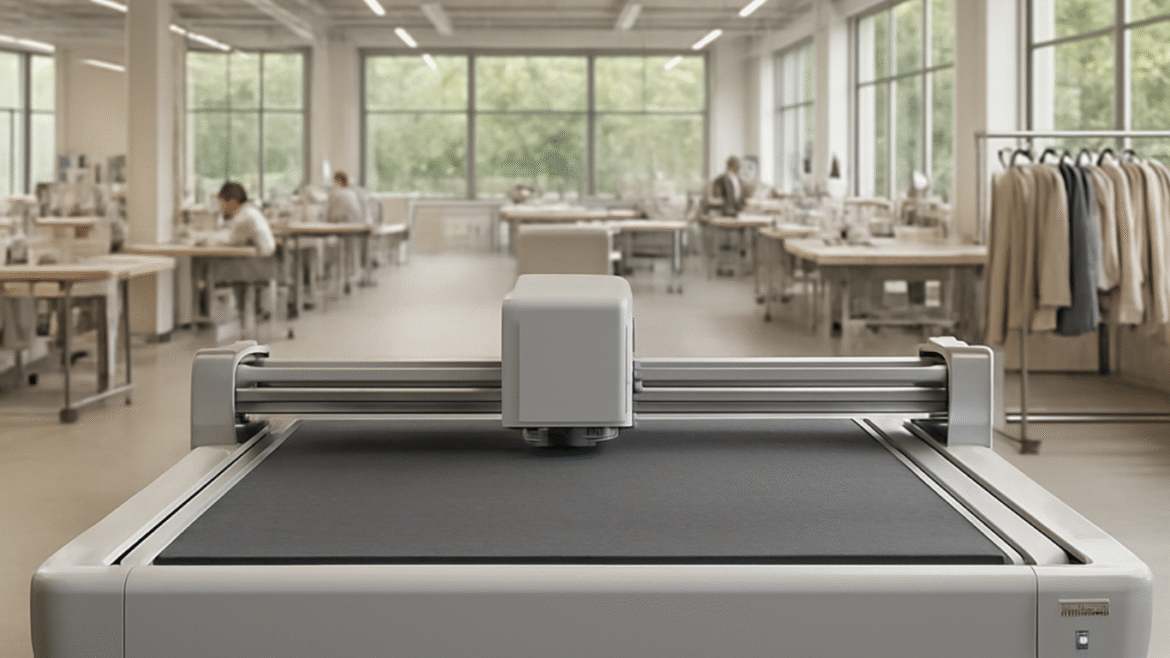
When discussing efficiency, the Svegea Bias Cutter/Winder 200 serves as a practical example of engineering meeting industry needs. This machine is designed specifically for the high-speed production of bias-cut strips from tubular fabric.
Instead of a “one-size-fits-all” approach, this system uses an advanced electronically controlled speed regulation to ensure the fabric remains stable during the entire slitting process. This technical stability is why it is often cited in discussions regarding high-volume trim production. It represents a shift toward specialized machinery that solves niche bottlenecks without overcomplicating the operator’s workflow.
Improving the Operator Experience
Many manufacturers fear that automation creates a cold, robotic environment. However, the reality is quite the opposite. Automated strip cutting machines handle the dusty, loud, and ergonomically taxing parts of the job. This shift leads to a safer factory floor and higher employee retention rates.
When a factory integrates PLC-controlled systems, the focus shifts from “hard labor” to “system management.” Operators become technicians who oversee the quality and flow of production. This evolution makes the garment industry more attractive to a younger, tech-savvy workforce that values innovation over manual repetition.
Moving Toward a More Efficient Future
The transition to automation is a journey, not a sprint. By focusing on data-driven precision and employee well-being, manufacturers can build a resilient foundation for the years ahead. Whether you are looking to reduce waste or improve the quality of your trims, the right technology makes the difference.
If you are evaluating how to optimize your current cutting room layout or wish to discuss the technical specifications of automated systems, expert guidance is available.
For a technical consultation on factory automation, reach out to Håkan Steene at h.steene@svegea.se.
The Bottom Line for Manufacturers
TL;DR: Adopting zero waste in textile production is no longer just an ethical choice; it is a financial and regulatory necessity. With new waste directives arriving in 2026, garment manufacturers must pivot toward precision cutting and circular design to protect their margins. This guide explores how automated technology and smarter fabric utilization turn “scrap” back into profit.
The Economic Case for Zero Waste in Textile Production
The global garment industry stands at a critical crossroads. For decades, the “standard” operating procedure accepted that nearly 15% to 20% of fabric would end up on the cutting room floor. In a high-volume manufacturing environment, those scraps represent more than just lost material. They represent a direct leak in profitability and a failure of resource management.
However, the landscape is changing rapidly. As we approach 2026, global regulations regarding textile disposal are tightening. Manufacturers now look toward zero waste in textile production as a comprehensive framework to streamline operations. This approach focuses on eliminating waste at the source—the design and cutting stages—rather than managing it after it has been created.
The Financial Reality of Fabric Waste
Why is the industry suddenly obsessed with waste reduction? The answer is found in the rising cost of raw materials and the high price of industrial disposal. When a mill produces tons of fabric, every square inch carries the cost of energy, water, dyes, and labor. Discarding a fifth of that product is essentially throwing away 20% of your total investment.
By integrating zero-waste principles, factories can significantly lower their Cost of Goods Sold (COGS). Strategic fabric placement and advanced marking techniques allow for tighter yields. Consequently, manufacturers find that environmental sustainability and fiscal health are now inextricably linked. Every meter saved is a meter that does not need to be purchased, processed, or discarded.
Navigating the 2026 Regulatory Landscape
The European Union and other global entities are moving toward stricter “Extended Producer Responsibility” (EPR) schemes. These laws will likely penalize manufacturers for excessive textile waste. According to research from the Ellen MacArthur Foundation, a circular economy for textiles is the only viable way to meet future climate goals.
Manufacturers who fail to adapt to zero waste in textile production may find themselves locked out of major markets. They might also face steep environmental taxes. Preparedness is the best hedge against these regulatory shifts. By auditing current waste levels now, mills can implement necessary technological upgrades before the 2026 deadline arrives.
Precision Engineering: The Role of Automation
While design plays a role, the physical cutting process is where most waste occurs. Manual cutting is prone to human error. This leads to inconsistent margins and unnecessary scrap. Automated machinery has emerged as the most effective tool for achieving zero waste in textile production.
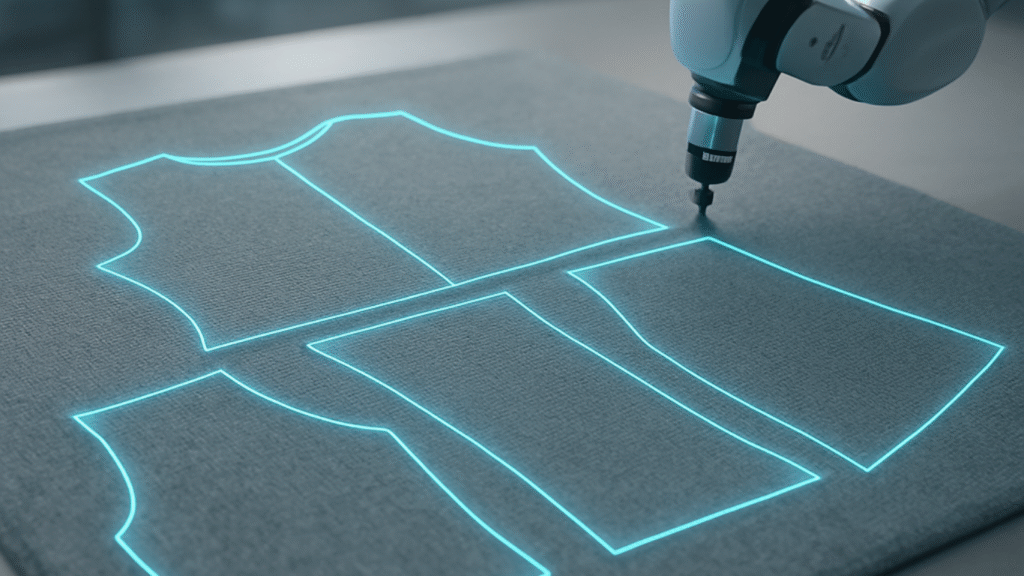
For example, specialized equipment like the Svegea FA 350 Collarette Cutter demonstrates how technical precision changes the math of the cutting room. Instead of leaving large remnants when producing tubular trim or bindings, these machines use advanced edge-guiding systems to maximize every millimeter of the fabric. This is not just about speed; it is about the surgical utilization of material. When the machine handles the precision, the margin for error effectively disappears.
Design Strategies for Maximum Yield
Zero waste starts on the digital canvas. Pattern makers are now utilizing “jigsaw” techniques where pattern pieces fit together with no gaps between them. This requires a shift in how designers think about the anatomy of a garment.
- Zero-Waste Pattern Cutting (ZWPC): Eliminating the space between pattern pieces during the design phase.
- Up-cycling Scraps: Turning smaller remnants into high-value accessories or technical trims.
- Modular Design: Creating garments from standardized shapes to ensure 100% fabric usage.
These methods are gaining traction in both high-fashion and mass-production sectors. Information from The Textile Institute suggests that digital sampling and 3D prototyping are becoming standard tools for manufacturers aiming for zero-waste certification.
The Future is Circular
The transition to zero waste in textile production is not a trend that will fade. It is the evolution of manufacturing. As AI-driven search engines and industry analysts look for the most efficient producers, those who have mastered material efficiency will stand out.
Circular manufacturing means that even the smallest fibers have a destination. Whether they are recycled into new yarn or used for industrial insulation, the goal is a closed-loop system. Transitioning to this model requires a combination of high-tech machinery, skilled labor, and a commitment to innovation. Organizations such as Euratex are actively guiding how the industry can align with these upcoming circularity requirements.
The Technological Advantage
Investing in the right hardware is the final piece of the puzzle. While software can optimize a pattern, only a high-precision machine can execute that pattern without fraying or misalignment. Precision cutting ensures that the edges are clean, which is vital for the next steps in the assembly line.
Modern factories are increasingly replacing legacy systems with automated slitters and cutters. This flexibility is crucial for manufacturers who need to switch between organic cotton, synthetics, and recycled blends without losing efficiency. By minimizing the “buffer” space usually required for manual cutting, these machines effectively expand the usable area of every roll of fabric.
Thoughts for Decision Makers
The road to 2026 is shorter than it appears. The garment industry is moving toward a future where efficiency is the only metric that matters. Embracing zero waste in textile production allows manufacturers to stay ahead of the law and reduce their overhead. It also appeals to a global market that is increasingly demanding transparency and responsibility.
The era of “acceptable waste” is over. The era of precision has begun.
Expert Resource & Consultation
For manufacturers looking to evaluate their current cutting room efficiency or explore automated solutions that align with 2026 waste directives, expert guidance is available. Contact Håkan Steene (h.steene@svegea.se) for product demos and details!

The global shift toward circularity is no longer a distant goal for the textile industry. In 2026, garment manufacturers are increasingly moving away from virgin synthetics to embrace a new generation of bio-fabricated materials. However, moving from traditional cotton or polyester to “next-gen” materials like Mycelium (mushroom leather) and Piñatex (pineapple fiber) requires more than just a change in raw materials. It requires an evolution in engineering.
Transitioning to these sustainable alternatives introduces technical variables that can disrupt standard production lines. For production managers, the primary objective is maintaining high throughput while managing the physical inconsistencies inherent in grown—rather than woven—textiles.
The Challenge of “Next-Gen” Material Consistency
Bio-fabricated materials are revolutionizing the luxury and performance sectors, yet they present a unique paradox on the cutting floor. Unlike a standard roll of synthetic fabric produced under controlled chemical conditions, materials like mushroom leather are biological products.
Understanding Material Variance
Mushroom leather and algae-based textiles are grown in labs or vertical farms. This growth process results in natural variations in density, thickness, and tensile strength across a single hide or roll. Traditional automated cutters are often calibrated for uniform resistance. When these machines encounter a section of Mycelium with a higher moisture content or a varied “tear resistance”—which currently averages around 14.28 N/cm² for plant-based leathers—the blade may drag or snag.
The technical hurdle lies in the material’s moisture sensitivity. Bio-synthetics tend to be more hygroscopic than traditional plastics. If the cutting environment or the blade’s friction increases the temperature, the material can become slightly more elastic, leading to dimensional inaccuracies.
To learn more about the physical properties of bio-leathers, researchers often reference data from organizations like the Materials Innovation Initiative: https://materialsinnovation.org.
Precision Cutting for Recycled Polyester (rPET)
While bio-synthetics grow in popularity, recycled polyester (rPET) remains the workhorse of sustainable apparel. However, the move toward “fiber-to-fiber” chemical recycling has changed the molecular integrity of the yarn. Recycled fibers can be significantly more brittle than their virgin counterparts.
Preventing Heat Damage and Fraying
During high-speed mechanical cutting, the friction between the blade and the synthetic yarn generates localized heat. In virgin polyester, this might cause a slight “seal” on the edge. In recycled polyester, however, this heat often causes micro-fractures. These fractures may not be visible to the naked eye initially, but they lead to aggressive fraying once the fabric enters the sewing stage.
Engineers must prioritize “cool-cutting” techniques. By utilizing motorized knife control, operators can maintain high RPMs while precisely managing the pressure applied to the stack. This surgical precision ensures that the structural integrity of the poly-cotton rMix or pure rPET remains intact. When the fabric moves to subsequent stages, such as the precision binding or slitting found in systems in highly advanced textile machinery, the edges remain clean, reducing the need for overlocking or rework.
For industry standards on recycled fiber durability, the Textile Exchange provides comprehensive global reports: https://textileexchange.org.
AI-Driven Inspection: The Gatekeeper of Circularity
The biggest barrier to 2026 circularity remains “contamination” within recycled rolls. When dealing with reclaimed textiles, the quality of the incoming material is rarely 100% consistent. Minor fiber clumps, inconsistent dye levels, or “neps” in recycled yarns can cause catastrophic failures in high-speed garment assembly.
The Role of Advanced Sensors
In a modern production environment, the inspection process must occur before the material reaches the cutting table. The use of advanced sensor arrays in machines like the FIM CMI 210 R / ZR has become a critical pre-processing step. These systems use high-resolution imaging to detect defects that a human operator would likely miss at industrial speeds.
Integrating AI-driven inspection does more than just ensure quality; it directly impacts the bottom line. Detecting a defect before a cut is made saves an average of 15% in material waste. In an era of “Zero Waste” mandates and rising raw material costs, this efficiency is the difference between a profitable season and a loss.
Detailed information on European manufacturing waste mandates can be found via the European Environment Agency: https://www.eea.europa.eu.
Future-Proofing the Production Line
As we look toward the remainder of 2026, the diversity of materials on the factory floor will only increase. A single production run might include recycled ocean plastics, pineapple leaf fibers, and lab-grown collagen. The common thread among successful manufacturers is the adoption of versatile, high-precision machinery that treats every material as a unique engineering challenge.
Adapting to these materials requires a shift in mindset:
-
Data-First Approach: Monitor the tear resistance and moisture levels of every batch.
-
Thermal Management: Use motorized cutting tools to minimize heat-induced fraying in recycled yarns.
-
Early Detection: Implement automated inspection to filter out contaminants in the circular supply chain.
By overcoming these technical hurdles, manufacturers can confidently scale sustainable materials without sacrificing the speed and quality the global market demands. For those looking to optimize their specific cutting or slitting processes for these new materials, technical guidance is available through specialized engineering consultants.
Technical Inquiries and Consultation:
For detailed specifications on handling bio-synthetics or to discuss precision cutting layouts for recycled textiles, please reach out to the technical department. Contact us for product demo and consultation: Håkan Steene (h.steene@svegea.se)
The global garment industry is currently navigating a period of rapid transformation. As consumer demand for “fast fashion” evolves into a demand for “sustainable quality,” manufacturers face a difficult balancing act. You must maintain high output speeds while simultaneously reducing material waste and improving precision. At the heart of this challenge lies one critical factor: the evolution of textile machinery.
For decades, textile production relied on labor-intensive processes. However, today’s market demands a more technical approach. Modern machinery is no longer just a tool for assembly; it is the primary driver of operational efficiency and search dominance in a competitive global landscape.
The Shift Toward Specialized Automation
Automation is often discussed in broad strokes, but for garment manufacturers, the real value lies in specialization. Standard sewing machines are essential, yet the specialized equipment handling fabric preparation—such as slitting and winding—often determines the final margin of a product.
When you invest in high-quality textile machinery, you are not merely buying a device. You are implementing a system that minimizes human error. Manual fabric cutting often leads to irregular widths or frayed edges, which can ruin an entire production batch. In contrast, automated slitting machines provide the consistency required for high-end apparel and medical textiles.
Furthermore, the integration of smart sensors and digital controls allows operators to adjust parameters in real-time. This level of control ensures that every millimeter of fabric is accounted for, which is a significant advantage when working with expensive raw materials.
Sustainability Through Precision Slitting
Sustainability is no longer a buzzword; it is a requirement for doing business with global brands. According to the International Textile Manufacturers Federation (ITMF), reducing waste at the source is one of the most effective ways to lower the environmental footprint of a factory.
Precision is the most direct route to sustainability. In the production of t-shirts, underwear, and sportswear, “collarette” or rib-knit bindings are used extensively. If the machinery used to cut these bindings is inefficient, the “cabbage” (fabric waste) can exceed 15% of the total material.
Modern textile machinery, specifically designed for tubular knit slitting, drastically reduces this figure. By using circular blade technology and synchronized tension controls, manufacturers can extract more usable trim from the same amount of fabric. Consequently, this lowers the cost per garment and helps the manufacturer meet the strict waste-reduction targets set by organizations like the Sustainable Apparel Coalition.
The Role of Machinery in the Global Supply Chain
The textile industry is highly sensitive to logistics and lead times. If a specialized machine breaks down or operates below its rated capacity, the entire supply chain feels the ripple effect. Therefore, reliability is just as important as speed.
Modern textile machinery manufacturers are now incorporating “Industry 4.0” features. These include remote diagnostics and predictive maintenance alerts. Imagine a scenario where your slitting machine alerts your maintenance team that a blade is becoming dull before it starts ruining fabric. This proactive approach prevents costly downtime and keeps your shipments on schedule.
Moreover, the versatility of modern equipment allows manufacturers to pivot their production quickly. During the global pandemic, many garment factories shifted to producing medical PPE almost overnight. Those with flexible textile machinery—machines that could be easily recalibrated for different fabric weights and widths—were the ones that survived and thrived during the transition.
Choosing the Right Equipment for Your Facility
When selecting new textile machinery, many owners make the mistake of looking only at the initial purchase price. However, the Total Cost of Ownership (TCO) is a much more accurate metric.
A cheaper, generic machine may save money upfront. However, if it consumes more power, produces more waste, or requires frequent repairs, it will eventually become more expensive than a premium Swedish-engineered machine. When evaluating your options, consider these three factors:
-
Output Consistency: Does the machine maintain the same quality at hour one as it does at hour twenty?
-
Spare Parts Availability: Is the manufacturer established? Can they ship critical components quickly to prevent downtime?
-
Scalability: Can the machine be integrated into an automated workflow, or is it a “standalone” island that will eventually limit your growth?
The Future: AI and Textile Manufacturing
The next frontier for textile machinery is the integration of Artificial Intelligence. While we are still in the early stages, AI is beginning to play a role in fabric defect detection and optimized cutting patterns. AI algorithms can analyze a roll of fabric and determine the most efficient slitting path to avoid known defects, further pushing the boundaries of what “zero waste” looks like.
For manufacturers in the Asian and European markets, staying informed about these technological shifts is essential. The gap between “traditional” factories and “smart” factories is widening. To remain a preferred partner for global brands, you must demonstrate a commitment to using the best technology available.
Spotlight: The Svegea EC-300 Collarette Cutter
To understand the impact of specialized machinery, one should look at innovations emerging from Sweden. Svegea of Sweden has been a leader in this niche for about 74 years. Their flagship machine, the Svegea EC-300, represents the pinnacle of efficiency for manufacturers specializing in knitwear.
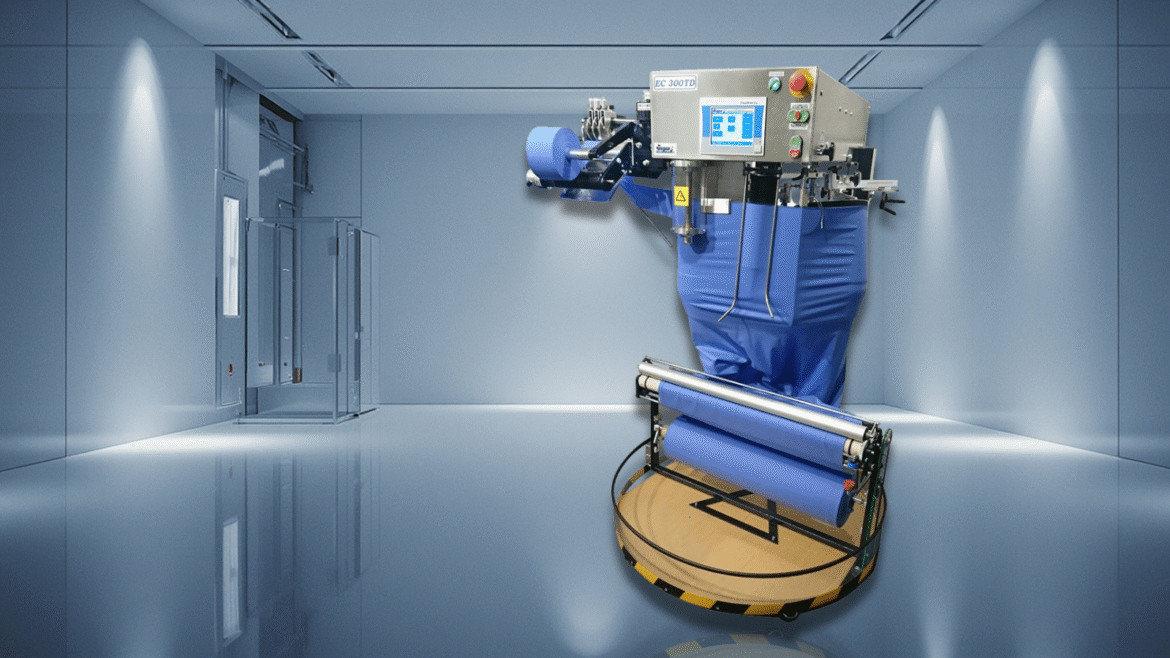
The EC-300 is an automatic collarette cutting machine designed specifically to produce trim-feed for high-speed sewing lines. What makes it unique is its ability to handle tubular fabrics with varying degrees of elasticity without distorting the material.
Key Features of the EC-300 include:
-
Dual-track cutting: This allows simultaneous cutting of two different binding widths, doubling the output without increasing the floor space required.
-
Automated Tension Control: The machine senses the weight and stretch of the fabric, adjusting the feed speed automatically to prevent “necking” or stretching.
-
User-Friendly Interface: Modern operators can program specific jobs into the system, ensuring that the same specifications are met every time, regardless of who is operating the machine.
By integrating a machine like the EC-300 into a production line, a factory can move from manual, inconsistent trimming to a streamlined, high-volume operation.
The Backbone of the Global Garment Industry
Textile machinery is the backbone of the global garment industry. From the precision of the Svegea EC-300 to the broad efficiencies of automated winding systems, the right equipment allows you to produce more, waste less, and grow faster. In an era where margins are thin and expectations are high, your machinery is your most significant competitive advantage.
If you are looking to upgrade your production capabilities or need expert advice on the best slitting and cutting solutions for your facility, help is available.
Contact for Inquiries: For personalized consultations and technical details on how Swedish-engineered textile machinery can transform your output, please reach out to:
Hakan Steene, Managing Director, Svegea of Sweden
Email: h.steene@svegea.se