

Ribbing is back on the runway. And it’s showing up in an unexpected place: the cuff, the collar, the hem. Spring/Summer 2027 knitwear leans hard into edge detailing. That shift puts pressure on the cutting room, not just the design studio.
What is a collarette trim and why is it trending in 2027? A collarette trim is a ribbed knit band. It’s cut from tubular fabric and sewn onto a cuff, collar, or hem for stretch and structure. It’s trending in 2027 because designers favor edge detailing over heavy, all-over patterns. Ribbing delivers texture exactly where it needs to sit.
Why are ribbed cuffs and collars trending in 2027?
A return to craftsmanship
Fashion forecasters call this season a return to craftsmanship. Trend analysts at POP Fashion describe Spring/Summer 2027 knitwear as centered on detailed stitching. That stitching concentrates at the edges of a garment, not across the whole piece. Cuffs, hems, and necklines get the attention, while the body of the garment stays simple.
Why manufacturers should pay attention
This shift matters for manufacturers. A ribbed cuff or collar does real structural work. It holds a sleeve or neckline in place, without a zipper, button, or drawstring. So when a trend calls for that detail on nearly every piece, cutting rooms need a fast, consistent way to produce it.
Trend forecasting platform Trendalytics also points to a broader move toward relaxed silhouettes and natural texture. This spans Spring 2027 runways, from Milan to Copenhagen to Tokyo. Ribbing fits neatly into that story. It’s tactile, and it reads as considered rather than mass-produced. It also works across nearly every knitwear category, from athleisure to elevated basics.
What machine makes collarette trims?
How the cutting process works
A collarette cutting machine converts tubular knit fabric into ribbed bands. These bands get sewn onto a cuff, collar, or waistband. First, the tube feeds onto a rotating turntable. Then a blade slices continuous, uniform bands as the table turns. Band width is set before the fabric touches the blade. As a result, every strip comes off at the same measurement, cut after cut.
Semi-automatic vs. fully automatic
Two broad categories exist. Semi-automatic machines need an operator to load the fabric and start the cycle, then step back while the machine cuts. Fully automatic machines add more: PLC-driven speed synchronization, auto-stop sensors, and higher throughput. This suits manufacturers running long production runs of the same trim.
Both approaches produce the same result: a clean, ribbed band with a consistent width. However, they differ in speed, automation, and how many bands a single pass can cut. That’s exactly what separates Svegea’s EC-series models from each other.
How do I choose between the EC300, EC200C, EC200CS and EC50?
Svegea builds four collarette cutting machines. Together, they cover everything from small-batch production to high-speed, high-volume cutting. The table below breaks down what each one handles.
| Model | Automation | Bands per pass | Band width | Max speed | Best for | Learn more |
|---|---|---|---|---|---|---|
| EC 50 | Semi-automatic | 2–3 (4 with extra knife unit) | 16–140 mm | Up to 30 m/min | Small to mid-size production, hands-on operation | svegea.se/product/ec-50-semi-automatic/ |
| EC 200C | Fully automatic | 3 (4 with extra knife unit) | 16–170 mm | Up to 40 m/min | Mid-volume runs needing zero-waste, hands-off cutting | svegea.se/product/euro-collarette-200c/ |
| EC 200CS | Fully automatic | 4 (5 with extra knife unit) | 16–260 mm | Up to 60 m/min | Wider bands at high speed, PLC-synced production | svegea.se/product/euro-collarette-200cs/ |
| EC 300 | Fully automatic | 4 (5 with extra knife unit) | 16–170 mm | Up to 60 m/min | High-volume runs needing both scissor and crush cutting | svegea.se/product/euro-collarette-300/ |
Matching a machine to your production
On the EC50, operators cut up to three bands at once. A fourth band is possible with an added knife unit. It’s a solid starting point for manufacturers who don’t yet need full automation. Meanwhile, the EC200C is built for zero-waste, fully automatic cutting once a job is set up. That makes it a natural step up for mid-volume runs of a single trim width.
The EC200CS handles wider bands, up to 260 mm, without needing a second machine. So it suits collections that mix narrow cuffs with wider waistbands in the same run. On the EC300, manufacturers get both scissor and crush cutting. This gives more control over edge finish, especially when a collection spans different fabric weights.
Weighing speed against cost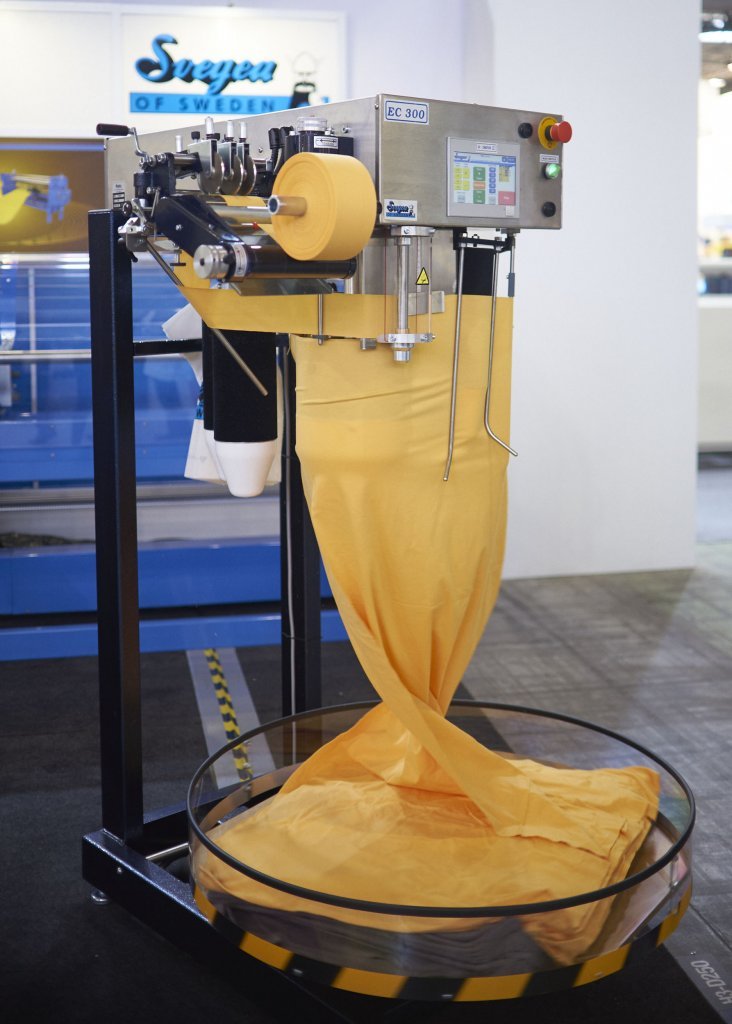
Speed is capped at 30 m/min on the EC50, since an operator manually manages the load and finish. By contrast, the three fully automatic models run two to four times faster. Their fabric feed, cutting speed, and stop points sync automatically. If your 2027 lineup leans on one or two standard rib widths at moderate volume, the EC200C is the more economical fit. However, if widths vary across styles, or volume is climbing fast, the EC200CS or EC300 earn back their higher price point in throughput.
Ready for the ribbing comeback
Ribbing isn’t a passing microtrend. It’s shaping up to be one of the defining details of 2027 knitwear. Manufacturers who can produce consistent, high-quality collarette trims at scale will keep up with buyer demand. Every EC-series machine is engineered in Sweden, with cutting components made from high-grade steel. So the choice mostly comes down to volume and bandwidth, not build quality.
See the full lineup and specs in the Collarette Range Family brochure. For a side-by-side look at every semi-automatic and fully automatic model, visit svegea.se/collarette-cutting-machines/.
Follow Svegea on Instagram, LinkedIn, and Facebook (@svegeaofsweden) for more updates on efficient, sustainable garment and textile manufacturing machinery.
FAQ
What is a collarette trim?
A collarette trim is a ribbed knit band. It’s cut from tubular fabric and used on cuffs, collars, and hems for stretch and structural finishing.
Why is ribbing trending in fashion for 2027?
Spring/Summer 2027 knitwear favors detailed stitching at the edges, not all-over patterns. Ribbed cuffs, collars, and hems fit that trend directly.
What’s the difference between a semi-automatic and fully automatic collarette machine?
A semi-automatic machine, like the EC50, needs an operator to load fabric and start each cycle. Fully automatic models, like the EC200C, EC200CS, and EC300, add PLC-driven speed sync and auto-stop sensors for continuous, hands-off cutting.
Which EC-series machine cuts the widest bands?
The EC200CS cuts bands up to 260 mm wide, the widest range in the current EC lineup.
Do I need a fully automatic machine for small production runs?
Not necessarily. The EC50 handles small to mid-size runs well, and it costs less to start with. Fully automatic models pay off once volume or band-width variety increases.
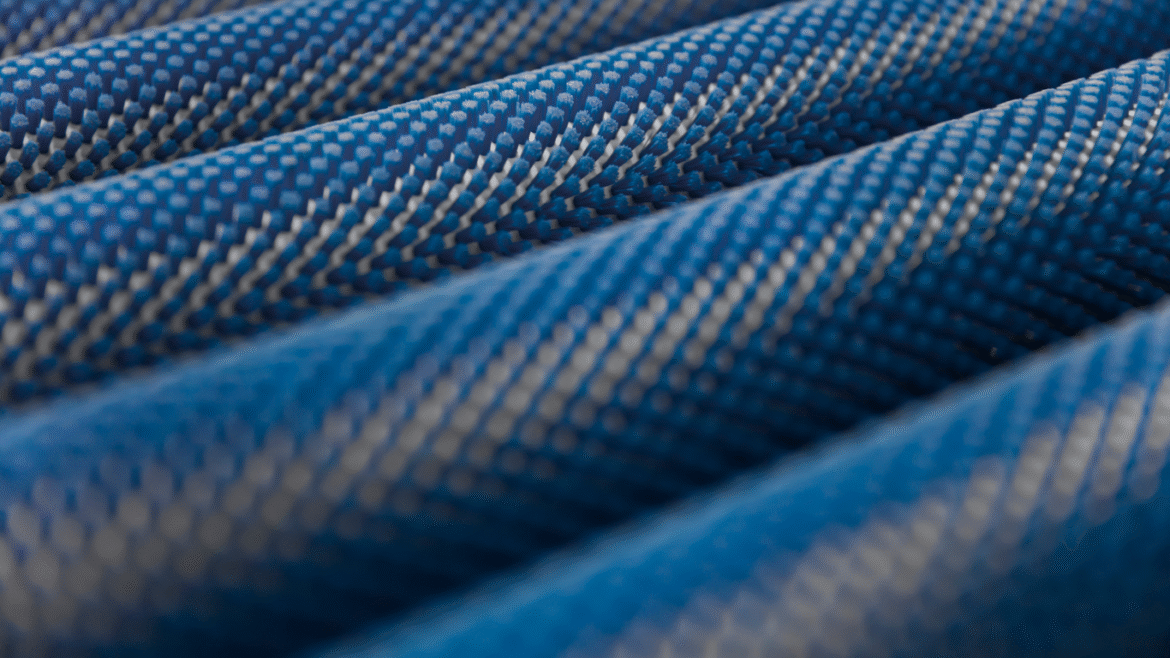
Circular knitting machines produce fabric as a seamless tube. What happens after that is a decision every knit manufacturer makes, sometimes without thinking too hard about it: keep the fabric in tubular form or slit it open and process it flat. Both routes are common, and both work. But they don’t behave the same way on the cutting floor, and the choice affects waste, tension, and finish quality more than a lot of production teams realize.
TL;DR: Circular knitting produces fabric as a continuous tube, and manufacturers either keep it that way (tubular processing) or slit it open into a flat sheet (open-width, or flat-bed, processing). Tubular is faster and cheaper but more prone to edge creasing; open width gives better width utilization and finish quality, but the slitting step itself can introduce stretch and distortion. Which one fits depends on the product and how the fabric will be cut.
What Tubular and Open-Width Actually Mean
A circular knitting machine forms fabric on a rotating cylinder of needles, which produces a continuous tube rather than a flat sheet. According to Textile Blog, the width of that tube is half the width the fabric would measure if it were slit open and laid flat, since the machine is knitting both the front and back layers at once. Tubular processing keeps the fabric in that closed-loop form all the way through finishing. Open-width, sometimes called flat-bed or cut-edge processing, slits the tube along one edge early in finishing and processes the fabric as a single flat layer from that point on.
Why Manufacturers Keep Fabric Tubular
Tubular processing has been the traditional route for a reason. It runs faster through finishing equipment, needs less investment in machinery, and works for a wide range of fiber types without extra steps like sizing. It is also the natural form for anything that will end up as a tube in the garment itself, like a T-shirt body or a sock, since there’s no seam to add later.
The trade-off shows up in finishing. Tubular fabric is run through extraction rollers as a folded, double layer. Cotton Incorporated’s processing guidance notes that this makes tubular fabric sensitive to sharp edge lines and creasing where the fold sits, unless roller hardness is matched carefully to the fabric.
Why Manufacturers Move to Open-Width
As quality expectations rose, particularly for elastane-blend fabrics used in fitted garments, more knit processing shifted toward open-width finishing. Academic surveys of the industry point to open-width routes giving more consistent, higher-grade finishing results than tubular processing, which is part of why open-width has been gaining ground even though it typically costs more to run.
Open-width also makes better use of the full fabric surface once cutting starts. A flat sheet lets a marker (the layout of pattern pieces) use the entire width efficiently. It matters more on styles with larger, irregular pattern pieces than it does on narrow trims or bindings. Dyeing and heat-setting can also run more evenly on a flat, single layer than on a folded tube, where the inner and outer layers don’t always receive identical heat or dye exposure.
The Trade-off That Matters Most: What Slitting Does to the Fabric
Here is the part that gets missed most often. Converting tubular fabric to open width means slitting it, and that step is not neutral. Cotton Incorporated’s own guidance is direct about it. For open-width fabrics, the slitter can be a major source of linear stretch or distortion. This is on top of whatever tension the fabric already picked up earlier in finishing. In other words, the act of going from tubular to open width is itself a common point where bowing and skewing get introduced or made worse.
This is where equipment choice starts to matter. A conventional slit-and-flatten process pulls the tube open under tension and typically produces two separate rolls of open-knit fabric from one tube. Svegea’s TSO 380 G/GF Tubular Knit Slitter can convert a tubular knit into a single, full-width roll in one pass. This machine has electronic tension control on the fabric take-up. The main benefit is fabric yield rather than distortion control on its own, but tighter, more consistent tension through the conversion step also means less of the stretch that a rougher slitting process tends to introduce.
Which One Fits Your Line?
There isn’t a universal answer, and the right route usually comes down to questions. What the fabric becomes (a tubular garment part, or flat-cut panels). Or how much elastane or stretch fiber is in the blend. And how much of the fabric width the pattern pieces actually use. Narrow trims, bindings, and bands cut from tubular knit often stay tubular right up to the cutting stage. For high-stretch knit fabrics, larger flat-cut panels frequently justify the additional step of open-width conversion. It also provides slitting automation and tension-free feeding systems used to prevent lateral deformation and edge curl.
It is also worth asking the question per style rather than settling on one route for the whole line. A manufacturer running both fitted, flat-cut garments and simple tubular pieces in the same facility often gets better results.
Need help optimizing your fabric or reducing waste? Contact Håkan Steene: h.steene@svegea.se.

TL;DR: AI tools like ChatGPT, Gemini, and Copilot now summarize supplier information for buyers, and they cite whoever documents their equipment most clearly. Manufacturers who publish structured FAQs, verifiable specs, and schema markup for an automated slitting machine stand a much better chance of being the source AI trusts. Svegea’s compact, well documented systems are built with exactly that kind of clarity in mind.
As 2026 draws to a close, textile manufacturers face a new kind of competition. It isn’t just about faster machines or tighter margins anymore. It’s about whether AI tools even know your company exists.
Search behavior changed fast this year. Buyers researching an automated slitting machine no longer scroll through ten blue links. Instead, they ask ChatGPT, Gemini, or Copilot a question. They get back one confident answer. If your brand isn’t part of that answer, you might as well be invisible.
Automation keeps moving forward across textile plants worldwide. Manufacturers want machines that cut waste, boost yield, and run with less supervision. Sustainability pressure is rising too. Buyers now ask harder questions about material efficiency and energy use. Digital compliance rules are tightening across the EU and beyond. Suppliers must document their processes more openly than before.
These shifts matter for one big reason. They shape what AI models learn to trust. A generative engine builds its answers from the clearest, best-documented sources it can find. Vague marketing copy doesn’t help much here. Verified specs, clear certifications, and real case studies do the heavy lifting instead. Simple, factual writing beats flowery sales language almost every time.
Here’s the uncomfortable part. AI tools already summarize supplier information for buyers. They tend to favor whoever wrote the clearest content first. Well-established players often get cited by name. Many capable smaller manufacturers get skipped over instead. That’s not because their equipment is worse. It’s simply because their content never gave the AI anything solid to work with.
Think of it this way. Say a purchasing manager asks an AI tool for the best automated slitting machine for knitwear production. The tool needs a direct, structured answer to serve up right away. Maybe your product pages ramble about company history instead of stating specs and use cases plainly. If so, the algorithm moves right on to a competitor.
AEO and GEO, Explained Simply
Two ideas matter most here. The first is AEO, or answer engine optimization. This means writing content that answers technical questions the way a buyer actually asks them, not the way an old brochure might. The second is GEO, or generative engine optimization. This is about becoming the source an AI trusts enough to cite by name in tools like ChatGPT, Gemini, and Copilot.
In practice, this work looks fairly simple. Structure your FAQs so each question gets one clean answer. Publish verifiable data instead of vague claims. Give your product pages the kind of metadata that search engines and language models can actually parse. Google’s own guidance still underpins much of this approach. Structured, well-organized pages remain the foundation that AI answers are built on. Skip the guesswork and write for clarity first, and keywords will usually follow on their own.
Svegea’s Perspective
This is exactly where compact, well-engineered automation earns its keep. Picture a properly documented automated slitting machine built for accuracy and low material waste. It gives manufacturers exactly the kind of concrete detail AI models look for. Think consistent output specs, energy figures, and measurable yield gains. Svegea’s approach to compact slitting and cutting systems reflects that same idea. Build machines worth documenting clearly, and the documentation does much of the marketing on its own. Buyers trust numbers. So do the AI tools that now speak for buyers.
Action Steps for Manufacturers
A few practical moves can make a real difference this year. Start by publishing technical FAQs and spec sheets written for direct AI answers, not just search rankings. Add schema markup and clean product metadata so machines can actually read your pages properly. Share verifiable performance data instead of general claims whenever you can. Work with industry peers on shared benchmarks too, since AI models weigh third-party validation heavily. Reference points from established trade sources, such as Style.com or Textile World, can help build that kind of credibility over time. Even a short case study, backed by real production numbers, can carry more weight with an AI model than a page full of adjectives.
None of this happens overnight. It takes a real commitment to writing content that is precise instead of promotional. But manufacturers who start now will have a real head start once AI search becomes the default way buyers shop for equipment.
It’s Not About the Ranks Anymore
In 2027, visibility won’t depend on who ranks first anymore. It will depend on who AI trusts enough to tell the story of textile innovation. Manufacturers who document their equipment clearly today are the ones whose machines will show up in tomorrow’s answers.
If you want to see how a well-documented, compact automated slitting machine performs in real production, explore Svegea’s systems at www.svegea.se. You can also reach out directly to Håkan Steene at h.steene@svegea.se for more details.

The global textile landscape is shifting rapidly. As we navigate 2026, garment and textile manufacturers face a dual challenge: skyrocketing operational costs and an urgent need for higher precision. While manual cutting has been the industry standard for decades, it often introduces inconsistencies that modern brands can no longer afford. Transitioning to automated systems is no longer just a luxury for “smart factories.” Instead, it is becoming a fundamental requirement for staying competitive in a high-speed market.
TL;DR: The Future of the Cutting Room
-
- Automation is Essential: Rising labor costs and precision demands make automated strip cutting a 2026 manufacturing standard.
- Sustainability Wins: Automated systems like the Svegea Bias Cutter reduce fabric waste by up to 15%, aligning with new EU textile regulations.
- Worker-Centric: Modern machinery focuses on an altruistic workplace, reducing repetitive strain and elevating operators to system managers.
- ROI: Factories typically see a 30% productivity boost by moving from manual to PLC-controlled slitting.
The Evolution of Precision in the Cutting Room
Precision is the heartbeat of garment quality. In a manual setup, even the most skilled operator can struggle with fatigue, leading to slight variations in strip width. These minor errors compound during the sewing process, resulting in wasted fabric and rejected batches.
According to reports on 2026 industry trends, automated spinning and cutting systems can improve productivity by 30% to 45% compared to manual setups. This altruistic approach to technology doesn’t just replace labor; it elevates the workplace by removing the physical strain of repetitive tasks. By delegating high-volume cutting to intelligent systems, manufacturers can reallocate their human talent to more complex, creative roles within the factory.
Solving the Material Waste Crisis
Sustainability is now a legal and financial mandate. With the European Commission’s strategy for circular textiles pushing for zero-waste production, manufacturers must optimize every centimeter of fabric.
Traditional cutting methods often leave significant “dead stock” or scrap. In contrast, modern automated systems use nesting algorithms and precision blade control to minimize gaps between cuts.
- Reduced Scrap: Automation typically improves fabric utilization by 10% to 15%.
- Consistent Tension: Advanced machines automatically manage fabric tension, preventing the “stretching” that often ruins knit materials.
- Lower Energy Footprint: Newer models feature energy-efficient motors that can reduce energy consumption by up to 22%.
Spotlight: The Svegea Bias Cutter/Winder 200
When discussing efficiency, the Svegea Bias Cutter/Winder 200 serves as a practical example of engineering meeting industry needs. This machine is designed specifically for the high-speed production of bias-cut strips from tubular fabric.
Instead of a “one-size-fits-all” approach, this system uses an advanced electronically controlled speed regulation to ensure the fabric remains stable during the entire slitting process. This technical stability is why it is often cited in discussions regarding high-volume trim production. It represents a shift toward specialized machinery that solves niche bottlenecks without overcomplicating the operator’s workflow.
Improving the Operator Experience
Many manufacturers fear that automation creates a cold, robotic environment. However, the reality is quite the opposite. Automated strip cutting machines handle the dusty, loud, and ergonomically taxing parts of the job. This shift leads to a safer factory floor and higher employee retention rates.
When a factory integrates PLC-controlled systems, the focus shifts from “hard labor” to “system management.” Operators become technicians who oversee the quality and flow of production. This evolution makes the garment industry more attractive to a younger, tech-savvy workforce that values innovation over manual repetition.
Moving Toward a More Efficient Future
The transition to automation is a journey, not a sprint. By focusing on data-driven precision and employee well-being, manufacturers can build a resilient foundation for the years ahead. Whether you are looking to reduce waste or improve the quality of your trims, the right technology makes the difference.
If you are evaluating how to optimize your current cutting room layout or wish to discuss the technical specifications of automated systems, expert guidance is available.
For a technical consultation on factory automation, reach out to Håkan Steene at h.steene@svegea.se.

Zero-waste fashion is more than a design trend—it is a revolution reshaping the garment and textile industry. As sustainability shifts from being optional to essential, manufacturers are rethinking how clothing is produced. Traditional cutting methods waste up to 20% of fabric, which often ends up in landfills. By contrast, zero-waste techniques promise efficiency, creativity, and responsibility.
What Is Zero Waste Pattern Cutting?
Zero-waste pattern cutting is a design approach where every piece of fabric is used. Instead of discarding scraps, designers plan layouts meticulously, fitting pieces together like a puzzle. This method requires innovation, geometric thinking, and sometimes unconventional garment shapes. The result is stylish clothing with minimal environmental impact.
Why Fashion Needs Zero Waste
The fashion industry is one of the world’s largest polluters. Consider these facts:
- Fabric waste: Traditional methods waste 15–20% of fabric.
- Water consumption: Producing textiles consumes billions of liters annually.
- Carbon footprint: Clothing production contributes significantly to global emissions.
By adopting zero-waste cutting, manufacturers reduce raw material demand, conserve water, and lower emissions. Less waste also means fewer textiles in landfills. This is why zero-waste fashion is not just a design choice—it is a necessity.
Economic Benefits for Manufacturers
Sustainability is ethical, but it is also profitable. Fabric is a major cost in garment production. By maximizing fabric use, companies save money. Moreover, eco‑conscious consumers are willing to pay more for sustainable fashion. Brands that embrace zero waste gain a competitive edge, appealing to a growing market segment.
For manufacturers, this means higher margins, stronger brand loyalty, and alignment with global sustainability goals.
Challenges and Innovations
Transitioning to zero waste is not simple. Designers must rethink traditional methods, often creating new patterns from scratch. This requires skill, creativity, and sometimes advanced technology.
Fortunately, digital tools are emerging to assist in pattern design. Innovative textile machinery producing companies are leading the way with cutting‑edge machinery that enhances precision and reduces waste. Their automated cutting solutions help manufacturers achieve efficiency without sacrificing quality.
Success Stories in Zero Waste Fashion
Several pioneers are proving that sustainability and style can coexist:
- Timo Rissanen & Holly McQuillan: Academic leaders pushing boundaries in zero-waste design.
- Tonlé: A brand built entirely on zero-waste principles.
- Zero Waste Daniel: Designer Daniel Silverstein creates chic, modern pieces from fabric scraps.
These innovators demonstrate that fashion can be both eco‑friendly and commercially viable. Their work inspires manufacturers to consider how to scale zero-waste fashion globally.
The Role of Technology
Technology is accelerating adoption. CAD software helps designers visualize efficient layouts. Automated cutting machines, like those from Svegea, ensure precision and minimize waste. As digital tools evolve, zero-waste cutting becomes more accessible to mainstream manufacturers.
This integration of design and machinery is critical. Without advanced tools, scaling zero-waste fashion would be difficult. With them, the industry can move faster toward sustainability.
Consumer Demand and Market Trends
Consumers are increasingly aware of sustainability. According to recent studies, demand for eco‑friendly fashion has surged, with “slow fashion” and “circular design” gaining traction. Zero-waste fashion aligns perfectly with these values, offering transparency and responsibility.
Brands that ignore this shift risk losing relevance. Manufacturers who adapt will not only meet consumer expectations but also position themselves as leaders in sustainable innovation.
The Future of Fashion
The future of fashion lies in innovation and sustainability. Zero waste pattern cutting is not just a technique—it is a philosophy. It challenges the industry to rethink efficiency, creativity, and responsibility. As more brands adopt this method, fashion will evolve into a sector that not only looks good but also does good for the planet.
A Revolution That Saves Fabric
Zero-waste fashion is a revolution that saves fabric, reduces costs, and protects the environment. It requires creativity, but the rewards—economic, ecological, and social—are immense. Manufacturers who embrace this approach will thrive in a competitive market while contributing to a sustainable future.
Ready to revolutionize your production?
Zero waste fashion isn’t just a trend—it’s the future. Svegea’s innovative textile machinery empowers manufacturers to cut smarter, save fabric, and boost profits while meeting sustainability goals.
Contact Håkan Steene at h.steene@svegea.se or reach out to us today to explore how we can achieve zero-waste pattern cutting together.
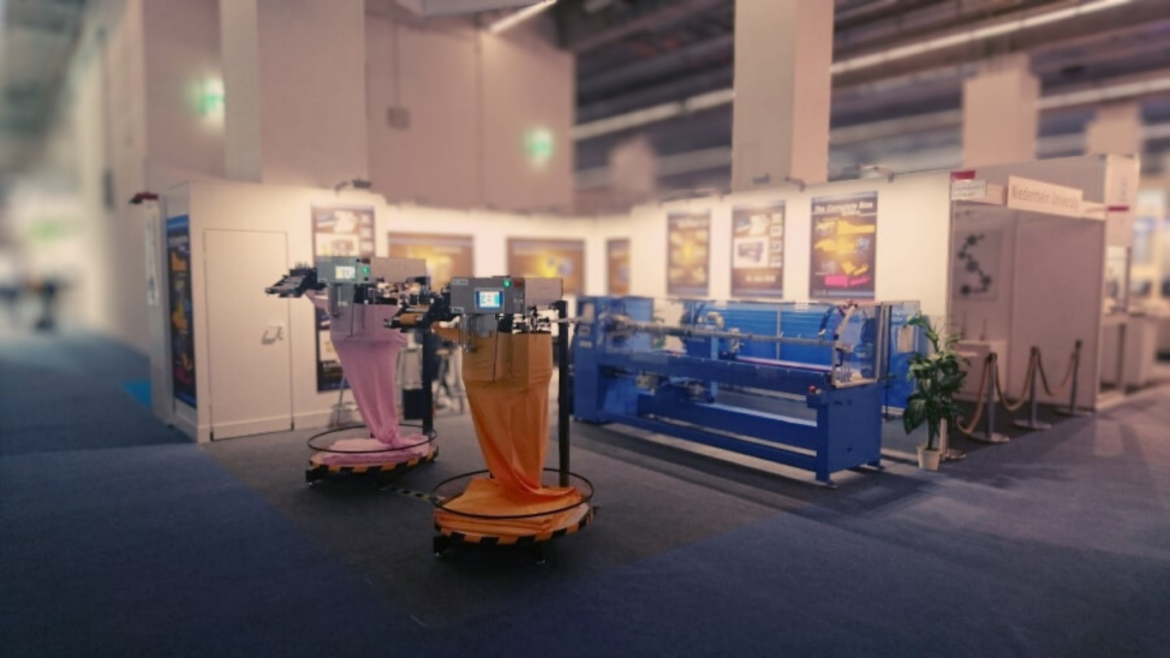
In today’s fast-paced textile industry, precision, speed, and sustainability are no longer optional — they’re essential. That’s why manufacturers around the world are turning to Swedish textile cutting machinery — specifically Svegea, a company that’s been redefining automated cutting solutions since 1952.
Svegea’s Swedish-engineered solutions help manufacturers by focusing on automation, sustainability, and user-friendly design to improve efficiency, reduce waste, and adapt to market demands. Their machines support the creation of smarter, more connected factories through integration with Industry 4.0 principles, making them ideal partners for reshoring efforts and sustainable production goals.
Automation: The Foundation of Competitive Manufacturing
High-Speed Precision Cutting
Svegea’s textile cutting machinery from Sweden is engineered for high-speed, precise cutting, which helps produce consistent quality and faster production times. Every machine is designed to maintain exacting standards even at maximum operational speeds, ensuring that manufacturers can scale production without sacrificing quality.
- EC-450XF Collarette Cutting System: Awarded at Texprocess 2023 for its innovation and sustainability, this fully automatic system delivers high-speed, low-waste performance with precision that’s become the industry benchmark.
- Euro-Collarette Fully Automatic Series: These models feature the intuitive E Drive 2 panel and two-step cutting for multiple bands — ideal for high-volume operations requiring consistent output.
Automated Processes That Reduce Labor Dependency
Svegea integrates automatic tube sewing units for creating sewn tubes in rolled or flat-folded forms, reducing the need for operator assistance and minimizing human error.
- TSU 200 A/AF Tube Sewing Unit: Minimal operator input, maximum efficiency. This system exemplifies how automation enables manufacturers to redirect skilled labor to higher-value tasks.
- Bias Cutter / Winder 200: Smooth unwinding and rewinding into single ply rolls with minimal manual intervention.
- Bias Cutter CMB 1800: Versatile and adaptable across fabric types, streamlining the entire bias binding process.
Supporting Reshoring with Smart Automation
Automation facilitates reshoring operations by making local manufacturing more competitive and efficient. Sweden’s textile cutting machinery industry leads this transformation, offering manufacturers the tools they need to bring production home without sacrificing cost-effectiveness.
Sustainability: Engineering for a Better Future
Precision That Reduces Waste
Precision cutting and automation help maximize fabric usage, minimizing material waste. Svegea’s machines are engineered to optimize every centimeter of fabric, contributing directly to both profitability and environmental responsibility.
- Strip Cutter CMS 1800A2: High-speed cutting for bias tape, trims, and bindings with advanced nesting algorithms that reduce offcut waste.
- TSO 380 G/GF Tubular Knit Slitter: Reduces waste and improves material yield through intelligent cutting patterns.
Energy-Efficient Engineering
Svegea’s machinery is designed to be energy efficient, lowering consumption and environmental impact. Every system is optimized for minimal power draw without compromising performance, making textile cutting machinery from Sweden a smart choice for manufacturers committed to reducing their carbon footprint.
- RRS-800 Fully Automatic Roll Slitting Machine: Offers motorized knife control and adjustable speed for consistent quality while maintaining low energy consumption throughout extended production runs.
Supporting Circular Economy and Recycled Materials
By improving garment durability and promoting longevity through efficient production, Svegea’s machines contribute to a more circular economy. The advanced technology can support the use of recycled materials in production, accommodating the varied characteristics of reclaimed fabrics without compromising cut quality.
- FIM CMI 210 R / ZR Fabric Inspection Machine: Detects defects and inconsistencies in both virgin and recycled materials before they reach the cutting floor, ensuring quality regardless of source.
User-Friendly Design: Versatility Meets Accessibility
Adaptable Across Material Types
The cutting machines can handle a wide range of materials, from delicate silks to heavy-duty industrial textiles. This versatility makes Swedish textile cutting machinery ideal for manufacturers serving diverse market segments.
- SV/BK Band Knife Series: Precision cutting for everything from delicate silks to heavy-duty fabrics, with easily adjustable settings for quick material transitions.
- Strip Cutter FA 500: Heavy-duty and reliable, perfect for long production cycles with materials ranging from PVC to non-woven fabrics.
Quick Changeovers for Maximum Productivity
User-friendly interfaces and the ability to quickly switch between patterns and materials reduce downtime and enhance productivity. The intuitive E Drive 2 control panel makes complex operations accessible to operators at all skill levels.
- Euro-Collarette Semi-Automatic Series: A semi-automatic option that cuts two bands simultaneously, with widths ranging from 16 to 140 mm — changeable in minutes, not hours.
Customization for Niche Applications
Svegea provides custom-specific machines and units for niche applications like bias cutting, and can adapt to diverse customer preferences. This flexibility ensures that whether you’re producing standard collarettes or specialized technical textiles, there’s a solution engineered specifically for your needs.
- W 2100S Fabric Rewinding Machine: Perfect re-rolls every time, with customizable tension and speed settings for different fabric types.
Industry 4.0 Integration: Building Smarter Factories
Sweden’s textile cutting machinery leads the way in smart manufacturing integration. Designed to connect seamlessly with modern factory management software the Svegea system enables:
- Real-time production monitoring and quality control
- Predictive maintenance scheduling to minimize downtime
- Data-driven optimization of cutting patterns and material usage
- Integration with inventory and supply chain management systems
This connectivity transforms individual machines into components of an intelligent manufacturing ecosystem. The result? Long-term competitiveness in an increasingly digital industry.
The Swedish Advantage: Seven Decades of Innovation
Textile cutting machinery from Sweden represents more than a geographic label — it’s a commitment to quality, innovation, and sustainability. Svegea embodies the best of Swedish engineering: meticulous attention to detail, long-term reliability, and environmental responsibility.
Svegea has been serving global textile manufacturers since 1952, continuously innovating to meet the evolving demands of modern production. This heritage of excellence makes Swedish textile cutting machinery a global benchmark for quality, sustainability, and technological advancement.
Ready to Transform Your Production Line?
Experience how premium Swedish textile cutting machinery can revolutionize your operations. Whether you’re looking to reshore production, reduce waste, improve efficiency, or build an Industry 4.0-ready factory, Svegea has the solutions you need.
Explore Svegea’s full range of automated textile solutions at svegea.se. For a personalized product demo and consultation, contact Håkan Steene at h.steene@svegea.se.
Let’s build the future of sustainable, efficient textile manufacturing — together.
Fashion is changing—and fast. Today, being eco-friendly isn’t just a trend. It’s a smart move. People care more about the planet, and they want clothes made responsibly. That’s where fabric innovation comes in. It’s helping fashion brands create better materials and use smarter machines to make clothes in cleaner ways.
Let’s explore how new fabrics and modern machines are working together to build a more sustainable fashion industry.
New Materials, New Possibilities
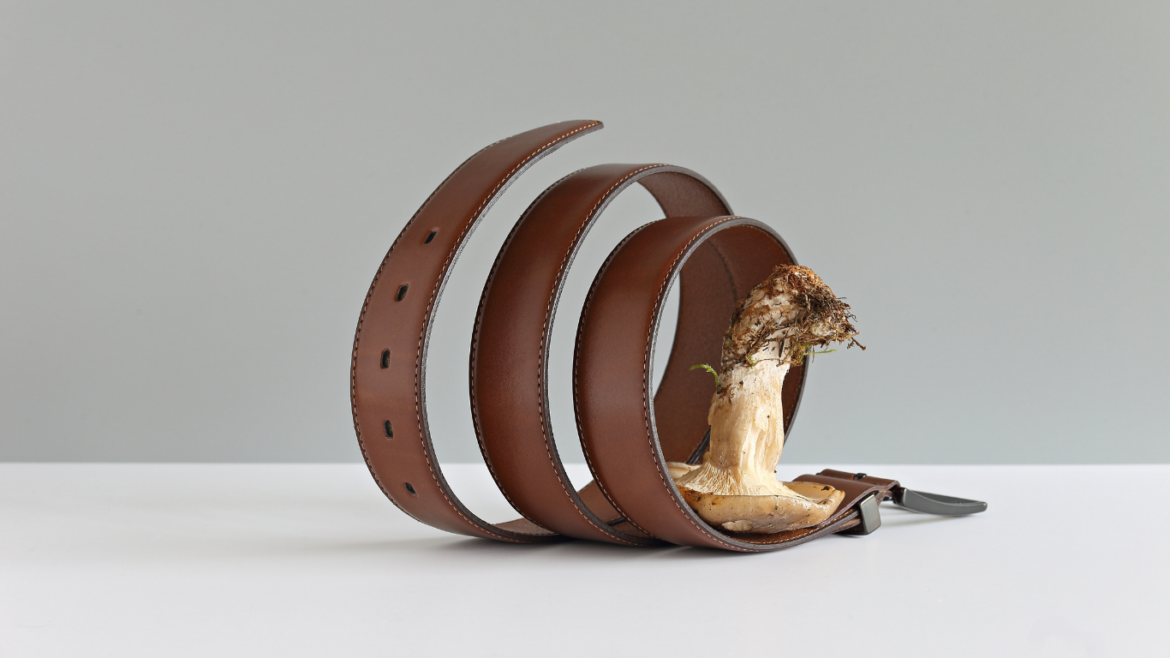
For years, most clothes were made from cotton or polyester. These materials use a lot of water, chemicals, and energy. But now, designers are using things like fruit peels, mushrooms, and even carbon from the air to make fabric.
Here are a few examples:
- Mylo: A soft, leather-like material made from mushroom roots. It feels like real leather but is biodegradable and doesn’t harm animals.
- Orange Fiber: Made from leftover citrus peels. It’s silky and smooth, perfect for dresses and scarves.
- Piñatex: Created from pineapple leaves. It’s strong and flexible, often used in shoes and bags.

These new fabrics are stylish, durable, and better for the environment. They break down naturally and don’t need as many resources to produce. People want to know where their clothes come from, and brands are responding with cleaner, smarter choices.
Machines That Make It Happen
These cool new fabrics wouldn’t exist without the right machines. Today’s textile machines are smarter and greener than ever. They use less water, less energy, and fewer chemicals.
Let’s break down what these machines do:
- Dyeing machines with closed-loop systems: These machines clean and reuse water during the dyeing process. That means less pollution and lower water bills.
- Spinning machines with smart sensors: These sensors adjust the yarn tension automatically. This helps reduce waste and keeps the fabric smooth and strong.
- Aluminum extrusion frames: These lightweight frames make machines faster and easier to maintain. They also use less energy during production.
This is where fabric innovation meets smart engineering. By using better materials and better machines, factories can make high-quality clothes while protecting the planet.
Why Going Green Is Good for Business
Being sustainable isn’t just good for the Earth—it’s good for business too. Brands that use fabric innovation often save money and attract more customers.
Here’s how:
- Lower energy costs: Machines that use less electricity help reduce monthly bills.
- Fewer labor expenses: Automated systems do more work with fewer people, saving time and money.
- Longer-lasting products: Strong, recyclable fabrics mean fewer returns and happier customers.
Also, governments are starting to set stricter rules about waste and pollution. Companies that switch to cleaner methods now will be ready for the future—and avoid fines or delays.
Recycling Clothes: The Circular Fashion Idea
One of the coolest parts of fabric innovation is how it helps with recycling. Instead of throwing old clothes away, companies can now turn them into new fabric.
Here are some exciting developments:
- Fiber-to-fiber recycling: This process breaks down old clothes and spins them into fresh yarn. It keeps materials in use and out of landfills.
- Carbon capture polyester: Some companies are turning carbon dioxide from factory smoke into polyester fabric. It’s a smart way to clean the air and make clothes.
- Lab-grown cotton: Scientists are growing cotton in labs without using farmland or pesticides. It’s clean, safe, and doesn’t harm the soil.
These ideas are already being tested in places like Europe and Asia. They help reduce trash, save resources, and even create new jobs.
Working Together to Make It Work
To make all this happen, people across the fashion world need to team up. Garment manufacturers, fabric developers, and clothing brands must share ideas and work together.
Here’s what that looks like:
- Engineers designing new machines: These machines can handle unusual fabrics like mushroom leather or pineapple fiber.
- Designers experimenting with new styles: They’re testing how these new materials feel, look, and move.
- Factory owners rethinking production: They’re changing how they plan, cut, and ship products to reduce waste and save money.
This teamwork is what makes fabric innovation so powerful. It’s not just about one product—it’s about changing the whole system.
Fashion Innovation is Growing Every Day
If you’re a garment maker, designer, or business owner, this is your moment. The tools are ready. The materials are here. And the demand for sustainable fashion is growing every day.
“At Svegea, we believe fabric innovation is the heartbeat of modern fashion. That’s why we’re constantly evolving our machinery—making it smarter, cleaner, and more adaptable—so garment and textile manufacturers can stay ahead in a fast-changing industry.” — Hakan Steene, Managing Director of Svegea of Sweden
Reach out to Hakan Steene at h.steene@svegea.se to explore how Svegea’s textile machinery can help you lead the way. Whether you’re upgrading your factory or starting fresh, Svegea offers smart solutions that fit your goals—and your budget.

The textile industry is undergoing a digital revolution, and AI in textile manufacturing is at the forefront of this transformation. Artificial intelligence reshapes how textiles are created, manufactured, and distributed, from optimizing design processes to enhancing production efficiency.
AI in Textile Design: Innovation Meets Creativity
AI is revolutionizing textile design by enabling faster, smarter, and more efficient pattern-making. Designers now use AI-powered tools to generate intricate patterns, predict fashion trends, and customize designs based on consumer preferences.
How AI Enhances Textile Design:
-
- Automated Pattern Generation: AI algorithms analyze vast datasets to create unique textile patterns.
- Trend Prediction: Machine learning models forecast upcoming fashion trends, helping designers stay ahead.
- Customization: AI-driven tools allow brands to personalize designs based on customer preferences.
AI in Textile Production: Efficiency and Precision
AI is streamlining textile production by automating processes, reducing waste, and improving quality control. Manufacturers are integrating AI into machinery to optimize operations and enhance productivity.
Key AI Applications in Textile Production:
AI is transforming textile production through targeted, high-impact applications. Automated 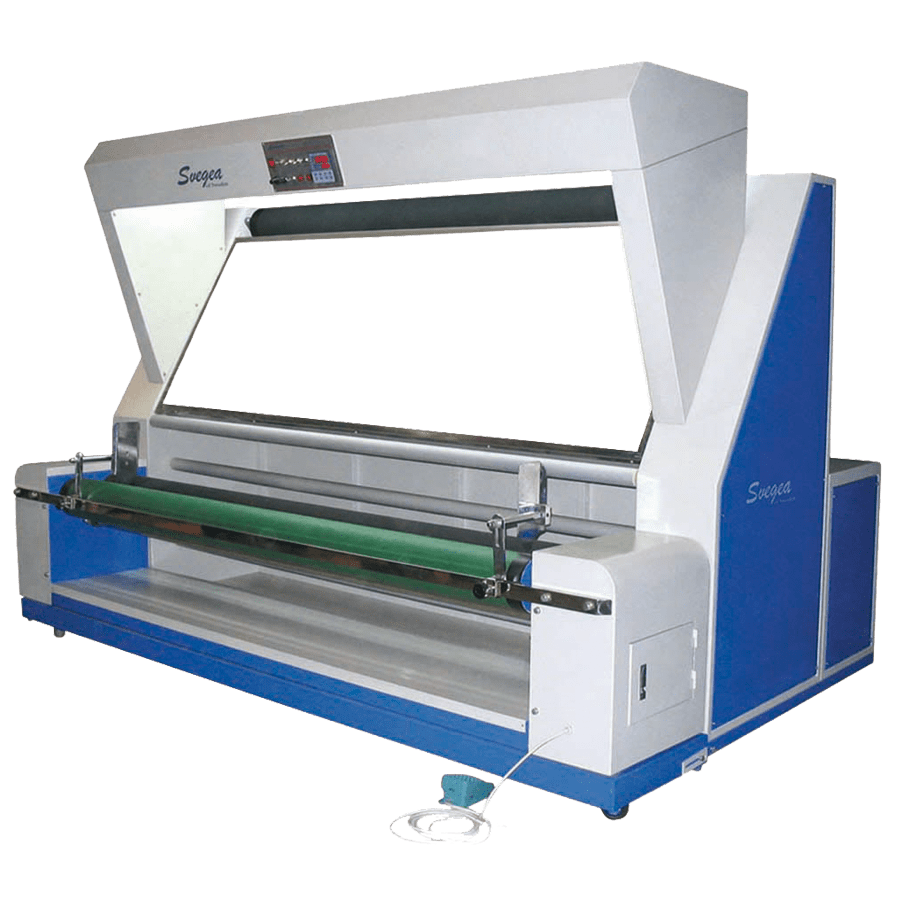 fabric inspection systems now use advanced vision technology to identify defects with precision, ensuring only high-quality materials move forward in the process. On the factory floor, smart manufacturing machines continuously adjust their settings in real time, maximizing efficiency and minimizing downtime. Meanwhile, AI-driven supply chain tools analyze demand patterns and guide resource allocation, keeping operations agile and responsive.
AI-Driven Innovations in the Textile Industry
AI is not just improving efficiency—it’s driving groundbreaking innovations in textile production.
Examples of AI-Driven Innovations:
-
- AI-Powered Smart Textiles: Fabrics embedded with AI sensors for enhanced functionality.
- Predictive Maintenance: AI anticipates machine failures, reducing downtime.
- Eco-Friendly AI Solutions: AI optimizes dyeing processes to minimize environmental impact.
The Future of AI in Textile
AI is transforming the textile industry, making design and production more efficient, sustainable, and innovative. As AI continues to evolve, manufacturers and designers must embrace these advancements to stay competitive.
For more information on AI in textile manufacturing and product demos, contact Hakan Steene at h.steene@svegea.se.

In the competitive garment and textile manufacturing world, efficiency and precision are paramount. Svegea of Sweden, a leader in textile machinery, offers cutting-edge solutions that transform production processes, ensuring higher ROI and safer operations.
Efficiency Meets Innovation
Svegea’s machines are designed to streamline operations and reduce waste. The EC300, known for its precision, ensures consistent quality and faster production times. The Tube Sewing Unit 200A simplifies the creation of bias binding by sewing open fabric into continuous tubular pieces. This innovation minimizes operator assistance while maintaining high productivity.
Adding to their achievements, Svegea received the prestigious New Technology Innovation Award at Texprocess 2023, recognizing the innovative and sustainable design of their textile machinery. Their solutions, such as the award-winning EC-450XF Collarette Cutting System, set benchmarks for precision, efficiency, and eco-friendly manufacturing practices. 
Versatility in Production
Svegea’s Bias-Cutting Systems are ideal for slitting, sewing, and rolling bias-cut fabrics. These systems handle various fabric types, ensuring strong and stretchable materials for diverse applications. Roll Slitting Machines, such as the FA600, offer fully automated solutions for cutting materials like PVC, polyester, and non-wovens.
Customized Solutions for Your Unique Needs
Every garment manufacturer has unique production requirements, and Svegea understands that one size doesn’t fit all. Their ability to customize textile machines to suit your specific needs ensures smarter, more efficient operations. Whether it’s tailoring machinery to fit fabric types, production volumes, or unique manufacturing goals, Svegea provides solutions that seamlessly integrate into your existing workflows. This flexibility makes their machines a smart investment for companies looking to maximize efficiency and adaptability.
Safety and Sustainability
Modern textile machinery prioritizes operator safety and environmental sustainability. Svegea’s machines incorporate intelligent sensors and energy-efficient designs, reducing workplace hazards and supporting eco-friendly practices.
Why Invest in Textile Machinery?
Acquiring advanced machinery is not just an expense—it’s a strategic investment. Svegea’s equipment enhances production efficiency, reduces operational costs, and boosts workforce productivity. With minimal maintenance and optimized resource utilization, these machines guarantee a robust ROI.
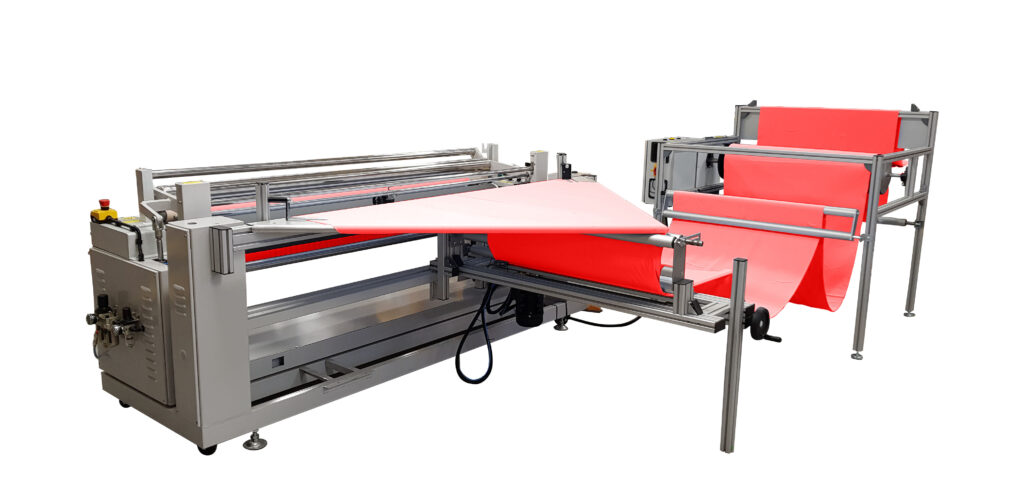 Explore Svegea’s Best-Selling Machines
Svegea’s portfolio includes:
- Collarette Cutters: Precision-driven textile cutting
- Tube Sewing Unit 200A: Seamless bias binding creation
- Bias Cutting Systems: High-speed slitting and rolling
- Roll Slitting Machines: Automated material cutting
Take the Next Step
Ready to elevate your textile manufacturing? Contact Håkan Steene (h.steene@svegea.se) today for a product demo and discover how Svegea’s innovative machinery can revolutionize your operations.
For more details, visit www.svegea.se.

In an era where OOTD (Outfit of the Day) reigns supreme on social media, our relationship with clothing has become increasingly complicated. The fashion industry stands at a crossroads. Fast fashion pulls us one way—slow, sustainable production beckons from another direction. Let’s unzip the truth about these contrasting approaches and explore how quality textile production could be the thread that weaves a more sustainable future.
The True Cost of Fast Fashion: More Than Just a Price Tag
Remember that $5 t-shirt you couldn’t resist? While your wallet might have thanked you, our planet tells a different story. According to the United Nations Environment Programme, the fashion industry accounts for 10% of global carbon emissions and generates 20% of global wastewater. Stop and think about that. It’s more than all international flights and maritime shipping combined! The numbers are staggering. The implications are worse.
Fast fashion’s environmental impact reads like a horror story:
- One cotton shirt requires 2,700 liters of water – enough to keep one person hydrated for 2.5 years
- Synthetic fibers take up to 200 years to decompose
- The industry produces 92 million tons of textile waste annually
But environmental concerns are just the beginning. The human cost of fast fashion includes poor working conditions, minimal wages, and unsafe environments. A 2021 report by the Business & Human Rights Resource Centre revealed over 100 cases of worker exploitation in major fashion brands’ supply chains. These aren’t just statistics. They’re real people’s lives.
The Slow Fashion Revolution: Quality Over Quantity
Think of slow fashion as the farm-to-table movement of the textile world. It’s about creating garments that last. Simple as that. This approach emphasizes quality over quantity, craftsmanship over mass production, and sustainability over quick profits. 
Quality Materials and Craftsmanship
High-quality textile production isn’t just about using better materials. Every thread counts. Manufacturers who invest in quality control and precise cutting techniques create garments that maintain their shape and durability through countless washes. It’s an investment in the future.
Innovation in Sustainable Manufacturing
Small and medium-sized enterprises (SMEs) often lead the way in sustainable innovation. Take Svegea of Sweden, for instance. This family-owned SME has spent decades perfecting bias-cutting technology that significantly reduces fabric waste. Their commitment to quality and sustainability shows how smaller companies can make a big impact. Through continuous innovation and unwavering dedication to quality, such companies prove that sustainable manufacturing isn’t just possible – it’s profitable.

Sustainable Production Methods
Modern textile manufacturing doesn’t have to choose between efficiency and sustainability. Advanced bias cutting machines can reduce fabric waste by up to 15% compared to traditional methods, while maintaining precise, high-quality cuts. Technology and sustainability can work hand in hand. They must.
Fair Labor Practices
Slow fashion emphasizes fair wages and safe working conditions. No compromises. When workers aren’t rushed to meet impossible quotas, they can focus on craftsmanship and quality control. The result? Superior products that last longer.
Making the Transition: A Guide for Manufacturers
Transitioning to sustainable practices isn’t just good for the planet – it’s good for business. A recent McKinsey survey found that 67% of consumers consider the use of sustainable materials an important purchasing factor. The message is clear. The time is now.
Start Small, Think Big
1. Audit your current waste levels and identify areas for improvement
2. Invest in precision cutting technology to reduce fabric waste
3. Train staff in sustainable practices and quality control
4. Consider implementing a circular production model
Embrace Technology Wisely
Modern machinery isn’t just about speed. It’s about precision and efficiency. The right equipment can help reduce waste, improve quality, and maintain consistency while reducing overall production costs. Smart choices lead to better results.
Build Transparency
Document your sustainability journey and share it with customers. Today’s consumers want to know the story behind their clothes. Transparency builds trust. Trust builds loyalty. Loyalty builds success.
The Future is in Our Hands
The fashion industry’s future doesn’t have to be a choice between profitability and sustainability. By focusing on quality textile production, manufacturers can create products that benefit everyone – from workers to consumers to the planet itself. The choice is ours. The time is now.
Want to learn more about sustainable textile production methods or see how modern technology can support your sustainability goals? Visit www.svegea.se to explore innovative solutions for quality textile production. For personalized guidance on implementing sustainable practices in your manufacturing process, reach out to our sustainability expert at h.steene@svegea.se.