
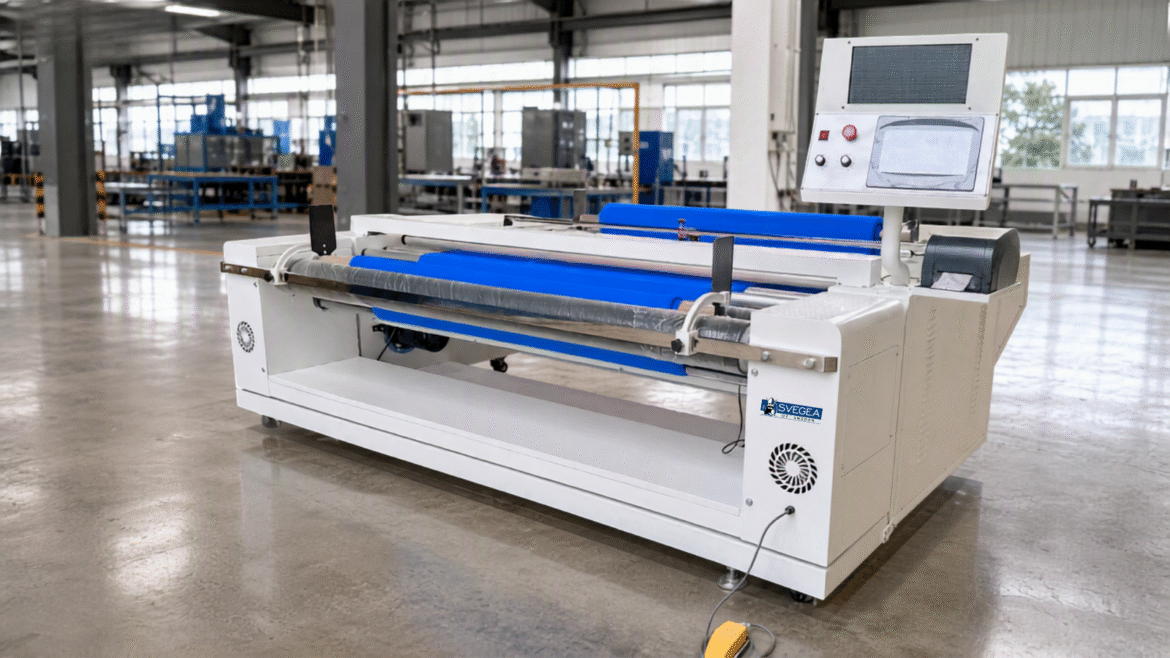
Garment factories are changing faster than most buyers realize. Machines now handle jobs that used to take several pairs of hands, and cutting rooms are quietly becoming the most technical part of the whole production line. For manufacturers planning capacity for 2027, that shift is worth understanding now.
The top textile manufacturing trends for 2027 are automation in trim and collarette production, gentler air-based fabric relaxing, waste reduction built into the cutting process, and modular machines that adapt to more than one job. Together, these trends point toward factories that produce more, waste less, and rely less on manual labor to stay consistent.
What Is Driving Automation in Textile Trims?
Labor costs are rising, and buyers expect tighter quality control than ever before. Because of this, semi-automatic trim machines are becoming standard rather than a premium upgrade. A machine like the EC50 Semi-Automaticlets one operator load fabric and start a cutting cycle that runs on its own, cutting labor time without cutting corners on precision.
The payoff shows up in the numbers. According to a 2026 garment manufacturing market report, automation in stitching and cutting has already improved productivity by 18% and reduced waste by 11% industry-wide. That kind of gain is hard to ignore for factories competing on both speed and cost.
High-precision collarette machines are following the same path. The EC300 Euro Collarette is built to hold consistent trim width across long runs, which matters more as brands demand uniform quality across bigger batches.
How Is Fabric Relaxing Getting Gentler?
Fabric that’s cut under tension often shrinks or distorts later, and that problem has quietly cost manufacturers money for years. In 2027, expect more factories to add a relaxing step before cutting, and to do it with less mechanical stress on the fabric.
Air-based relaxing is leading that change. The CRX Air Relaxing Series uses contact-free air technology instead of rollers, which reduces distortion in delicate knits. It’s a small step in the process, but it prevents costly rework further down the line.
Why Is Waste Reduction Now a Core Trend, Not an Afterthought?
Sustainability pressure isn’t new, but it’s becoming more concrete. Fabric waste is being treated as a production cost to eliminate, not just an environmental talking point. Systems that combine cutting, folding, and winding in one pass – like the Complete Bias System – cut down on offcuts and reduce the handling steps where fabric typically gets damaged or wasted.
This trend also connects back to relaxing and trim precision. A cleanly relaxed, evenly cut fabric produces fewer rejected panels, and fewer rejected panels means less fabric bought and discarded in the first place.
Why Are Modular, Accessory-Based Machines Gaining Ground?
Manufacturers no longer want a machine that does one job well. They want equipment that adapts as orders change. Accessory kits, like the ones now available for the EC200C, let a single collarette machine produce multiple trim widths and styles without buying separate equipment for each style.
This flexibility matters most for mid-size manufacturers, who need to serve varied customer demands without the capital cost of a large, specialized machine fleet.
What This Means for Your Production Line
None of these trends work in isolation. Automation improves speed, gentler relaxing protects fabric quality, waste reduction protects margins, and modular machines protect flexibility. Manufacturers who treat these as one connected strategy – rather than four separate purchases – will be better positioned heading into 2027.
If you’re mapping out equipment upgrades for the year ahead, contact the Svegea team to talk through which machines fit your production line.
FAQ
- What is the biggest textile manufacturing trend for 2027?
Automation in trim and cutting is the trend with the broadest impact, since it affects speed, labor cost, and consistency at once. - Does automation reduce fabric waste?
Yes. Automated, precision-cut trims and relaxed fabric both reduce the number of rejected panels, which lowers overall fabric waste. - What is fabric relaxing and why does it matter?
Fabric relaxing removes tension from a fabric roll before cutting. It’s important because fabric cut under tension tends to shrink or shift shape after cutting, causing quality issues later. - Are modular machines worth it for smaller manufacturers?
Often, yes. A modular machine with accessory kits can replace several single-purpose machines, which lowers equipment costs for manufacturers producing varied trim styles. - How can I prepare my factory for these 2027 trends?
Start by identifying where manual handling causes the most waste or inconsistency – usually trim cutting or fabric relaxing – and evaluate equipment built for that specific step.

Autumn is creeping back in, and with it, the trench coat is coming out of storage again. Scroll through any fashion feed right now and you’ll see it: belted, oversized, thrown over a slip dress or buttoned up over a suit. It never really goes away, but every September it seems to reintroduce itself as the season’s must-have layer.
We’ve watched this coat cycle through fashion for years from our side of the industry — the manufacturing side. And here’s the thing most style articles won’t tell you: the reason a good trench coat still looks sharp after a decade of wear has almost nothing to do with the belt or the buttons everyone photographs. It’s buried inside the collar, the lapel, and the lining, in a set of narrow fabric strips most wearers never think about.
A Coat Built Like a Small Structure
Thomas Burberry patented gabardine back in 1879, engineering it specifically to be waterproof without the stiffness of rubberized rainwear. That original goal — weather resistance without bulk — is still what separates a real trench coat from a coat-shaped raincoat. But weatherproof fabric alone doesn’t explain why a well-made trench holds its collar stand or keeps its lapels from curling after years of use.
That comes down to internal reinforcement: collar stays, lapel interlining, and the strapping used for belts and epaulettes. Unlike a lightweight dress or blouse, a trench coat carries real structural weight. Heavy gabardine, dense twill, sometimes multiple bonded layers — none of it behaves the way thin fabric does under a sewing machine, and none of it forgives sloppy internal construction.
So while the outer fabric gets all the design credit, it’s these hidden strips of interlining and tape that decide whether the coat ages gracefully or starts sagging at the shoulders by its second winter.
What Those Hidden Strips Actually Do
A few things happen when a manufacturer gets this part right:
- The collar stands up crisply instead of collapsing, even on a heavy double-layered lapel.
- Belt loops and cuff straps stay straight and don’t twist over time.
- The fabric doesn’t fray internally where it’s under the most tension — shoulders, waist, collar edge.
- The coat keeps its shape wash after wash, season after season.
None of this shows up in a product photo. You notice it later, the first time you flip your collar up against a cold wind and it actually stays put.
Where Hand-Cutting Runs Out of Road
A skilled tailor working on a single bespoke coat can cut collar stays and waist strapping by hand, with shears and a steady eye. It works, at that scale.
It doesn’t work at factory scale. Once a manufacturer is producing thousands of coats a season, hand-slitting heavy rolls introduces the kind of inconsistency that ruins a production run: frayed edges from blade friction, strips that come out a millimeter or two off-width, automated sewing lines thrown out of alignment because the input material isn’t uniform. Multiply a small error by ten thousand units and it stops being small.
This is the point where most outerwear manufacturers move to dedicated slitting equipment. And it’s the part of the process we spend most of our time thinking about.
Where We Come In
At Svegea, we build roll slitting and band cutting machines designed around exactly this problem: cutting dense, heavy fabric into narrow, consistent strips without the fraying, stretching, or width drift that ruins a production batch.
A few things our machines are built to handle:
1. Consistent width across the whole roll. The strip you cut at meter one should match the strip at meter one thousand.
2. Clean edges on dense material. Automatic blade sharpening keeps friction and heat from fraying heavier fabrics like gabardine or bonded interlining.
3. Tension control that doesn’t distort the weave. Heavy woven fabric under the wrong tension stretches unevenly, and that shows up later as puckering.
We didn’t design this equipment with trench coats specifically in mind — it’s used across tailored blazers, technical rainwear, and industrial textiles too — but outerwear is where the margin for error is smallest. Dark, structured coats show every flaw in daylight.
The Part Nobody Photographs
There’s a reason this kind of detail rarely makes it into a fashion write-up. It’s not glamorous. Nobody’s Instagramming a roll of interlining tape. But it’s the difference between a coat that’s still in rotation a decade from now and one that’s in a donation bag by next spring.
If you’re on the manufacturing side and dealing with fraying, width inconsistency, or waste on heavy-fabric roll slitting, it’s worth a conversation — we’ve spent a long time solving exactly this problem. You can reach our engineering team through svegea.se, or explore the equipment lineup on the same site.
Either way, next time you flip up a trench coat collar against the wind, you’ll know what’s actually holding it there.
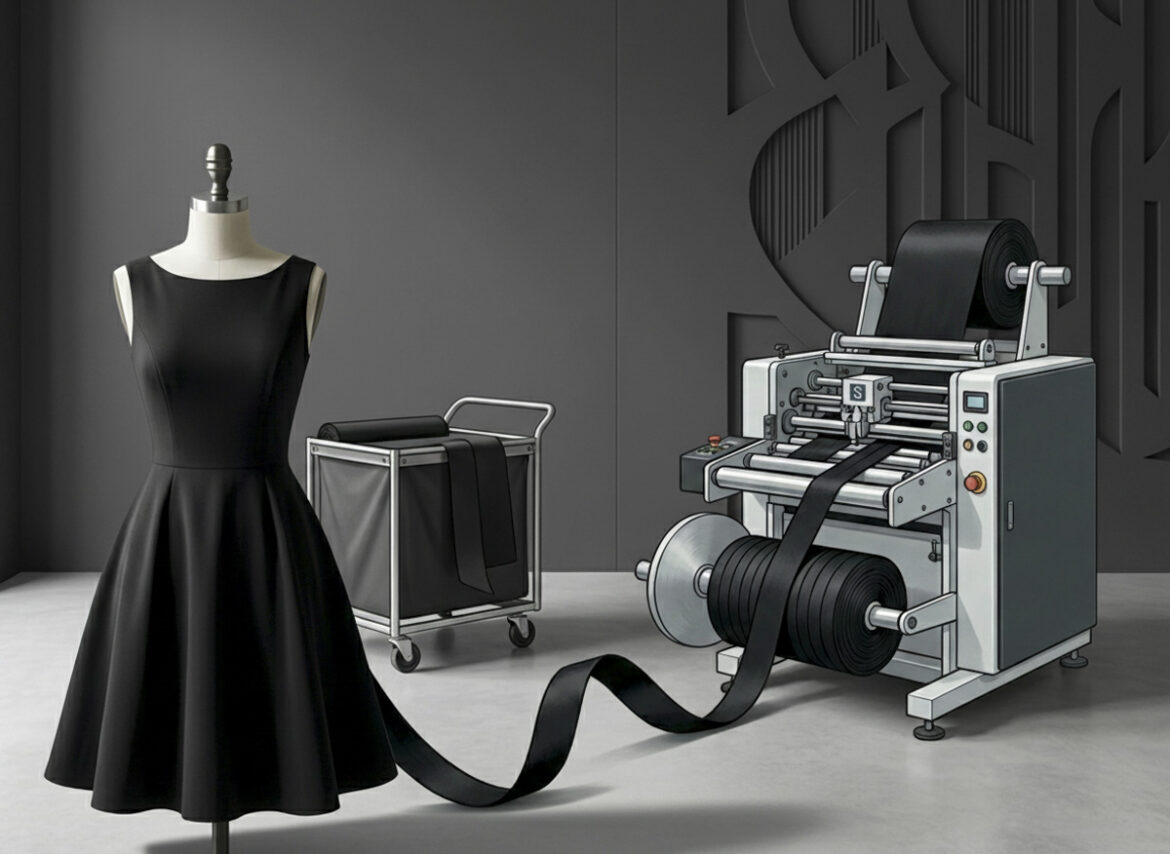
Little did Givenchy know that the little black dress he designed for Audrey Hepburn would become an essential piece in nearly every woman’s wardrobe, generations after Breakfast at Tiffany’s first hit the screen.
The Little Black Dress, or LBD, has since become fashion’s great equalizer — a single garment that flatters every shape, suits every occasion, and never goes out of style. It gets you through a chaotic morning, an unplanned dinner date, or a job interview with equal ease. Match it with a denim jacket and flats for class, add a statement necklace for a night out, or pair it with a tailored blazer to walk into an interview with confidence. Few garments do so much with so little.
But here’s what almost no one talks about when they praise the LBD’s timeless silhouette: why does a well-made black dress hold its shape, drape cleanly around the neckline, and outlast a decade of wear — while a cheaper version puckers, frays, and loses its form after a few washes?
The answer isn’t the fabric. It isn’t even the cut. It’s what happens at the edges.
The Finishing Technique You Never Notice — Until It’s Missing
Every curved seam, every clean neckline, every armhole that sits flat against the skin instead of gapping or rolling — all of it depends on a technique called bias binding.
Bias binding is a strip of fabric cut on the diagonal, or “bias,” of the material rather than along the straight grain. Cutting fabric this way gives the strip natural stretch and flexibility, which means it can wrap smoothly around curves — necklines, armholes, hems — without puckering or stretching out of shape. It’s the difference between a seam that looks handmade and one that looks engineered.
In garment manufacturing, bias binding does more than finish an edge. It:
- Reinforces stress points so seams don’t tear under movement
- Hides raw edges for a clean, professional interior finish
- Adds structure to curved lines that straight-grain fabric simply can’t follow
- Extends the garment’s lifespan, which is exactly why a well-made LBD from ten years ago can still look as sharp as the day you bought it
It’s a small detail with an outsized effect on perceived quality — the kind of thing a customer can’t always name, but instantly feels when they try on a dress that’s been finished properly.
From Sewing Room to Factory Floor
Home sewists can easily cut bias tape by hand. A simple fold, a quick press with an iron, and they’re done. But scale that up to a commercial factory. Imagine producing thousands of little black dresses every single season.
At that volume, manual cutting fails instantly. Speed drops. Fabric waste spikes. Consistency disappears completely. Manufacturers need a real engineered solution.
That’s where Svegea of Sweden enters the picture. We’ve spent decades perfecting industrial bias binding systems.
Engineers built Svegea’s Bias System specifically for garment manufacturing automation. At full production scale, it transforms massive fabric rolls into continuously sewn bias binding.
The process starts fast. First, the Tube Sewing Unit transforms open fabric into a continuous tubular piece. Next, the Bias Cutter and Winder opens and rewinds the material into an open-width roll. This prepares the fabric for precise slitting. The system handles everything smoothly, cutting delicate 6mm trims as easily as wide structural bindings for heavy fabrics.
The result? Perfect bias binding from the first meter to the ten-thousandth. No manual process can compete with that level of accuracy.
Why This Matters Beyond the LBD
Bias binding isn’t just for little black dresses. It shows up everywhere garments need clean, durable, curve-friendly finishes. You’ll find it on blouses, activewear, and children’s clothing. It even elevates non-apparel items like bags and home textiles.
Still, the classic LBD remains the ultimate quality test. Buyers expect to wear it for years. Its dark color exposes every single flaw in construction, leaving zero room for sloppy seams.
That’s what separates cheap clothing from true quality. One piece looks nice on a hanger. The other still looks pristine after fifty washes.
It all comes down to finishing. Top manufacturers rely on precision textile cutting systems to guarantee flawless results every time.
The same logic applies across the entire factory floor. Modern facilities deploy collarette cutters for waistbands and roll slitters for large fabric rolls. Precision machinery eliminates human error, keeps waste low, and guarantees consistent quality across every batch.
The Takeaway
The next time you slip into a little black dress that fits like a dream—just like the day you bought it—you’re rocking pure engineering genius. That pristine neckline and those crisp, fray-free seams surviving a decade in rotation don’t happen by accident. Every iconic silhouette relies on high-precision manufacturing, where seamless consistency turns basic threads into forever fashion.
Svegea’s Bias System and cutting machines give garment manufacturers a distinct competitive advantage through unmatched precision.

The Silent Language of Textiles
TL;DR: Touch is the first sense you ever develop, and fabric never stops talking to it. Long after you’ve stopped noticing color or cut, texture is still quietly running the show, calming a classroom, steadying a hospital ward, convincing a hotel guest they’ve arrived somewhere special. The science backs this up. So does the machinery that keeps a fabric’s feel consistent, batch after batch.
Touch Talks First, and It Never Really Stops
Run your hand across cashmere, then linen, then a coarse wool blanket. You don’t need a vocabulary lesson to know how each one makes you feel. Your body reacts before your brain finishes the sentence.
That’s not a coincidence. It’s a nine-month head start.
Touch is the first sense to develop in the womb, arriving around the eighth week of gestation, well before sight, hearing, or the ability to have an opinion about anything. Sensory receptors wake up first around the mouth and nose, then spread across the rest of the body over the following weeks. By the time a baby takes its first breath, touch already has months of practice logged. Fabric just keeps that conversation going.
Why Texture Beats Color to the Punch
Marketing teams love a good color story, and fair enough, color is loud and photogenic. But texture works in a quieter room: your nervous system, which reacts before your conscious mind gets a vote.
A 2024 study in PLOS ONE measured how tactile sensitivity shapes the way people rate fabric texture, confirming what mills have long suspected by feel alone: touch perception can be measured and predicted, not just guessed at.
Research published in the Spanish Journal of Marketing pushed the point further. After interviewing industry experts, the authors found that of the four qualities people notice by touch- texture, weight, temperature, and hardness- texture dominates how a product gets judged in someone’s hands. Shoppers decide with their fingertips. Their brains just write the caption afterward.
Where This Actually Plays Out
Picture a classroom in soft, breathable uniforms. Kids fidget less and focus more, because nothing scratchy is competing for their attention. Picture a hospital bed dressed in gentle linens instead of stiff, clinical ones. Shoulders drop a little faster. Picture a five-star hotel robe with real weight to it, sheets with a thread count you can feel before anyone announces the number. The room has already made its case before a single staff member says a word.
None of that happens by accident. It happens because someone understood that texture does emotional work whether a brand plans for it or not.
A World Woven in Texture
Travel far enough and texture starts speaking in dialects. Silk carries centuries of ceremony in Japan. Kente cloth, hand-woven in raised patterns across West Africa, tells stories of heritage and status that a photo alone can’t capture. Dense wool in Scandinavia is less a style choice than a survival strategy that eventually became culture, resilience spun into every fiber to get through a brutal winter.
These aren’t just materials. They’re identities, worn on the body and handed down.
The Blind Spot Nobody’s Solved Yet
E-commerce cracked color, cracked fit charts, mostly cracked video. It has not cracked touch. Researchers testing simulated haptic feedback in online apparel shopping found that screens still can’t replicate the confidence a customer gets from actually handling a fabric. Until touchscreens catch up, the only honest way to sell texture online is to describe it relentlessly: fiber content, weight, weave, finish, and photography that doesn’t oversell the hand-feel it can’t actually deliver.
The Unglamorous Part Nobody Photographs
Here’s the part that never makes the mood board: none of the feelings above survive an inconsistent production line. A designer can imagine the perfect hand-feel for a fabric, but if the machinery behind it drifts from batch to batch, that feeling never reaches the person wearing it.
That’s the role Svegea of Sweden plays, and it’s a deliberately unglamorous one. We don’t design the emotional experience of a textile; the manufacturers do that. What precision engineering does is make sure the texture a designer imagined is the texture that actually ships, consistently, so mills can spend their energy on the parts that require imagination instead of fighting variance on the floor.
The Actual Point
Stop designing only for how a fabric photographs. Start designing for how it will feel against skin, in the middle of an ordinary Tuesday, when nobody’s paying attention and the fabric is doing its job anyway. Texture is already telling a story. The only real choice is whether you’re the one writing it.
To talk through what consistent, imagination-ready production could look like for your line, reach out to Håkan Steene directly at h.steene@svegea.se, or visit www.svegea.se.

Cut a length of tubular knit fabric, lay the panels out, and something looks off. The pieces don’t quite sit on the grain. Sleeves twist slightly after the first wash. Quality control flags the batch, and nobody can point to one clear mistake.
This is fabric distortion, and it is one of the more common, least understood problems in cutting rooms that work with knits. The good news is that distortion is rarely random. It follows patterns, and those patterns can usually be traced back to tension, handling, and the cutting method itself.
|
TL;DR: Knit fabric distortion (bowing and skewing) usually starts before the fabric reaches the cutting table, in knitting, dyeing, or finishing. But the cutting method can make it worse or help contain it. Tubular knits are especially prone to skew once they are slit open and spread flat for cutting. Circumferential cutting, which works the fabric in the round, skips that extra handling step and helps the grain stay aligned. |
What Bowing and Skewing Actually Mean
Distortion in knit fabric usually shows up as one of two defects. Bowing happens when the courses, the horizontal rows of loops in a knit, curve into an arc across the fabric width instead of running straight. Skewing is different: the courses stay straight, but they tilt, so one side of the fabric runs ahead of the other. According to Textile Learner, both defects are graded by how far the courses deviate from a line perpendicular to the fabric’s selvage, and both get harder to spot on solid colors than on stripes or prints, where the distortion becomes visually obvious.
Where the Tension Really Starts
Most distortion is introduced long before a roll reaches the cutting table. The knitting machine’s take-up mechanism can pull fabric unevenly across its width, and that unevenness carries through to finishing. During dyeing and finishing, fabric is pulled through rollers and tenter frames under tension, and if that tension is not distributed evenly from edge to edge, bowing or skewing is the result, as Apparel Science and Textile Learner both document.
Handling at the cutting stage matters too. Fabric that is spread and cut under tension, straight off the roll, tends to relax back into a different shape once it is off the table. This is exactly why many cutting rooms build in a relaxation period, letting the fabric sit unrolled for a few hours before it is cut, particularly for stretch fabrics with spandex or Lycra content, where relaxation shrinkage is more pronounced.
Why Tubular Knits Are Especially Vulnerable
Circular knit fabric is produced as a seamless tube. For many cutting operations, this tube is slit open along one edge and spread flat. This extra step introduces skew by placing uneven tension across the fabric, adding to existing knitting or finishing distortions.
Processing fabric in the round avoids slitting and holds grain alignment much better. For example, Svegea’s Euro-Collarette range cuts bindings and collarette bands directly from tubular fabric without opening or flattening it first. While it can’t fix pre-existing fabric distortion, it eliminates a key handling step that often makes the problem worse.
How to Check Your Own Line for Distortion
Distortion is measured formally under ASTM D3882, the standard test method for bow and skew in woven and knitted fabrics. It works by comparing the actual path of a course (or a filling yarn, in woven fabric) against a straight line perpendicular to the selvage, and expressing the gap as a percentage of fabric width.
A quick in-house check does not need lab equipment. Make a small nick perpendicular to the selvage and tear the fabric across its width. On fabric that is square, the tear runs in a straight line. A curved tear points to bowing, and a diagonal tear points to skew. Because distortion can worsen along the length of a roll, it is worth repeating the check at several points, not just at the start.
What It Costs When Distortion Goes Unchecked
Unchecked distortion hits your bottom line downstream, long after fabric leaves the cutting table. When workers mark pattern pieces against a distorted grain line, the pieces twist out of alignment during sewing. Panels might look perfect on the table, but the finished garment pulls, warps, or sags after its first wash as the fabric relaxes into its true shape. For manufacturers running tight margins on knitwear, these flaws trigger costly rework, wasted fabric, and customer returns. None of these expenses surface on the cutting room floor until fixing them becomes far too expensive.
A Process Question First
Controlling distortion depends more on process discipline than on raw equipment power. Proper tension control, fabric relaxation, and minimal handling ensure fabric stability.Process matters. When working with tubular knits, manufacturers must evaluate whether their handling opens and flattens the tube more than necessary.
Bowing and skew can quickly disrupt a tubular knit line. If you are facing these issues or want to optimize your fabric preparation before cutting, reach out to Svegea. Håkan Steene can evaluate your setup and talk through solutions with you. Contact him directly at h.steene@svegea.se.

TL;DR
Garment manufacturers can significantly reduce textile waste and improve fabric utilization by implementing advanced material optimization strategies. Traditional methods often cause material distortion and feeding errors, leading to high downstream rejects. Upgrading to advanced slitting and cutting systems with synchronized feeding—such as the Svegea CMS 1800A2 and Euro-Collarette series—ensures precision fabric cutting and minimizes costly edge scrap.
Material costs are the largest single expenditure in garment manufacturing, often accounting for up to 60% of total production expenses. Despite this financial weight, typical cutting room operations still generate substantial amounts of fabric scrap. When factories mismanage fabric utilization in garment manufacturing, they face a dual penalty: tight profit margins shrink further, and environmental footprints expand.
To break this cycle, forward-thinking manufacturers are moving away from passive handling. They are adopting active material optimization strategies instead. This shift requires an understanding of how raw textiles behave under mechanical stress. It also requires deploying advanced precision fabric-cutting hardware to prevent waste before it happens.
The True Cost of Downstream Fabric Waste
Many factory managers view fabric waste as an inevitable byproduct of the cutting room floor. However, a significant portion of this waste stems from mechanical inaccuracies during initial processing. When raw fabric rolls are sliced into component strips or binding bands, traditional machinery often pulls the material unevenly.
This tension creates minor distortions across the textile web. While these imperfections may seem negligible at first glance, they manifest as major defects during downstream sewing. Stretched or misaligned fabric strips cause skewed seams, puckering, and uneven collars. Consequently, quality control teams must reject the finished garments.
By addressing material distortion at the source, manufacturers can prevent these costly errors. According to industry studies on sustainable manufacturing from organizations like the Ellen MacArthur Foundation, optimizing raw material processing is the most effective way to eliminate industrial textile waste.
The Role of Synchronized Feeding in Fabric Utilization
How do modern production facilities achieve perfect alignment without wasting valuable material? The answer lies in automated, synchronized feeding mechanisms.
When a cutting system pulls fabric from a roll or fold without precise speed regulation, the material stretches. Knitted fabrics are especially vulnerable to this tension, which alters their natural relaxation state. High-yield textile machinery solves this issue by matching the feeding speed exactly with the cutting mechanism speed.
[Fabric Roll Supply] —> (Automated Speed Sync) —> [Precision Cutting Blade] —> Zero-Tension StripSynchronized feeding ensures the textile remains completely relaxed as it meets the blade. This precision eliminates the traditional “buffer zone”—the extra material managers typically add to accommodate fabric shrinkage or shifting. By removing this buffer, factories achieve tighter nesting patterns and significantly improve overall fabric utilization.
Engineering Precision into the Cutting Room
Achieving high-yield textile production requires mechanical stability and smart automation. Manual cutting processes are simply too variable to meet modern tolerance requirements. To achieve repeatable precision, manufacturers rely on specialized systems designed for specific cutting challenges.
Roll Slitting and Strip Cutting Efficiency
For operations that process woven or synthetic rolls into binding strips, the stability of the blade and carriage is critical. Advanced units utilize automated Programmable Logic Controller (PLC) systems to manage the knife carriage movement. This technology allows operators to pre-program exact dimensions, ensuring that every cut remains identical from the first meter to the last.
For example, equipment like the Svegea CMS 1800A2 Strip Cutter uses an enclosed knife carriage and digital settings to deliver clean cuts across widths ranging from 5 mm to 1800 mm. This versatility allows factories to maximize the use of every roll, converting edge scrap into usable product components.
Eliminating Waste in Tubular Knit Processing
Tubular knitted fabrics present unique handling challenges due to their inherent elasticity. Standard cutting methods often flatten and distort the tube, leading to uneven edges and wasted center sections.
Advanced options like the Svegea Euro-Collarette Series overcome this issue by utilizing specialized internal fabric guides and variable speed controls. Systems such as the fully automatic Euro-Collarette 200CS feature electronic soft start and stop functions. This feature prevents the initial fabric jerk that frequently ruins the first few meters of a run.
By maintaining uniform tension throughout the entire cutting cycle, these specialized collarette cutters allow manufacturers to extract maximum material value with virtually zero waste.
The Financial Impact of High-Yield Machinery
Upgrading to high-yield machinery alters the financial landscape of a garment factory. When you reduce textile waste by even a small percentage, the cumulative savings over a fiscal year can be substantial.
| Operational Metric | Legacy Cutting Systems | Advanced Optimized Machinery |
| Average Material Waste Rate | 8% – 12% | Less than 2% |
| Fabric Tension Control | Manual / Unsynchronized | Automated PLC / Speed Synchronized |
| Downstream Reject Rates | Moderate (due to strip distortion) | Exceptionally Low (consistent dimensions) |
| Setup and Changeover Time | High (manual scaling and resets) | Low (pre-programmed digital recipes) |
Minimizing waste also helps manufacturers comply with increasingly strict international environmental standards. The European Environment Agency continues to push for circularity and waste reduction within the textile sector. Adopting advanced cutting technology helps brands meet these regulatory demands while simultaneously lowering their raw material procurement costs.
Strategic Implementation for Factory Managers
Transitioning to an optimized, low-waste cutting room requires a systematic approach. Factory managers should begin by auditing their current waste streams to identify where the largest volume of scrap occurs. If the majority of scrap consists of uneven roll edges or distorted binding strips, the mechanical feeding system is likely the root cause.
Investing in machinery that features automated speed synchronization, robust blade guidance, and flexible width adjustments will solve these issues. Furthermore, choosing systems with intuitive digital interfaces ensures that operators can switch between different fabric profiles quickly and accurately, reducing human error during setup.
Optimize Your Production Yield
Reducing textile waste requires the right balance of mechanical precision and automated control. If you want to eliminate material distortion, improve your fabric utilization, and protect your manufacturing margins, upgrading your cutting room infrastructure is a critical next step.
For expert guidance on selecting the ideal slitting or collarette cutting configuration for your facility, contact Håkan Steene at h.steene@svegea.se to discuss your specific technical requirements.
TL;DR
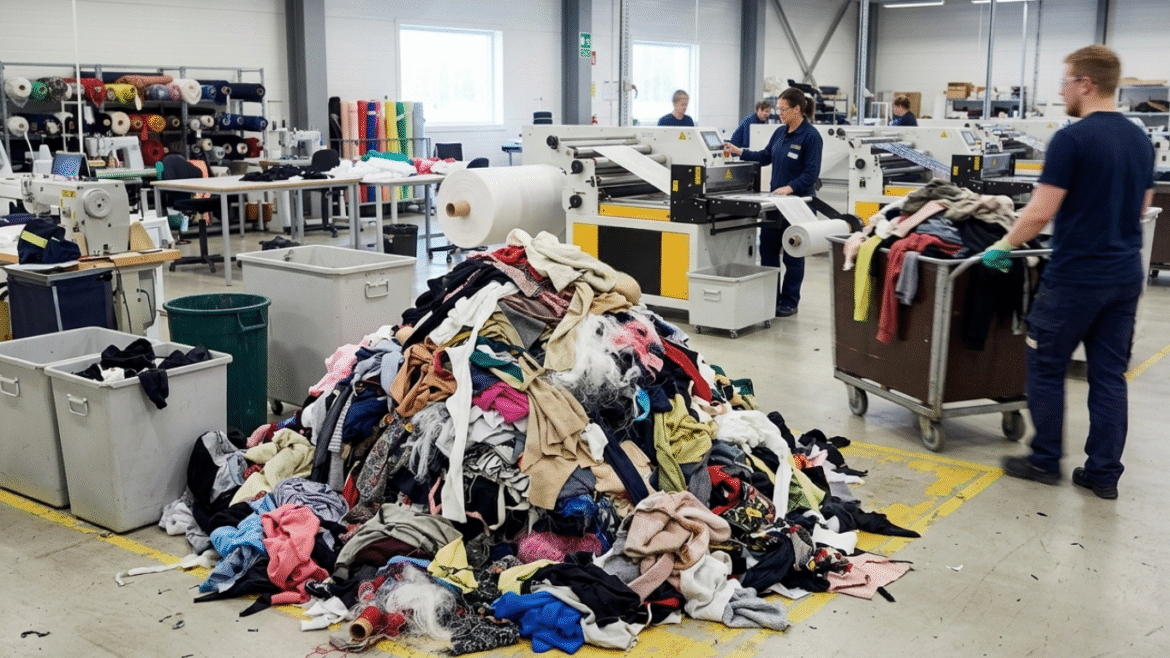
Cutting rooms routinely lose 10-15% of raw material to scrap, and some estimates run even higher. Active material optimization tackles this head-on. Synchronized feeding, precision fabric cutting, and tight tension control let facilities keep more of the fabric they pay for. The payoff isn’t just a smaller waste pile — it’s fewer downstream rejects and a healthier margin on every roll.
Material costs eat up more than half the total production budget in apparel manufacturing. Yet the cutting room — the single biggest opportunity to control that cost — is still where factories lose the most. Manual layouts, inconsistent tension, and operator guesswork have turned scrap into something everyone accepts.
That tolerance is getting harder to justify. Researchers tracking cut-and-sew waste across the apparel supply chain put the number at roughly 10-15% of fabric discarded before it ever becomes a garment. This figure traces back to sustainability researcher Timo Rissanen and has held up across more recent industry reviews. A separate fact sheet on clothing and textile waste puts a similar figure on how much delivered fabric ends up on the cutting room floor (resource.stopwaste.org/fact-sheet/clothing-and-textiles). Multiply either number across a full production run, and the math stops being a rounding error.
Active material optimization is how factories claw that margin back. It pairs automated material handling with precision cutting technology so scrap gets designed out of the process instead of cleaned up after the fact.
What Fabric Scrap Actually Costs You
Every offcut and rejected panel costs a factory twice. First, you’ve already paid for material that never becomes a finished garment. Second, someone still has to handle and dispose of it — that’s labor and disposal fees on top of the wasted fabric itself.
The bigger issue is what bad cutting does further down the line. When tension drifts during cutting, panels warp slightly — not enough to catch in a quick inspection, but enough to pull unevenly once stitched. That mismatch shows up at the sewing stage as a reject, and now you’re paying to recut from fresh stock and eating the labor twice.
What “Active” Optimization Actually Means
Most cutting rooms run reactively: feed the roll in, let the operator adjust for wrinkles or tension shifts as they show up. Active material optimization flips that. Instead of reacting to problems after they appear, automated systems monitor and stabilize the material continuously through the cut.
Getting there means controlling three things at once:
- Mechanical alignment — keeping material square (or precisely on the bias) relative to the blade
- Tension control — preventing the stretch or compression that rollers introduce as fabric moves through the line
- Dimensional consistency — the same component width from the first meter of a roll to the last
Nail these three, and you can tighten margins between components, compress nesting layouts, and cut wide-trim waste dramatically.
Synchronized Feeding: Where Tension Control Actually Happens
Knitted and elastic fabrics are the hardest to get right. They stretch under the slightest pull, and if a blade cuts fabric while it’s under tension, the material snaps back to its relaxed shape the moment it’s released — and that snap-back is where dimensional errors come from.
Fabric under tension → cut applied → fabric relaxes → dimensional inaccuracy / scrap
Synchronized feeding solves this by locking the speed of the fabric source — a turntable, a roll support — to the speed of the cutting head itself. Svegea’s True-Drive II system, for example, uses electronic synchronization to remove physical pull on the material entirely, so fabric reaches the blade already relaxed. Cut on true dimensions instead of stretched ones, and the downstream warping that ruins components simply doesn’t happen.
Precision Fabric Cutting, By Machine Design
High-yield cutting machinery is the most direct lever a factory has for pulling waste out of the cutting room. It replaces manual guesswork with mechanical consistency.
The Svegea CMS 1800A2 Strip Cutter is a good example of what that looks like in practice — a PLC-controlled knife carriage paired with an integrated dust grinding unit, holding tight tolerances across a working width of up to 1650 mm. That consistency is what lets a machine extract more usable product from every roll, run after run.
The Svegea Euro-Collarette Series solves a related but different problem: guiding technical tubular knits, single jersey, and rib fabrics through variable cutting speeds without distortion. Its electronic soft-start eliminates the jerking motion that typically wastes fabric in the first few seconds of a run — a small detail, but one that adds up over hundreds of production cycles.
Traditional workflow:  manual feed → tension shifts → inconsistent widths → high scrap rate
Optimized workflow:    synchronized feed → controlled tension → precision cut → minimal waste margin
Waste Reduction Has to Live in the Workflow, Not Just the Machine
New equipment only gets you halfway. The other half is how the floor actually operates day to day, especially when dimensions change between orders.
In a lot of factories, changing cut dimensions still means stopping the line, manually adjusting blades, and running test cuts until the new size checks out — burning both time and fabric in the process. Flexible cutting systems with tool-free width adjustment and precise mechanical scales cut that changeover down to minutes, and the first cut of a new run comes out usable instead of scrap. That matters most for smaller, custom orders, where setup waste can otherwise eat the whole job’s margin.
Keeping It Working: A Few Habits Worth Building In
Optimization isn’t a one-time upgrade — it holds up better with a bit of ongoing discipline:
- Run a waste audit. Track scrap weight per shift against total fabric used to find where losses actually concentrate.
- Trace downstream rejects back to their source. When a sewn component gets rejected for distortion, follow it back to the original cutting or tension issue.
- Calibrate on a schedule. Blades and synchronization sensors drift over long runs — a routine maintenance schedule catches that before it shows up as scrap.
None of this is glamorous work, but it’s the difference between a cutting room that quietly bleeds margin and one that doesn’t.
Optimize Your Textile Cutting Efficiency
Curious how precision Swedish engineering could tighten up your cutting room, stabilize material tension, and cut fabric waste? For technical guidance, machinery specs, or a conversation about your production layout, reach out to Håkan Steene at h.steene@svegea.se or visit svegea.se.
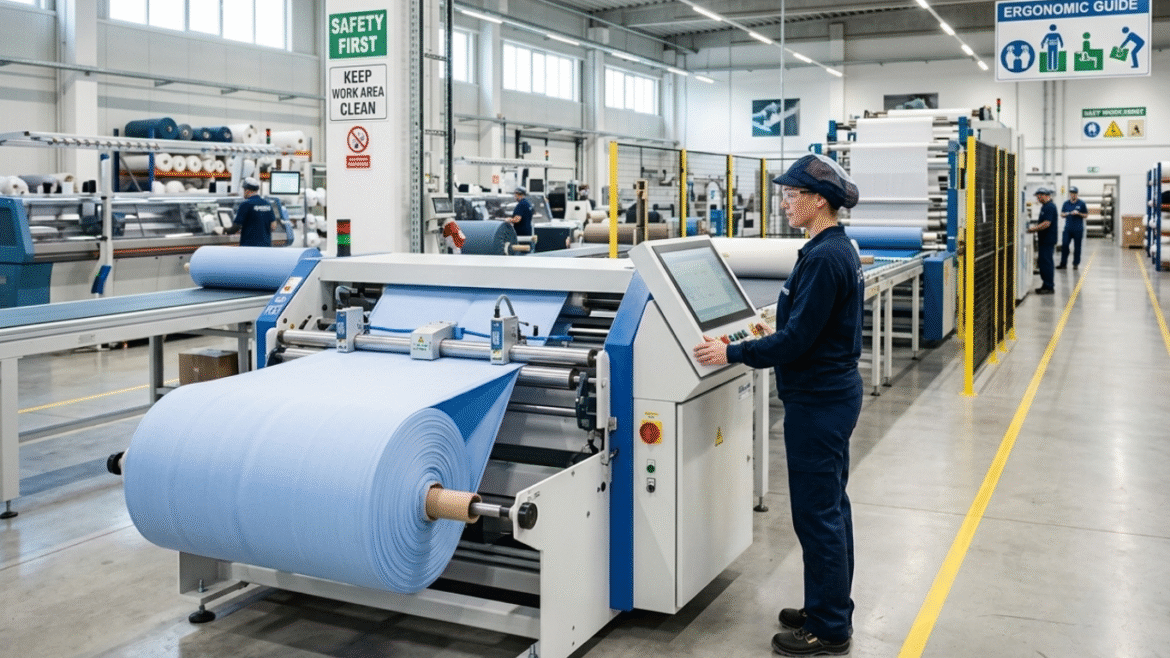
The Hidden Connection Between Plant Safety and Worker Retention
A busy garment factory floor depends entirely on the steady hands of its operators. Still, many plant managers face a familiar problem: high turnover and rising absenteeism. When output slows, managers usually check production schedules or operator training first. The real cause, though, often hides in plain sight. It is physical fatigue caused by poor workstation setup and repetitive strain.
Plant safety is not only about avoiding regulatory fines or checking compliance boxes. In modern apparel manufacturing, a safe floor is the foundation of employee retention.
According to the Occupational Safety and Health Administration (OSHA), musculoskeletal disorders (MSDs) remain a leading cause of lost or restricted work time across general industries. Workers who face daily physical strain eventually move on to less demanding jobs. By turning strenuous manual tasks into safer, smarter processes, manufacturers can stabilize their workforce and protect production quality.
Addressing the Strain of Material Transit and Fabric Preparation
Where do the highest physical risks occur on a textile production line? Most people point to the sewing floor first. Sewing does demand sustained focus, but the earlier stages of material preparation often require the heaviest physical exertion.
Moving heavy fabric rolls, bending over low cutting tables, and manually guiding material through slitting machines all place real stress on an operator’s back, neck, and shoulders. Industry insights from Textile School note that repetitive motions combined with awkward postures accelerate operator fatigue significantly.
Picture a traditional manual roll-slitting process. Operators must load heavy rolls by hand, reach forward continually, and hold rigid postures to keep material aligned as it feeds through an open blade. Across an eight-hour shift, that repetitive strain wears down precision and raises the risk of an acute injury. When operators must physically fight the machine just to keep fabric straight, the floor environment is already working against basic safety principles.
Engineering Controls: The Smart Alternative to Manual Strain
Progressive manufacturers respond to these hazards with physical changes to the factory floor rather than relying only on training or personal protective equipment. Safety specialists call this approach “engineering controls.” Instead of managing risk around a hazard, engineering controls modify or replace the equipment, so the hazard is designed out entirely.
Enclosed cutting chambers are a clear example. When a machine fully encloses the blade during the cut cycle, operators no longer need to work near an exposed edge or brace against moving material. Automated roll loading takes this further, removing the need for an operator to manually lift, position, and feed heavy fabric rolls by hand.
This shifts the operator’s role from strenuous physical labor to safer system monitoring, without slowing down output.
Safety by Design: The Strip Cutter FA 500
Modern industrial machinery increasingly builds these ergonomic principles directly into the equipment. A clear example of this design philosophy is the Svegea Strip Cutter FA 500, a heavy-duty, fully automatic roll-slitting machine built to handle a wide range of materials, including open knits, woven fabric, PVC, vinyl, satin, polyester, non-wovens, and select paper products.
Rather than exposing operators to an open blade and manual roll handling, the FA 500 is totally enclosed during the cut cycle, keeping the cutting action fully contained while it runs. Pneumatic fabric loading support helps manage the transition between rolls, reducing the manual lifting and repositioning that typically strains an operator’s back and shoulders.
The machine also gives operators precise, low-effort control over the process itself. Up to three preset cut widths and cut counts can be programmed per cycle, with three standard programs run through a touch screen panel rather than manual adjustment. Blade penetration speed and material roll rotation are both adjustable, so the cut can be tuned to the material instead of forcing an operator to compensate by hand.

Automatic blade sharpening, with adjustable sharpening time, keeps performance consistent without a manual mid-shift intervention, and every function runs under PLC control for repeatable, predictable results. An optional automatic blade cooling device is also available for materials that need extra care during cutting.
Together, these features remove several of the manual strain points common to older slitting setups: exposed blades, manual roll loading, and hands-on speed adjustment. The result is a cutting station where the operator manages the process rather than physically wrestling with it.
A Simple Walkthrough for Your Floor Audit
Improving plant safety does not require an immediate, multi-million-dollar overhaul. A targeted assessment of your current layout is a reasonable place to start:
1. Observe Postures: Watch your cutting and slitting stations for thirty minutes. Do operators frequently bend past a 90-degree angle or reach above shoulder height?
2. Track Minor Absences: Cross-reference frequent, short-term operator absences with specific, high-effort workstations on your line.
3. Evaluate Material Loading: Measure how far an operator must manually carry or lift a fabric roll before it safely locks into the machine feed.
4. Check Blade Exposure: Note whether any part of your current slitting process leaves a blade or edge accessible to an operator during normal operation.
These observations will pinpoint exactly where manual strain and exposure risk threaten both your team’s health and your line’s productivity.
TL;DR: Plant safety directly shapes worker retention and factory output. Most safety conversations center on the sewing floor, but the heaviest physical strain often happens earlier, during material transit and fabric preparation. Engineering controls like fully enclosed, automated strip cutting reduce repetitive stress injuries and protect your bottom line.
Optimize Your Production Floor Safety
Every manufacturing facility handles fabric differently, and the right slitting setup depends on your specific volume, material types, and floor layout. If you would like to discuss practical ways to reduce material handling strain and improve safety on your cutting floor, Håkan Steene can walk you through the technical options for the Strip Cutter FA 500 and other Svegea solutions. Reach him directly at h.steene@svegea.se to schedule a consultation.
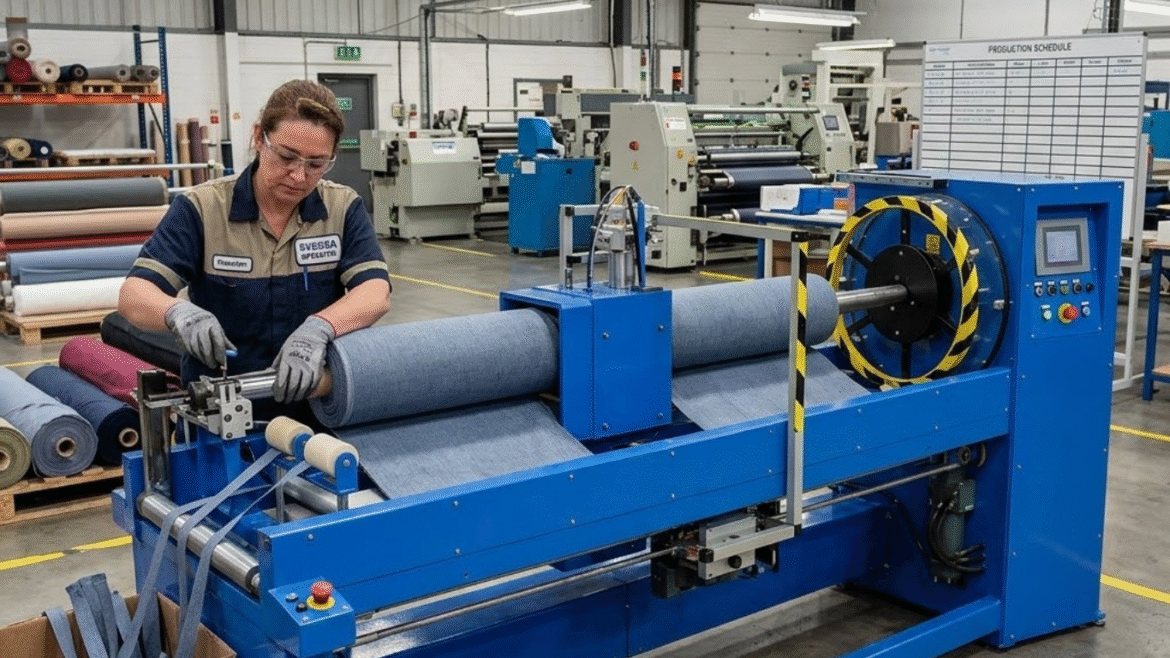
Order sizes are shrinking, and not because demand is drying up. A brand that once committed to 5,000 units of a single style now wants 300 units across three colorways. To complicate matters, they expect a quick reorder in two weeks if the first run sells out. This rapid rise of micro-collections has transformed small-batch garment manufacturing into a normal part of doing business, not a niche service.
The factories that handle this shift well are not necessarily the largest operations. Instead, they are the agile facilities that can change what they are cutting without losing half a shift to set up.
Why Smaller Orders Are Becoming the Norm
This shift has been building for a while. Fast-fashion retailers pioneered this model by reaching a 10-day turnaround from spotting a trend to placing a product on the market. They achieved this speed largely by keeping production agile and batches small, a strategy analyzed thoroughly by McKinsey & Company at https://www.mckinsey.com. That kind of speed only happens when your floor equipment keeps pace with the schedule, not the other way around.
TL;DR Embracing on-demand textile production requires a floor built for agility. Most factories lose profitable time at the changeover, not during the actual cut. Modern equipment engineered for frequent spec changes determines how many micro-orders your line can absorb.
The Real Bottleneck Is the Changeover, Not the Cut
Most friction in small-batch work occurs at the changeover. When you switch a line from one fabric weight to another, or from one strip width to the next, production stalls. Operators must manually reset guides or blades, and then they must run test cuts before the machinery produces usable output.
Lean manufacturing defines this problem as setup time. The Single-Minute Exchange of Die (SMED) methodology, which Shigeo Shingo developed at Toyota, exists specifically to push changeovers down to single-digit minutes. It achieves this by separating the steps that truly require a stopped machine from those that operators can perform while the line runs. You can explore these lean principles further at https://www.leanproduction.com.
Factories that fail to apply this thinking discover that mechanical downtime during changeovers, rather than raw cutting speed, severely limits how many small orders they can accept each week.
What Flexible Cutting Equipment Actually Looks Like
Consider the physical reality on your floor. A traditional line built exclusively for long, uniform runs usually features complex dials, specialized tools, and numerous steps between jobs. Every extra tool change or manual calibration acts as a roadblock where a quick order gets stuck behind a slow setup.
To handle varying fabric weights and widths without losing hours of profitable production, modern facilities rely on flexible cutting systems. These systems share a few vital traits:
-
Tool-less width adjustments that do not require machine disassembly.
-
Intuitive controls that an operator can master in a single shift rather than a week.
-
Tight mechanical tolerances that eliminate lengthy trial-and-error periods so your first cut is usable.
Svegea’s Semi-Automatic Range in Practice
Svegea engineered its semi-automatic range with this exact variety in mind, moving away from the rigid design of traditional, single-spec machinery to prevent costly mechanical downtime.
The Strip Cutter SC 300
The SC 300 solves a different part of the agility puzzle by processing roll-fed material rather than tubular knits, making it an ideal choice for high-precision fabric roll slitting. It slits a wide range of substrates, including open knits, woven fabrics, satin, polyester, and technical non-wovens.
[Strip Cutter SC 300] ──> Widths set electronically via one-button operation
                      ──> Holds cutting tolerance of ±0.5 mm
                      ──> Eliminates manual trial cuts
For a factory juggling several small client orders in different fabric types over a single week, this combination of width flexibility and material range eliminates the guesswork that normally inflates setup costs. You can view the full specifications at https://svegea.se/product/strip-cutter-sc-300/.
What This Does, and Does Not, Solve
Implementing flexible cutting systems alone will not completely solve the small-batch puzzle. Production scheduling, sourcing fabric in smaller lot sizes, and smart labor planning matter just as much.
However, on the cutting room floor, the equipment question remains straightforward: can your machine move from one specification to the next in minutes, using an operator who has not spent years learning its quirks? Lines that can answer yes absorb the high-margin, fast-turnaround orders that are defining modern on-demand textile production. The alternative is turning them down because the setup time eats into the profit.
TL;DR Flexible cutting systems win on changeover time, not raw speed. Tool-less width adjustments, straightforward controls, and precise out-of-the-box tolerances let your line move between small orders in minutes instead of hours.
Optimize Your Cutting Floor
If you are weighing options for a production line that must handle a greater variety without adding headcount or expanding your training pipeline, let’s talk data.
Connect directly with Håkan Steene, Managing Director at Svegea of Sweden, at h.steene@svegea.se to discuss your specific machinery requirements. We can audit where your changeover time is currently going and find the exact setup to protect your margins on short runs.

Key insights:
- Digital twins are virtual models of machines or production lines, built from real-time data.
- The digital twin textile factory market was worth USD 1.42 billion in 2024 and is projected to reach USD 17.91 billion by 2033, according to Texpertise Network.
- Textile manufacturing sits below 30% adoption today, well behind aerospace and automotive, but the gap is closing.
- The cutting room is a practical starting point, since slitting and cutting machines already generate structured, usable data.
- New EU rules starting in 2027 will require Digital Product Passports. Manufacturers who track data early will be ahead of that curve.
For years, “digital twin” sounded like a term for car plants and jet engines. That is changing fast. In 2026, textile and garment manufacturers are asking a simpler question: could a virtual model of our own cutting room save us money? The answer is yes, and the technology required to try it is closer than most decision-makers think.
What a Digital Twin Actually Is
The term gets used loosely, so a clear definition helps. McKinsey describes a digital twin as a virtual model of a physical system. It connects to real data and updates in real time as the machine runs. There are three broad types. A plant twin mirrors an entire facility. A network model of the supply chain. An infrastructure twin covers things like buildings or roads.
Most textile manufacturers do not need a whole-factory twin right away. A smaller “process twin” works better as a starting point. It focuses on one line or one machine. This is also the version most relevant to the cutting room.
Why the Cutting Room Is a Logical Starting Point
The cutting room already runs on precision. Slitting and cutting machines track roll width, edge position, run speed, and material count every day. According to Texpertise Network, the trade publication run by Messe Frankfurt, a textile digital twin links physical machines to a virtual model through sensors, IoT devices, CAD/CAM data, and production software. Cutting and slitting lines already have several of these pieces in place.
Take automatic edge guiding and adjustable cutting widths. Both features appear on fully automatic roll slitting machines, such as Svegea’s FA-series strip cutters. These features were not built for digital twins. They exist to keep materials straight and cuts accurate. But they generate the same data a twin model needs: edge position, width, and run speed. That data can feed a model that simulates output and flags drift before it wastes fabric. Machines that already collect this data sit closer to “twin-ready” than older, manually adjusted equipment.
From Sensors to Simulation
Once data starts flowing, a twin becomes useful in two main ways: maintenance and quality.
For maintenance, a 2026 study in the World Journal of Advanced Engineering Technology and Sciences proposed a predictive maintenance framework built on digital twins. It covers textile and mechanical equipment like spinning machines, looms, motors, bearings, gearboxes, and conveyors. The researchers note that the model can adapt as new data arrives, which makes it useful for older equipment, not just new machines.
For quality, a twin loaded with historical production data can flag where defects are likely to happen. That lets a plant act before a flaw turns into a customer return.
Quick Stat Check
-
-
- Market growth runs about 32% a year through 2033.
- Aerospace and automotive sit above 70% digital twin adoption; textiles sit below 30%, per PatSnap.
- Across all industries, McKinsey reports that 70% of C-suite tech leaders are already exploring or investing in digital twins.
- Some manufacturers have cut development time by up to half.
-
The Adoption Gap, and Why It’s Closing
Textiles trail other sectors for clear reasons. Research from PatSnap points to two main barriers: cost and legacy infrastructure. Many cutting room machines were not built with sensors or connectivity in mind. That gap is real, but it is closing. Patent filings for digital twin technology rose sharply between 2017 and 2025, a sign that the underlying tools are maturing and becoming more affordable for mid-sized manufacturers, not just large industrial players.
A Regulatory Push Is Coming
There is also a compliance angle worth watching closely. Starting in 2027, textile products sold in the EU will need Digital Product Passports, according to reporting from Shijin Fashion. A 2026 study in The International Journal of Advanced Manufacturing Technology proposes a textile-specific digital twin framework built for this exact need. It pairs IoT data with circular-economy tools, such as Life Cycle Assessment and Digital Product Passport reporting. Manufacturers who already track data at the machine level will be ahead when full traceability becomes mandatory rather than optional.
Getting Started Without Overbuilding
A full, factory-wide twin is not the right first step for most manufacturers. McKinsey’s own case studies describe a staged approach: build a small proof of concept, confirm the data feeds are solid, then expand to a bigger model. Applied to a cutting room, this could mean starting with one slitting line, connecting its existing sensor data to a simple dashboard, running it for a few weeks, and checking whether the model’s predictions match what actually happens on the floor.
Older, manually run machines may need retrofitting first. That cost should be part of any pilot budget. It is often the real barrier, not the modeling software itself.
Where This Leaves Manufacturers
Digital twin technology in textiles is no longer just a trade-show buzzword. The market data, the maintenance research, and the new EU rules all point in the same direction. Factories that start capturing clean, machine-level data now will have an easier path later, whether that means less downtime, less waste, or easier compliance reporting.
The cutting room is a sensible place to begin. Well-built cutting and slitting equipment already produces usable data on its own, without extra hardware. That makes it a lower-risk pilot than trying to model an entire production floor on the first attempt.
Svegea designs cutting, slitting, and bias systems for manufacturers exploring this kind of process visibility, and the team is happy to talk through what twin-readiness looks like for a given setup, no obligation attached. For manufacturers who want to discuss what a more connected cutting room could look like for their operations, Hakan Steene (h.steene@svegea.se) is a good place to start the conversation.