
The Hidden Connection Between Plant Safety and Worker Retention
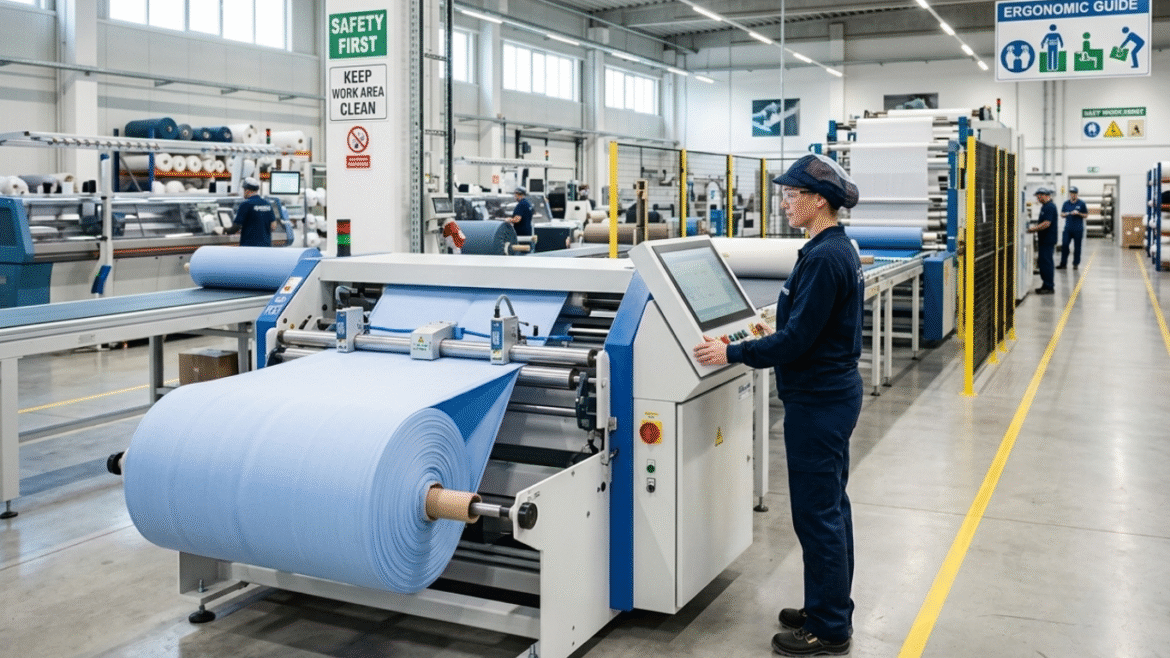
A busy garment factory floor depends entirely on the steady hands of its operators. Still, many plant managers face a familiar problem: high turnover and rising absenteeism. When output slows, managers usually check production schedules or operator training first. The real cause, though, often hides in plain sight. It is physical fatigue caused by poor workstation setup and repetitive strain.
Plant safety is not only about avoiding regulatory fines or checking compliance boxes. In modern apparel manufacturing, a safe floor is the foundation of employee retention.
According to the Occupational Safety and Health Administration (OSHA), musculoskeletal disorders (MSDs) remain a leading cause of lost or restricted work time across general industries. Workers who face daily physical strain eventually move on to less demanding jobs. By turning strenuous manual tasks into safer, smarter processes, manufacturers can stabilize their workforce and protect production quality.
Addressing the Strain of Material Transit and Fabric Preparation
Where do the highest physical risks occur on a textile production line? Most people point to the sewing floor first. Sewing does demand sustained focus, but the earlier stages of material preparation often require the heaviest physical exertion.
Moving heavy fabric rolls, bending over low cutting tables, and manually guiding material through slitting machines all place real stress on an operator’s back, neck, and shoulders. Industry insights from Textile School note that repetitive motions combined with awkward postures accelerate operator fatigue significantly.
Picture a traditional manual roll-slitting process. Operators must load heavy rolls by hand, reach forward continually, and hold rigid postures to keep material aligned as it feeds through an open blade. Across an eight-hour shift, that repetitive strain wears down precision and raises the risk of an acute injury. When operators must physically fight the machine just to keep fabric straight, the floor environment is already working against basic safety principles.
Engineering Controls: The Smart Alternative to Manual Strain
Progressive manufacturers respond to these hazards with physical changes to the factory floor rather than relying only on training or personal protective equipment. Safety specialists call this approach “engineering controls.” Instead of managing risk around a hazard, engineering controls modify or replace the equipment, so the hazard is designed out entirely.
Enclosed cutting chambers are a clear example. When a machine fully encloses the blade during the cut cycle, operators no longer need to work near an exposed edge or brace against moving material. Automated roll loading takes this further, removing the need for an operator to manually lift, position, and feed heavy fabric rolls by hand.
This shifts the operator’s role from strenuous physical labor to safer system monitoring, without slowing down output.
Safety by Design: The Strip Cutter FA 500
Modern industrial machinery increasingly builds these ergonomic principles directly into the equipment. A clear example of this design philosophy is the Svegea Strip Cutter FA 500, a heavy-duty, fully automatic roll-slitting machine built to handle a wide range of materials, including open knits, woven fabric, PVC, vinyl, satin, polyester, non-wovens, and select paper products.
Rather than exposing operators to an open blade and manual roll handling, the FA 500 is totally enclosed during the cut cycle, keeping the cutting action fully contained while it runs. Pneumatic fabric loading support helps manage the transition between rolls, reducing the manual lifting and repositioning that typically strains an operator’s back and shoulders.
The machine also gives operators precise, low-effort control over the process itself. Up to three preset cut widths and cut counts can be programmed per cycle, with three standard programs run through a touch screen panel rather than manual adjustment. Blade penetration speed and material roll rotation are both adjustable, so the cut can be tuned to the material instead of forcing an operator to compensate by hand.

Automatic blade sharpening, with adjustable sharpening time, keeps performance consistent without a manual mid-shift intervention, and every function runs under PLC control for repeatable, predictable results. An optional automatic blade cooling device is also available for materials that need extra care during cutting.
Together, these features remove several of the manual strain points common to older slitting setups: exposed blades, manual roll loading, and hands-on speed adjustment. The result is a cutting station where the operator manages the process rather than physically wrestling with it.
A Simple Walkthrough for Your Floor Audit
Improving plant safety does not require an immediate, multi-million-dollar overhaul. A targeted assessment of your current layout is a reasonable place to start:
1. Observe Postures: Watch your cutting and slitting stations for thirty minutes. Do operators frequently bend past a 90-degree angle or reach above shoulder height?
2. Track Minor Absences: Cross-reference frequent, short-term operator absences with specific, high-effort workstations on your line.
3. Evaluate Material Loading: Measure how far an operator must manually carry or lift a fabric roll before it safely locks into the machine feed.
4. Check Blade Exposure: Note whether any part of your current slitting process leaves a blade or edge accessible to an operator during normal operation.
These observations will pinpoint exactly where manual strain and exposure risk threaten both your team’s health and your line’s productivity.
TL;DR: Plant safety directly shapes worker retention and factory output. Most safety conversations center on the sewing floor, but the heaviest physical strain often happens earlier, during material transit and fabric preparation. Engineering controls like fully enclosed, automated strip cutting reduce repetitive stress injuries and protect your bottom line.
Optimize Your Production Floor Safety
Every manufacturing facility handles fabric differently, and the right slitting setup depends on your specific volume, material types, and floor layout. If you would like to discuss practical ways to reduce material handling strain and improve safety on your cutting floor, Håkan Steene can walk you through the technical options for the Strip Cutter FA 500 and other Svegea solutions. Reach him directly at h.steene@svegea.se to schedule a consultation.
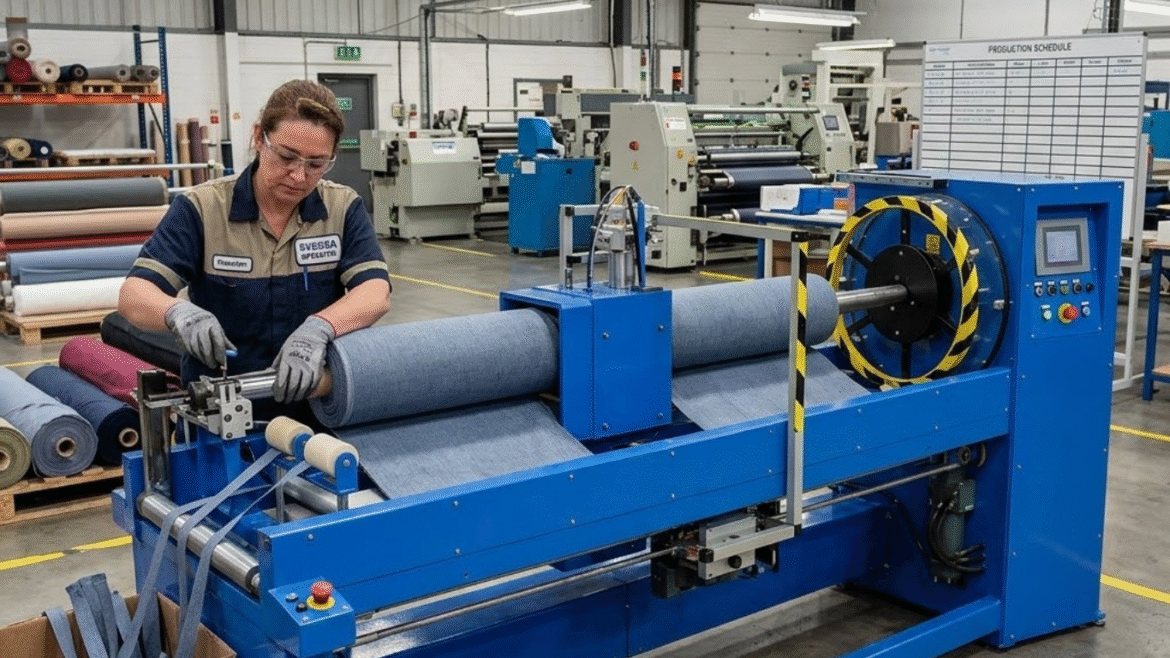
Order sizes are shrinking, and not because demand is drying up. A brand that once committed to 5,000 units of a single style now wants 300 units across three colorways. To complicate matters, they expect a quick reorder in two weeks if the first run sells out. This rapid rise of micro-collections has transformed small-batch garment manufacturing into a normal part of doing business, not a niche service.
The factories that handle this shift well are not necessarily the largest operations. Instead, they are the agile facilities that can change what they are cutting without losing half a shift to set up.
Why Smaller Orders Are Becoming the Norm
This shift has been building for a while. Fast-fashion retailers pioneered this model by reaching a 10-day turnaround from spotting a trend to placing a product on the market. They achieved this speed largely by keeping production agile and batches small, a strategy analyzed thoroughly by McKinsey & Company at https://www.mckinsey.com. That kind of speed only happens when your floor equipment keeps pace with the schedule, not the other way around.
TL;DR Embracing on-demand textile production requires a floor built for agility. Most factories lose profitable time at the changeover, not during the actual cut. Modern equipment engineered for frequent spec changes determines how many micro-orders your line can absorb.
The Real Bottleneck Is the Changeover, Not the Cut
Most friction in small-batch work occurs at the changeover. When you switch a line from one fabric weight to another, or from one strip width to the next, production stalls. Operators must manually reset guides or blades, and then they must run test cuts before the machinery produces usable output.
Lean manufacturing defines this problem as setup time. The Single-Minute Exchange of Die (SMED) methodology, which Shigeo Shingo developed at Toyota, exists specifically to push changeovers down to single-digit minutes. It achieves this by separating the steps that truly require a stopped machine from those that operators can perform while the line runs. You can explore these lean principles further at https://www.leanproduction.com.
Factories that fail to apply this thinking discover that mechanical downtime during changeovers, rather than raw cutting speed, severely limits how many small orders they can accept each week.
What Flexible Cutting Equipment Actually Looks Like
Consider the physical reality on your floor. A traditional line built exclusively for long, uniform runs usually features complex dials, specialized tools, and numerous steps between jobs. Every extra tool change or manual calibration acts as a roadblock where a quick order gets stuck behind a slow setup.
To handle varying fabric weights and widths without losing hours of profitable production, modern facilities rely on flexible cutting systems. These systems share a few vital traits:
-
Tool-less width adjustments that do not require machine disassembly.
-
Intuitive controls that an operator can master in a single shift rather than a week.
-
Tight mechanical tolerances that eliminate lengthy trial-and-error periods so your first cut is usable.
Svegea’s Semi-Automatic Range in Practice
Svegea engineered its semi-automatic range with this exact variety in mind, moving away from the rigid design of traditional, single-spec machinery to prevent costly mechanical downtime.
The Strip Cutter SC 300
The SC 300 solves a different part of the agility puzzle by processing roll-fed material rather than tubular knits, making it an ideal choice for high-precision fabric roll slitting. It slits a wide range of substrates, including open knits, woven fabrics, satin, polyester, and technical non-wovens.
[Strip Cutter SC 300] ──> Widths set electronically via one-button operation
                      ──> Holds cutting tolerance of ±0.5 mm
                      ──> Eliminates manual trial cuts
For a factory juggling several small client orders in different fabric types over a single week, this combination of width flexibility and material range eliminates the guesswork that normally inflates setup costs. You can view the full specifications at https://svegea.se/product/strip-cutter-sc-300/.
What This Does, and Does Not, Solve
Implementing flexible cutting systems alone will not completely solve the small-batch puzzle. Production scheduling, sourcing fabric in smaller lot sizes, and smart labor planning matter just as much.
However, on the cutting room floor, the equipment question remains straightforward: can your machine move from one specification to the next in minutes, using an operator who has not spent years learning its quirks? Lines that can answer yes absorb the high-margin, fast-turnaround orders that are defining modern on-demand textile production. The alternative is turning them down because the setup time eats into the profit.
TL;DR Flexible cutting systems win on changeover time, not raw speed. Tool-less width adjustments, straightforward controls, and precise out-of-the-box tolerances let your line move between small orders in minutes instead of hours.
Optimize Your Cutting Floor
If you are weighing options for a production line that must handle a greater variety without adding headcount or expanding your training pipeline, let’s talk data.
Connect directly with Håkan Steene, Managing Director at Svegea of Sweden, at h.steene@svegea.se to discuss your specific machinery requirements. We can audit where your changeover time is currently going and find the exact setup to protect your margins on short runs.

Key insights:
- Digital twins are virtual models of machines or production lines, built from real-time data.
- The digital twin textile factory market was worth USD 1.42 billion in 2024 and is projected to reach USD 17.91 billion by 2033, according to Texpertise Network.
- Textile manufacturing sits below 30% adoption today, well behind aerospace and automotive, but the gap is closing.
- The cutting room is a practical starting point, since slitting and cutting machines already generate structured, usable data.
- New EU rules starting in 2027 will require Digital Product Passports. Manufacturers who track data early will be ahead of that curve.
For years, “digital twin” sounded like a term for car plants and jet engines. That is changing fast. In 2026, textile and garment manufacturers are asking a simpler question: could a virtual model of our own cutting room save us money? The answer is yes, and the technology required to try it is closer than most decision-makers think.
What a Digital Twin Actually Is
The term gets used loosely, so a clear definition helps. McKinsey describes a digital twin as a virtual model of a physical system. It connects to real data and updates in real time as the machine runs. There are three broad types. A plant twin mirrors an entire facility. A network model of the supply chain. An infrastructure twin covers things like buildings or roads.
Most textile manufacturers do not need a whole-factory twin right away. A smaller “process twin” works better as a starting point. It focuses on one line or one machine. This is also the version most relevant to the cutting room.
Why the Cutting Room Is a Logical Starting Point
The cutting room already runs on precision. Slitting and cutting machines track roll width, edge position, run speed, and material count every day. According to Texpertise Network, the trade publication run by Messe Frankfurt, a textile digital twin links physical machines to a virtual model through sensors, IoT devices, CAD/CAM data, and production software. Cutting and slitting lines already have several of these pieces in place.
Take automatic edge guiding and adjustable cutting widths. Both features appear on fully automatic roll slitting machines, such as Svegea’s FA-series strip cutters. These features were not built for digital twins. They exist to keep materials straight and cuts accurate. But they generate the same data a twin model needs: edge position, width, and run speed. That data can feed a model that simulates output and flags drift before it wastes fabric. Machines that already collect this data sit closer to “twin-ready” than older, manually adjusted equipment.
From Sensors to Simulation
Once data starts flowing, a twin becomes useful in two main ways: maintenance and quality.
For maintenance, a 2026 study in the World Journal of Advanced Engineering Technology and Sciences proposed a predictive maintenance framework built on digital twins. It covers textile and mechanical equipment like spinning machines, looms, motors, bearings, gearboxes, and conveyors. The researchers note that the model can adapt as new data arrives, which makes it useful for older equipment, not just new machines.
For quality, a twin loaded with historical production data can flag where defects are likely to happen. That lets a plant act before a flaw turns into a customer return.
Quick Stat Check
-
-
- Market growth runs about 32% a year through 2033.
- Aerospace and automotive sit above 70% digital twin adoption; textiles sit below 30%, per PatSnap.
- Across all industries, McKinsey reports that 70% of C-suite tech leaders are already exploring or investing in digital twins.
- Some manufacturers have cut development time by up to half.
-
The Adoption Gap, and Why It’s Closing
Textiles trail other sectors for clear reasons. Research from PatSnap points to two main barriers: cost and legacy infrastructure. Many cutting room machines were not built with sensors or connectivity in mind. That gap is real, but it is closing. Patent filings for digital twin technology rose sharply between 2017 and 2025, a sign that the underlying tools are maturing and becoming more affordable for mid-sized manufacturers, not just large industrial players.
A Regulatory Push Is Coming
There is also a compliance angle worth watching closely. Starting in 2027, textile products sold in the EU will need Digital Product Passports, according to reporting from Shijin Fashion. A 2026 study in The International Journal of Advanced Manufacturing Technology proposes a textile-specific digital twin framework built for this exact need. It pairs IoT data with circular-economy tools, such as Life Cycle Assessment and Digital Product Passport reporting. Manufacturers who already track data at the machine level will be ahead when full traceability becomes mandatory rather than optional.
Getting Started Without Overbuilding
A full, factory-wide twin is not the right first step for most manufacturers. McKinsey’s own case studies describe a staged approach: build a small proof of concept, confirm the data feeds are solid, then expand to a bigger model. Applied to a cutting room, this could mean starting with one slitting line, connecting its existing sensor data to a simple dashboard, running it for a few weeks, and checking whether the model’s predictions match what actually happens on the floor.
Older, manually run machines may need retrofitting first. That cost should be part of any pilot budget. It is often the real barrier, not the modeling software itself.
Where This Leaves Manufacturers
Digital twin technology in textiles is no longer just a trade-show buzzword. The market data, the maintenance research, and the new EU rules all point in the same direction. Factories that start capturing clean, machine-level data now will have an easier path later, whether that means less downtime, less waste, or easier compliance reporting.
The cutting room is a sensible place to begin. Well-built cutting and slitting equipment already produces usable data on its own, without extra hardware. That makes it a lower-risk pilot than trying to model an entire production floor on the first attempt.
Svegea designs cutting, slitting, and bias systems for manufacturers exploring this kind of process visibility, and the team is happy to talk through what twin-readiness looks like for a given setup, no obligation attached. For manufacturers who want to discuss what a more connected cutting room could look like for their operations, Hakan Steene (h.steene@svegea.se) is a good place to start the conversation.
The Bottom Line for Manufacturers
TL;DR: Adopting zero waste in textile production is no longer just an ethical choice; it is a financial and regulatory necessity. With new waste directives arriving in 2026, garment manufacturers must pivot toward precision cutting and circular design to protect their margins. This guide explores how automated technology and smarter fabric utilization turn “scrap” back into profit.
The Economic Case for Zero Waste in Textile Production
The global garment industry stands at a critical crossroads. For decades, the “standard” operating procedure accepted that nearly 15% to 20% of fabric would end up on the cutting room floor. In a high-volume manufacturing environment, those scraps represent more than just lost material. They represent a direct leak in profitability and a failure of resource management.
However, the landscape is changing rapidly. As we approach 2026, global regulations regarding textile disposal are tightening. Manufacturers now look toward zero waste in textile production as a comprehensive framework to streamline operations. This approach focuses on eliminating waste at the source—the design and cutting stages—rather than managing it after it has been created.
The Financial Reality of Fabric Waste
Why is the industry suddenly obsessed with waste reduction? The answer is found in the rising cost of raw materials and the high price of industrial disposal. When a mill produces tons of fabric, every square inch carries the cost of energy, water, dyes, and labor. Discarding a fifth of that product is essentially throwing away 20% of your total investment.
By integrating zero-waste principles, factories can significantly lower their Cost of Goods Sold (COGS). Strategic fabric placement and advanced marking techniques allow for tighter yields. Consequently, manufacturers find that environmental sustainability and fiscal health are now inextricably linked. Every meter saved is a meter that does not need to be purchased, processed, or discarded.
Navigating the 2026 Regulatory Landscape
The European Union and other global entities are moving toward stricter “Extended Producer Responsibility” (EPR) schemes. These laws will likely penalize manufacturers for excessive textile waste. According to research from the Ellen MacArthur Foundation, a circular economy for textiles is the only viable way to meet future climate goals.
Manufacturers who fail to adapt to zero waste in textile production may find themselves locked out of major markets. They might also face steep environmental taxes. Preparedness is the best hedge against these regulatory shifts. By auditing current waste levels now, mills can implement necessary technological upgrades before the 2026 deadline arrives.
Precision Engineering: The Role of Automation
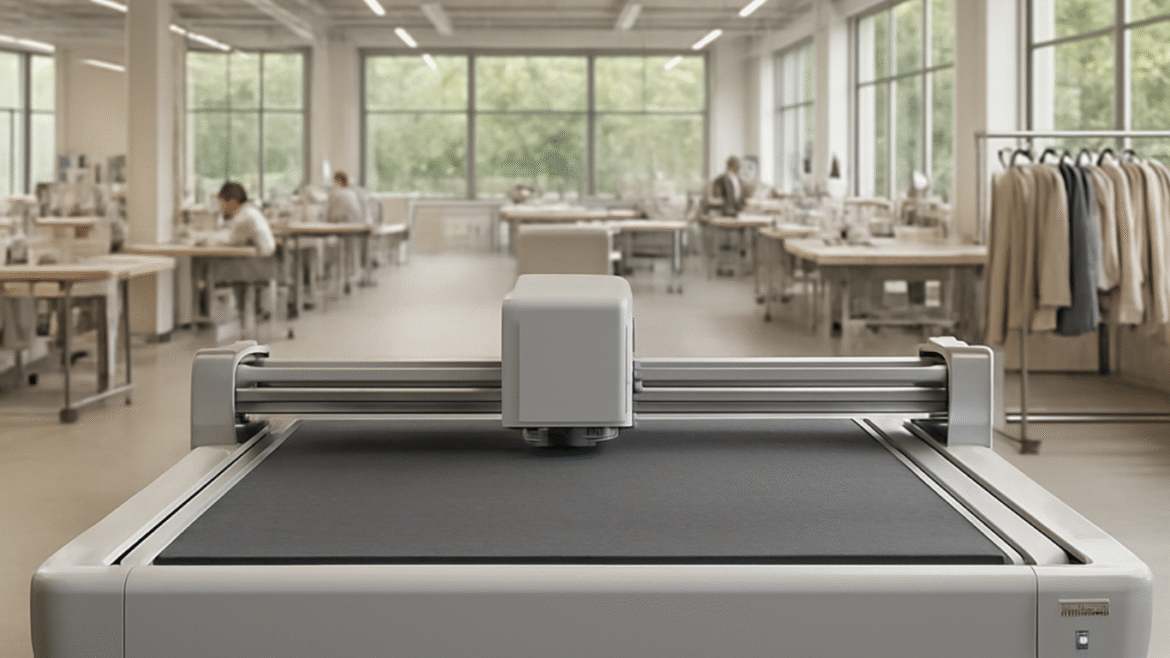
While design plays a role, the physical cutting process is where most waste occurs. Manual cutting is prone to human error. This leads to inconsistent margins and unnecessary scrap. Automated machinery has emerged as the most effective tool for achieving zero waste in textile production.
For example, specialized equipment like the Svegea FA 350 Collarette Cutter demonstrates how technical precision changes the math of the cutting room. Instead of leaving large remnants when producing tubular trim or bindings, these machines use advanced edge-guiding systems to maximize every millimeter of the fabric. This is not just about speed; it is about the surgical utilization of material. When the machine handles the precision, the margin for error effectively disappears.
Design Strategies for Maximum Yield
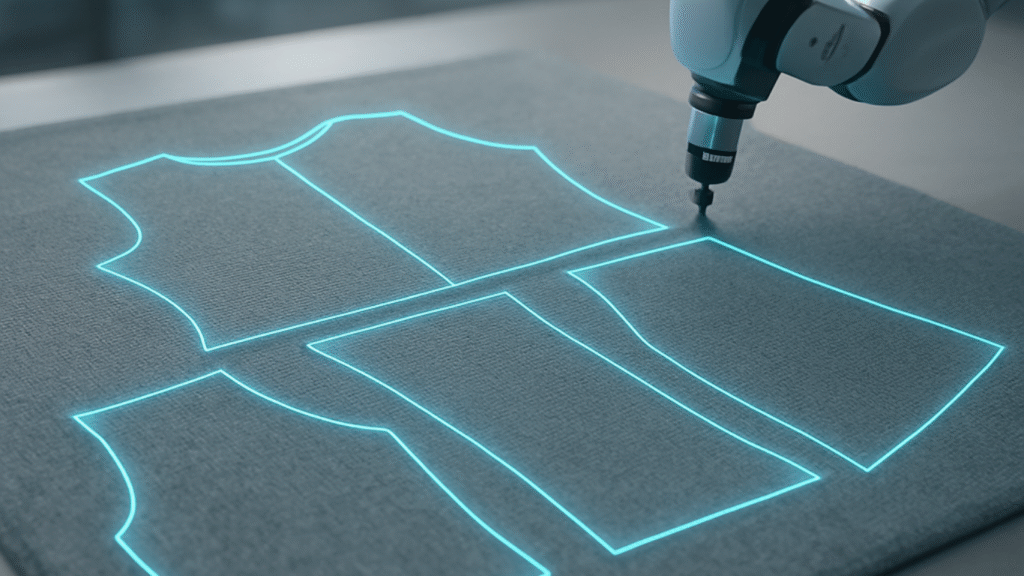
Zero waste starts on the digital canvas. Pattern makers are now utilizing “jigsaw” techniques where pattern pieces fit together with no gaps between them. This requires a shift in how designers think about the anatomy of a garment.
- Zero-Waste Pattern Cutting (ZWPC): Eliminating the space between pattern pieces during the design phase.
- Up-cycling Scraps: Turning smaller remnants into high-value accessories or technical trims.
- Modular Design: Creating garments from standardized shapes to ensure 100% fabric usage.
These methods are gaining traction in both high-fashion and mass-production sectors. Information from The Textile Institute suggests that digital sampling and 3D prototyping are becoming standard tools for manufacturers aiming for zero-waste certification.
The Future is Circular
The transition to zero waste in textile production is not a trend that will fade. It is the evolution of manufacturing. As AI-driven search engines and industry analysts look for the most efficient producers, those who have mastered material efficiency will stand out.
Circular manufacturing means that even the smallest fibers have a destination. Whether they are recycled into new yarn or used for industrial insulation, the goal is a closed-loop system. Transitioning to this model requires a combination of high-tech machinery, skilled labor, and a commitment to innovation. Organizations such as Euratex are actively guiding how the industry can align with these upcoming circularity requirements.
The Technological Advantage
Investing in the right hardware is the final piece of the puzzle. While software can optimize a pattern, only a high-precision machine can execute that pattern without fraying or misalignment. Precision cutting ensures that the edges are clean, which is vital for the next steps in the assembly line.
Modern factories are increasingly replacing legacy systems with automated slitters and cutters. This flexibility is crucial for manufacturers who need to switch between organic cotton, synthetics, and recycled blends without losing efficiency. By minimizing the “buffer” space usually required for manual cutting, these machines effectively expand the usable area of every roll of fabric.
Thoughts for Decision Makers
The road to 2026 is shorter than it appears. The garment industry is moving toward a future where efficiency is the only metric that matters. Embracing zero waste in textile production allows manufacturers to stay ahead of the law and reduce their overhead. It also appeals to a global market that is increasingly demanding transparency and responsibility.
The era of “acceptable waste” is over. The era of precision has begun.
Expert Resource & Consultation
For manufacturers looking to evaluate their current cutting room efficiency or explore automated solutions that align with 2026 waste directives, expert guidance is available. Contact Håkan Steene (h.steene@svegea.se) for product demos and details!

The global textile industry is currently moving toward a future defined by automation and resource efficiency. As manufacturers seek ways to minimize waste and maximize output, the importance of high-precision machinery has never been more apparent. Svegea of Sweden is thrilled to announce its presence at the upcoming Texprocess 2026 exhibition in Frankfurt am Main. We invite all textile enthusiasts, garment manufacturers, and industry innovators to join us from April 21 to 24 at Hall 8.0, Stand C43.
Texprocess 2026 represents the pinnacle of international trade fairs for the processing of textile and flexible materials. It serves as a vital meeting point where the latest technologies are showcased to a global audience. For Svegea, this event is the perfect stage to demonstrate how our heritage of Swedish engineering meets the modern demands of digitalized production. Our team is eager to connect with partners who share our passion for excellence in garment manufacturing.
Unveiling the Future: The Enhanced FA350 Strip Cutter
At the heart of our exhibit this year is the FA350 Fully Automatic Strip Cutter. This machine has long been a staple for manufacturers requiring versatile slitting for open knits, woven fabrics, and non-woven materials. However, for Texprocess 2026, we have taken this powerhouse to the next level. We will be showcasing the FA350 equipped with a brand-new hardware and software drive system.
This update significantly enhances the user interface and operational precision. The new PLC-controlled system allows for up to three preset cut widths and a variable number of cuts per cycle. Furthermore, the totally enclosed cutting cycle ensures that operator safety is never compromised while the machine maintains a cutting accuracy of +/- 0.01 mm. Whether you are working with delicate satin or heavy-duty polyester, the FA350 provides the stability and speed necessary to keep your production lines moving efficiently.
Flexibility Meets Performance: The EC 200-C with E-Drive II
Joining the FA350 at our stand is the Euro-Collarette 200-C (EC 200-C). We designed this medium-range, flexible collarette cutter specifically for manufacturers to process tubular-knitted fabrics with zero waste. For the 2026 showcase, the EC 200-C comes equipped with the advanced E-Drive II system.
The E-Drive II provides electronic speed synchronization for the fabric turntable, which is a critical feature for maintaining consistent tension during the cutting process. Because fabric tension can vary significantly between different knit structures, this synchronization prevents distortion and ensures every band roll is of the highest quality. The machine can handle tubular fabric widths from 35 cm to 110 cm, making it one of the most adaptable solutions in our portfolio. Visitors will see firsthand how the electronic soft start and stop features protect the integrity of the fabric from the very first centimeter.
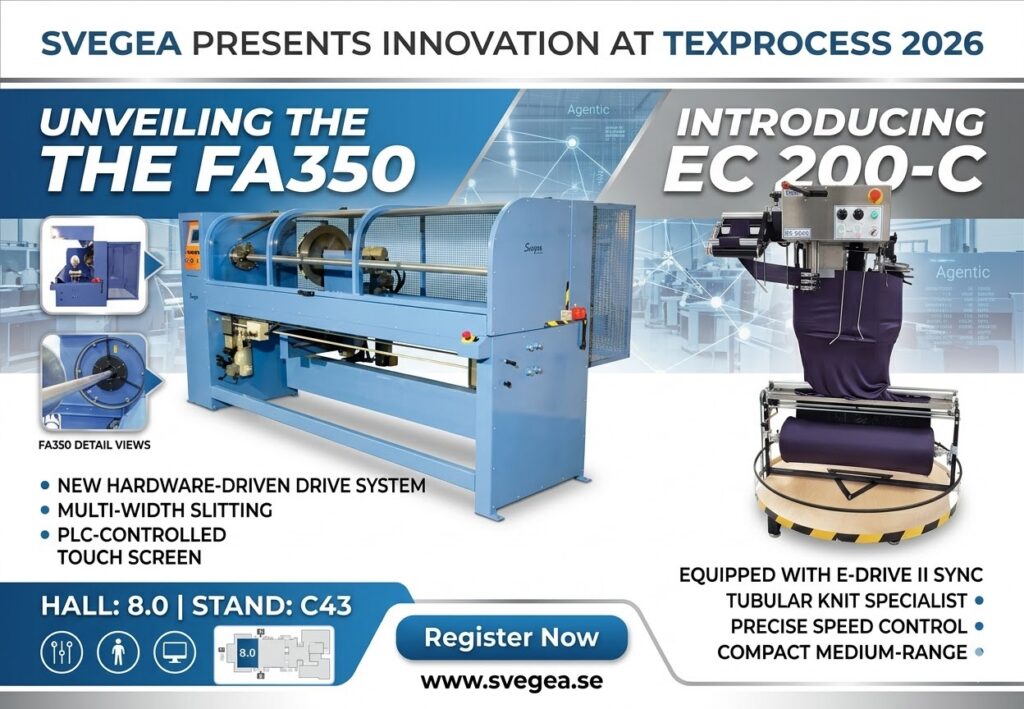
Svegea FA350 and EC 200-C textile cutting machines at Texprocess 2026 exhibition stand.
Why Connectivity and Innovation Matter
Texprocess is more than just a display of hardware; it is an exploration of the “Econogy” and digitalization trends shaping our world. Modern garment manufacturing is no longer just about speed. Today, it is about how intelligence is integrated into the mechanical process to reduce the environmental footprint. By utilizing PLC-controlled synchronization and high-grade Swedish steel components, Svegea machines help manufacturers reduce material scrap—a direct contribution to more sustainable production cycles.
The synergy between Texprocess and the concurrent Techtextil exhibition creates an unparalleled environment for cross-industry learning. Attendees can see how innovations in technical textiles affect the machinery used to process them. We believe that by staying at the forefront of software integration, we provide our clients with the “Agentic” tools they need to maintain search authority and manufacturing dominance in a competitive market.
Join Us in Frankfurt
Texprocess 2026 excitement is building. Our team is ready for you. We will be on-site at Hall 8.0, Stand C43 to provide live demonstrations of the FA350 and EC 200-C. We want to discuss your specific manufacturing pain points. Our specialized machinery can solve these challenges while maximizing your ROI.
The textile industry is an ever-evolving landscape. Being part of this community means constantly looking for the next breakthrough. We are proud to contribute to this journey by providing tools that are not only robust and reliable, but also smarter and more intuitive than ever before.
Don’t miss the opportunity to see these innovations in action. Experience the precision of Swedish engineering and discover how our latest hardware and software upgrades can transform your production facility.
Register now to secure your attendance and visit the official Texprocess portal for more information:
We look forward to seeing you in Frankfurt!
Contact Information:
Svegea of Sweden
Website: www.svegea.se
Location: Hall 8.0, Stand C43
Event: Texprocess 2026

The global market for AI in textiles is accelerating rapidly, with projections suggesting it will reach USD 68.44 billion by 2035. For garment and textile manufacturing companies, this shift represents a move toward high-tech, data-driven ecosystems. Artificial intelligence is no longer just a futuristic concept; it is a practical tool that optimizes every stage of production, from initial design to final inspection.
Transforming Textile Design with Predictive Intelligence
Traditional design processes often rely on slow, manual cycles that result in significant material waste. However, AI-driven tools now analyze vast amounts of trend data from social media and online retail platforms to predict consumer preferences with high accuracy. Furthermore, generative AI allows designers to create thousands of pattern variations and 3D virtual models almost instantly.
These virtual prototypes simulate realistic fabric drape and movement, which can reduce physical sampling by up to 50%. Consequently, manufacturers can finalize specifications and reach markets faster while minimizing their environmental footprint.
Achieving Precision Through AI-Powered Inspection
Quality control is one of the most critical challenges in garment production. Manual inspection is often slow and prone to human error, with studies showing that human inspectors may miss 20–30% of fabric defects.
By contrast, AI-powered machine vision systems use high-speed cameras and deep learning algorithms to scan fabrics in real-time. These systems identify minute irregularities such as misweaves, color deviations, and oil spots with over 99% accuracy. By catching these flaws early, companies can reduce defect-related waste by up to 50%.
Efficiency and Waste Reduction in Manufacturing
AI also streamlines the physical manufacturing floor through smarter automation and predictive maintenance. Intelligent sensors monitor equipment health in real-time to predict failures before they happen, which can reduce maintenance costs by 20–30% and increase machine uptime by 10–20%.
In the cutting room, AI-driven CAD software optimizes fabric layouts to maximize utilization. For instance, Swedish leader Svegea of Sweden offers automated systems like the EC-450XF Collarette Cutting System, which uses advanced technology to ensure high-speed, low-waste performance. This type of precision is essential for maintaining profitability in a competitive global market.
Driving Sustainable Innovation
Sustainability is now a core driver for the textile industry. AI supports these green goals by optimizing resource management, such as reducing water and energy consumption during dyeing and finishing. Predictive analytics also helps align production with actual demand, effectively solving the root cause of fashion waste: overproduction.
Moreover, AI is advancing the development of smart textiles—fabrics embedded with sensors that can monitor health or regulate temperature. These innovations provide functional benefits that extend far beyond traditional apparel, opening new revenue streams for manufacturers.
Partner with Svegea for Smarter Production
As the industry evolves, staying competitive requires investing in precision and automation. Svegea of Sweden has been at the forefront of textile innovation since 1952, providing world-class automated cutting and inspection solutions designed to reduce waste and boost ROI.
Revolutionize your workflow today. Visit https://svegea.se to explore our full range of services or contact Håkan Steene at h.steene@svegea.se for a personalized product demo.

Sustainability as the New Baseline
The textile industry in 2026 is standing at a crossroads. What was once a competitive edge—sustainability—has now become the baseline expectation. Regulators, consumers, and brands are converging on one undeniable truth: fabrics must be eco‑friendly, transparent, and innovative.
According to market analysis, the sustainable fabrics market is projected to reach USD 41.28 billion in 2026, with growth expected to hit USD 115.72 billion by 2035 at a CAGR of 12%.
Regenerative Textiles: Beyond “Do No Harm”
For years, “sustainable” was the buzzword. In 2026, the conversation has shifted toward regenerative textiles—materials that actively restore ecosystems. Cotton grown through regenerative farming improves soil health, while hemp blends reduce water usage. These fabrics don’t just minimize harm; they contribute positively to biodiversity.
This evolution reflects a deeper consumer desire: products that give back to the planet rather than simply take less from it.
Circular Fashion Moves Center Stage
Circular fashion, once a niche experiment, has gone mainstream. Closed‑loop systems recycle fabrics and reintroduce them into production. Recycled polyester and bio‑cellulosics like Lyocell are now used at scale, proving that sustainability can coexist with performance and aesthetics.
The Global Circular Fashion Forum reports that brands are scaling recycling of post‑industrial textile waste to achieve a just transition.
Innovative textile machinery companies play a supporting role here. By enabling efficient cutting and minimizing waste, they help manufacturers align with circularity goals without compromising productivity.
Smart Fabrics Meet Eco‑Innovation
Another defining trend is the rise of smart fabrics—materials embedded with sensors or responsive weaves that regulate temperature, moisture, or even monitor health. In 2026, innovation is merging with sustainability: smart fabrics are being designed to be biodegradable or recyclable.
These fabrics are expected to revolutionize apparel and healthcare applications, merging fashion with function in ways previously unimaginable.
Transparency as a Consumer Demand
Consumers in 2026 are more informed than ever. They demand to know where fabrics come from, how they are produced, and whether they align with ethical standards. Transparency is no longer optional—it is a requirement.
Brands that fail to provide clear information risk losing credibility. Conversely, those that embrace transparency gain loyalty and trust. Machinery that ensures consistent quality and traceability supports manufacturers in meeting these expectations.
Luxury Meets Sustainability
Luxury fashion has embraced sustainability without sacrificing aesthetics. Premium eco‑fabrics are being introduced by high‑end brands, proving that sustainability can be synonymous with elegance. Innovations include silk alternatives made from orange peels and leather substitutes crafted from mushrooms.
Global Market Shifts
Textile trends in 2026 vary across regions. Asia continues to dominate production, Europe leads in sustainability regulations, and the US focuses on innovation‑driven textiles.
The global textile market is projected to grow from USD 660.13 billion in 2025 to USD 919.08 billion in 2030 at a CAGR of 6.9%.
Wellness Woven Into Fabrics
Health and wellness are influencing textile innovation. Fabrics with antimicrobial properties, stress‑reducing textures, and wellness‑enhancing designs are gaining popularity. These textiles are not only functional but also align with the growing demand for holistic lifestyles.
Craft Meets Computation
2026 is witnessing a fascinating blend of artisanal craftsmanship and computational design. Digital tools enhance traditional weaving techniques, creating fabrics that are both culturally rich and technologically advanced.
Pigment Technologies That Dance With Light
Color innovation is another exciting frontier. Pigment technologies that shift with light or angle are redefining aesthetics. Analysts project the textile pigment market will exceed USD 4 billion by 2026.
Upholstery Evolves Into Storytelling
Textiles extend far beyond fashion. Upholstery is evolving into a storytelling medium, with fabrics designed to reflect identity, culture, and emotion. Furniture is becoming a canvas for narratives, and textiles are the brushstrokes.
The Future Is Sustainable
Sustainability, innovation, and adaptability define the textile industry in 2026. From regenerative fabrics to smart textiles, responsibility and creativity weave the future.
Consequently, manufacturers who embrace these trends will not only meet consumer expectations, but also secure long‑term success. The role of advanced textile machinery is strategic—supporting efficiency and precision where sustainability demands it, without overshadowing the broader industry narrative.
Talk to us now and learn how we can help your production cope with the textile trends in 2026!

In 2026, fashion is moving away from “looking good” and toward “feeling good.” Experts at trend agencies like WGSN are calling this the era of “Feel Appeal.” For fashionistas, this means wardrobes full of 3D textures and colors that soothe the mind. For manufacturers, it presents a new challenge: how to produce these complex garments without slowing down their production line?
Understanding these trends today allows you to adjust your factory floor before the demand peaks. Here are the three major shifts coming in 2026.
1. The Rise of “Hyper-Haptic” Textures
Minimalism is changing. While “Quiet Luxury” was about smooth, flat fabrics, 2026 introduces Tactile Maximalism. Expect to see heavy bouclé, 3D knits, and fabrics with “puckered” or uneven surfaces. These materials engage the sense of touch.
Consequently, these textures are much harder to cut than standard cotton. Traditional blades can snag or tear these delicate surfaces. To handle these “Hyper-Haptic” fabrics, manufacturers need high-precision band knives and automated tension control. This ensures that the 3D structure of the fabric remains perfect from the roll to the final garment.
2. Modular Design and the Return of the Trim
Sustainability in 2026 focuses on longevity. Fashionistas want “Modular Garments”—clothes that they can change or repair. This includes detachable sleeves, adjustable waistbands, and layered pockets.
In addition, high-quality trims and bindings are becoming a central design feature. A simple shirt becomes a luxury item when it features a perfectly cut collarette or a contrast bias binding. For the manufacturer, this means the demand for specialized trimmings will skyrocket. Using an automated collarette cutter allows you to produce these complex details at high speed with zero errors.
3. Raw Authenticity and “Brut” Materials
The “natural” look is taking a bold turn. “Brut Denim”—which is unwashed, stiff, and raw—is a top trend for 2026. Alongside this, we see earthy pigments like “Transformative Teal” and “Cocoa Powder” dominating the runways.
Furthermore, consumers are looking for “honest” materials. They want to see the weave of the fabric and the quality of the stitch. When the fabric is this raw, there is nowhere to hide mistakes. Precision in every cut is vital. If a manufacturer uses outdated machinery, the raw edges of these heavy materials will fray, resulting in increased waste and lower quality.
How to Prepare Your Factory for 2026
The trends of 2026 require a “quality first” mindset. Manufacturers who invest in precision garment finishing will capture the luxury and technical markets. By upgrading to automated slitting and cutting systems, you can handle 3D textures and modular designs with ease.
Specifically, automation allows you to produce the “hand-crafted” look that fashionistas crave, but at an industrial scale. This balance of craft and technology is the secret to success in the coming year.
Let’s Design the Future Together
We understand that transitioning to new fabric trends can be difficult. Our team is here to help you choose the right machinery to stay ahead of the curve.
Contact Håkan Steene at h.steene@svegea.se or visit our Contact Us page to request a product demo. Let us show you how our Swedish-engineered solutions can make your 2026 collections a reality.
Photo by Egor Myznik on Unsplash

Modern car design relies on much more than just metal and glass. Today, engineers use high-performance fabrics to make vehicles safer, lighter, and more comfortable. By 2026, experts expect the global market for technical textiles in the automotive industry to exceed $34 billion.
Why Engineers Choose Fabric Over Metal
The rise of Electric Vehicles (EVs) is the primary driver of this trend. As a result, manufacturers must find ways to reduce vehicle weight to improve battery range. Technical textiles in the automotive industry provide a perfect solution because they deliver strength without the heavy weight of traditional materials.
In addition to weight savings, textiles play a critical role in safety. Manufacturers use specialized fibers like Nylon 6,6 to create airbags and seatbelts. These materials must withstand extreme heat and pressure without failing.
Solving the Challenges of Precision Slitting
Working with technical materials requires a different approach than working with fashion fabrics. Many automotive materials feature multiple layers, such as foam backings or protective coatings. Cutting these materials often presents a challenge. Because synthetic fibers are sensitive to heat, traditional blades can sometimes melt the edges. To solve this, manufacturers use specialized slitting machines that offer:
- Cold-Cutting Technology: Clean edges without fusing layers.
- High Dimensional Tolerance: Exact measurements for safety-critical parts.
Automated systems eliminate human error, leading to higher quality and lower costs.
Meeting New Environmental Regulations
Looking ahead to 2026, global governments are introducing the Waste Framework Directive. This means car manufacturers must take more responsibility for the waste they create during production. By using precision slitting, a factory maximizes raw materials and complies with new laws. This ensures that technical textiles in the automotive industry continue to support sustainability goals.
Invest in Machinery that Powers the Next Generation of Automotive Interiors
At Svegea, we provide the machinery that powers the next generation of automotive interiors. We invite you to learn more about our high-precision solutions. Contact Håkan Steene at h.steene@svegea.se or visit our Contact Us page for more details and a product demo. Let us know how we can help you meet the strict demands of automotive manufacturing.
Photo by Altered Vision on Unsplash

The fashion revolution isn’t just a trend—it’s a full-blown transformation. It’s bold, it’s beautiful, and it’s reshaping everything from haute couture to humble factory floors. Circular fashion, once a niche concept whispered among eco-warriors, is now the heartbeat of the industry. And guess what? It’s not just designers and influencers leading the charge. Garment and textile manufacturers are stepping into the spotlight, armed with smart machines and sustainable strategies.
Circular Fashion: More Than Just a Buzzword
Let’s be real. Fashion has always been about reinvention. But the fashion revolution is different. It’s not about chasing the next look; it’s about changing the way we make, wear, and reuse clothing. Circular fashion means designing garments that last longer, can be repaired, recycled, or repurposed, and don’t end up as landfill clutter.
Consumers are loving it. From thrifted treasures to biodegradable sneakers, they’re choosing pieces that tell a story—and respect the planet. But behind every conscious choice is a manufacturer making it possible.
The Factory Floor Joins the Revolution
Here’s where things get exciting. The fashion revolution isn’t just happening on runways or in retail. It’s happening in factories, where smart technology is turning sustainability into profitability.
Modern fabric inspection systems now detect flaws before cutting begins, reducing waste and improving quality. Automated cutting machines use AI to map out the most efficient layouts, saving material and time. These innovations aren’t just cool—they’re crucial.
According to the Stockholm Resilience Centre, circular fashion models are key to reducing environmental impact and building resilient supply chains. And manufacturers who embrace these models are seeing real results.
Fashion Revolution = ROI Revolution
Let’s talk numbers. The fashion revolution isn’t just good for the Earth—it’s good for business.
By optimizing material use with smart inspection and cutting tech, manufacturers reduce fabric waste, lower production costs, and increase output. That means better margins and faster turnaround. Plus, sustainable practices attract eco-conscious brands and consumers, boosting demand and loyalty.
A study published by MDPI found that circular economy strategies like reuse, recycling, and reduction are not only environmentally beneficial—they’re economically viable. In other words, sustainability sells.
From Catwalk to Cutting Table
Designers may sketch the vision, but manufacturers bring it to life. The fashion revolution depends on this partnership.
Imagine a designer creating a zero-waste collection. To make it real, the factory needs machines that can handle unconventional fabrics, cut with precision, and minimize leftovers. That’s where innovation meets execution.
Why Manufacturers Should Care
Still wondering if the fashion revolution is worth the investment? Let’s break it down:
- Relevance: Brands are demanding sustainable production. If you can’t deliver, they’ll find someone who can.
- Efficiency: Smart machines reduce waste, save time, and improve consistency.
- Compliance: Regulations around textile waste are tightening. Circular practices help you stay compliant.
- Growth: Eco-conscious consumers are driving demand. Be ready to scale sustainably.
This isn’t just a movement—it’s a market shift. And manufacturers who adapt will thrive.
The Future Is Circular—and Smart
Circular fashion is here to stay. And the fashion revolution is only getting stronger. From recycled fibers to AI-powered cutting tables, the tools are ready. The demand is real. And the opportunity is massive.
If you’re a garment or textile manufacturer, now is the time to act. Don’t just watch the revolution—join it.
“The fashion revolution is not just about what we wear—it’s about how we make it. At Svegea, we’re committed to helping garment and textile manufacturers stay ahead by innovating our machinery to support circular fashion models. Sustainability and profitability can go hand in hand.” — Hakan Steene, Managing Director, Svegea of Sweden
Contact Hakan Steene at h.steene@svegea.se to explore Svegea’s innovative textile machinery. These sustainable solutions are designed to help your company stay relevant, reduce waste, and boost ROI in the age of the fashion revolution.