Order sizes are shrinking, and not because demand is drying up. A brand that once committed to 5,000 units of a single style now wants 300 units across three colorways. To complicate matters, they expect a quick reorder in two weeks if the first run sells out. This rapid rise of micro-collections has transformed small-batch garment manufacturing into a normal part of doing business, not a niche service.
The factories that handle this shift well are not necessarily the largest operations. Instead, they are the agile facilities that can change what they are cutting without losing half a shift to set up.
Why Smaller Orders Are Becoming the Norm
This shift has been building for a while. Fast-fashion retailers pioneered this model by reaching a 10-day turnaround from spotting a trend to placing a product on the market. They achieved this speed largely by keeping production agile and batches small, a strategy analyzed thoroughly by McKinsey & Company at https://www.mckinsey.com. That kind of speed only happens when your floor equipment keeps pace with the schedule, not the other way around.
TL;DR Embracing on-demand textile production requires a floor built for agility. Most factories lose profitable time at the changeover, not during the actual cut. Modern equipment engineered for frequent spec changes determines how many micro-orders your line can absorb.
The Real Bottleneck Is the Changeover, Not the Cut
Most friction in small-batch work occurs at the changeover. When you switch a line from one fabric weight to another, or from one strip width to the next, production stalls. Operators must manually reset guides or blades, and then they must run test cuts before the machinery produces usable output.
Lean manufacturing defines this problem as setup time. The Single-Minute Exchange of Die (SMED) methodology, which Shigeo Shingo developed at Toyota, exists specifically to push changeovers down to single-digit minutes. It achieves this by separating the steps that truly require a stopped machine from those that operators can perform while the line runs. You can explore these lean principles further at https://www.leanproduction.com.
Factories that fail to apply this thinking discover that mechanical downtime during changeovers, rather than raw cutting speed, severely limits how many small orders they can accept each week.
What Flexible Cutting Equipment Actually Looks Like
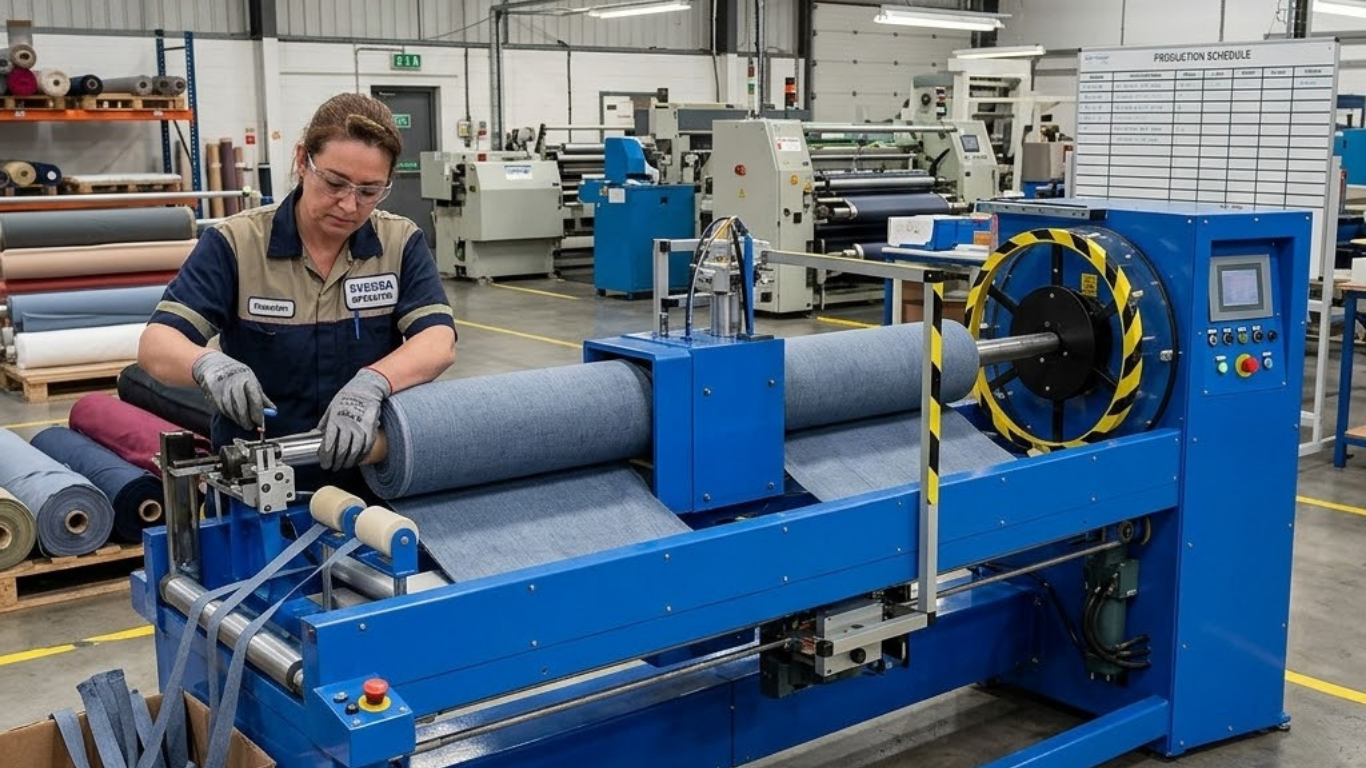
Consider the physical reality on your floor. A traditional line built exclusively for long, uniform runs usually features complex dials, specialized tools, and numerous steps between jobs. Every extra tool change or manual calibration acts as a roadblock where a quick order gets stuck behind a slow setup.
To handle varying fabric weights and widths without losing hours of profitable production, modern facilities rely on flexible cutting systems. These systems share a few vital traits:
-
Tool-less width adjustments that do not require machine disassembly.
-
Intuitive controls that an operator can master in a single shift rather than a week.
-
Tight mechanical tolerances that eliminate lengthy trial-and-error periods so your first cut is usable.
Svegea’s Semi-Automatic Range in Practice
Svegea engineered its semi-automatic range with this exact variety in mind, moving away from the rigid design of traditional, single-spec machinery to prevent costly mechanical downtime.
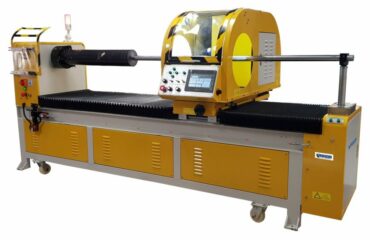
The Strip Cutter SC 300
The SC 300 solves a different part of the agility puzzle by processing roll-fed material rather than tubular knits, making it an ideal choice for high-precision fabric roll slitting. It slits a wide range of substrates, including open knits, woven fabrics, satin, polyester, and technical non-wovens.
[Strip Cutter SC 300] ──> Widths set electronically via one-button operation
                      ──> Holds cutting tolerance of ±0.5 mm
                      ──> Eliminates manual trial cuts
For a factory juggling several small client orders in different fabric types over a single week, this combination of width flexibility and material range eliminates the guesswork that normally inflates setup costs. You can view the full specifications at https://svegea.se/product/strip-cutter-sc-300/.
What This Does, and Does Not, Solve
Implementing flexible cutting systems alone will not completely solve the small-batch puzzle. Production scheduling, sourcing fabric in smaller lot sizes, and smart labor planning matter just as much.
However, on the cutting room floor, the equipment question remains straightforward: can your machine move from one specification to the next in minutes, using an operator who has not spent years learning its quirks? Lines that can answer yes absorb the high-margin, fast-turnaround orders that are defining modern on-demand textile production. The alternative is turning them down because the setup time eats into the profit.
TL;DR Flexible cutting systems win on changeover time, not raw speed. Tool-less width adjustments, straightforward controls, and precise out-of-the-box tolerances let your line move between small orders in minutes instead of hours.
Optimize Your Cutting Floor
If you are weighing options for a production line that must handle a greater variety without adding headcount or expanding your training pipeline, let’s talk data.
Connect directly with Håkan Steene, Managing Director at Svegea of Sweden, at h.steene@svegea.se to discuss your specific machinery requirements. We can audit where your changeover time is currently going and find the exact setup to protect your margins on short runs.