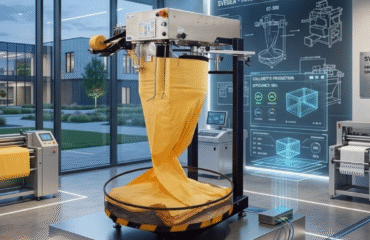

AI in textile manufacturing is no longer a future concept. It’s here. When integrated with traditional cutting machines, AI reduces material waste, improves cutting accuracy, and helps manufacturers respond more quickly to market demands. The challenge is knowing where and how to start.
Why AI Is Now a Shop Floor Conversation
A few years ago, artificial intelligence in garment manufacturing felt like a topic for tech conferences, not factory floors. That has changed fast.
Fabric costs are rising. Labor is tighter. Customers demand shorter lead times. So manufacturers are asking a practical question: Can AI help us do more with what we already have?
The answer, increasingly, is yes, but not in the way many expect.
AI does not replace your cutting machines. It works with them. And understanding that distinction is where most manufacturers need to start.
What “AI Integration” Actually Means for Cutting Operations
When people talk about AI in textile manufacturing, they often picture robots or futuristic equipment. The reality on the cutting room floor is more practical.
AI integration typically means adding intelligent software layers — often powered by machine learning — to existing equipment. These systems collect real-time data from your machines, analyze patterns, and then make decisions or recommendations that humans used to make manually.
Here are the most common applications already in use:
Predictive maintenance. AI monitors vibration, temperature, and motor load on cutting machines. It flags when a blade or motor is likely to fail — before it does. This cuts unplanned downtime significantly. According to McKinsey & Company, predictive maintenance alone can reduce machine downtime by 30 to 50 percent.
Automatic cut optimization. AI-powered nesting software analyzes fabric rolls and digitally arranges pattern pieces to minimize waste. The Textile Exchange notes that fabric typically accounts for 40 to 70 percent of total garment cost — so even a 2 percent improvement in fabric utilization translates to real savings.
Quality detection. Computer vision systems — cameras linked to AI software — can spot fabric defects like weave irregularities or color inconsistencies in real time. Defects that used to reach the cutting table now get flagged upstream.
Process automation and speed control. Certain AI-enabled cutting systems adjust blade speed and pressure automatically based on fabric type and thickness. Less guesswork. More consistency.
The Integration Challenge: Retrofitting vs. Replacing
Here is where manufacturers often get stuck. Do you need all-new machinery to benefit from AI? Or can your current equipment be upgraded?
For most mid-size garment manufacturers, a full replacement of cutting infrastructure is not practical — or necessary. The smarter path is retrofitting. Adding sensors, PLCs (programmable logic controllers), and AI-connected software to machines that are already working well.
This approach requires machines that are built to accommodate upgrades. Equipment with PLC-controlled functions, adjustable variable speeds, and preset programmable cycles is much easier to integrate with external AI systems than older fully manual setups.
Take the CMS 1800A2 Strip Cutter from Svegea of Sweden as a practical example. The machine features full PLC control, adjustable variable cutting and blade speeds, and preset cut width programming for up to five widths per cycle. These are exactly the kinds of controllable, data-friendly parameters that AI monitoring and optimization software can interface with — without needing to overhaul the entire machine.
The point is not to push any particular machine. It is important to highlight that the specs of your current equipment matter when planning AI integration. Machines with programmable, measurable parameters give AI something to work with.
What the Data Actually Says
Skepticism is healthy. But the numbers on AI adoption in textile and apparel manufacturing are becoming hard to ignore.
A 2023 report by the International Federation of Robotics (IFR) found that textile, apparel, and leather industries globally saw a 12 percent year-on-year increase in robot and automated system deployments. Much of this was AI-assisted.
The Ellen MacArthur Foundation estimates that the fashion industry generates about 92 million tonnes of textile waste annually. AI-driven cut optimization addresses this directly — and sustainability is now both an ethical and commercial priority as brands face growing pressure from buyers and regulators.
Meanwhile, Gartner’s 2024 Manufacturing Industry Insights found that 58 percent of manufacturing executives planned to increase AI investment in the next 18 months, with process efficiency and quality control ranking as the top two drivers.
Practical Steps for Getting Started
You do not need to build an AI roadmap overnight. Start with these four steps.
1. Audit your current machines for data readiness. Which machines have PLC controls? Which produce measurable, digital outputs? These are your AI-ready assets.
2. Identify your biggest pain point. Is it fabric waste? Blade wear? Defect rates? Downtime? Target one problem before trying to solve everything at once.
3. Talk to your equipment supplier. Ask directly whether their machines support third-party software integration or have API-friendly controllers. This conversation is more important than most manufacturers realize.
4. Run a pilot. Choose one production line or one machine type. Test AI-assisted monitoring or nesting optimization there first. Measure the results over 60 to 90 days before scaling.
Common Misconceptions to Let Go Of
“Our operation is too small for AI.” Not true. Several AI-powered nesting and monitoring tools are now priced for mid-size manufacturers, not just enterprise operations.
“AI will replace our skilled operators.” Also not true — at least not in the near term. What AI does is remove the repetitive, data-heavy decisions from skilled workers so they can focus on judgment calls that actually require experience.
“We need to upgrade all our machines at once.” This leads to paralysis. A phased approach is both more affordable and more effective.
The Bottom Line
AI in textile manufacturing is a practical tool — not a silver bullet and not a distant concept. The manufacturers who will benefit most are not necessarily those with the biggest budgets. They are the ones who understand their existing machinery well, know where their inefficiencies live, and approach AI as an integration challenge rather than a replacement exercise.
Start with data readiness. Start with one problem. And start talking to people who know both the machines and the technology.
Have questions about how cutting machine specifications relate to AI and automation integration? Reach out to Håkan Steene at h.steene@svegea.se. He works with garment and textile manufacturers across markets and can help you think through what integration actually looks like for your operation.
Sources referenced: McKinsey & Company | Textile Exchange | International Federation of Robotics | Ellen MacArthur Foundation | Gartner