

A camel coat with no logo. An ivory silk shirt with no visible branding. A plain wool trouser that costs more than a month’s rent. This is quiet luxury, and it has changed what shoppers notice.
When a garment has no logo to speak for it, the fabric does all the talking. Shoppers run their hands over the cloth, hold it up to the light, and study the seams. A small slub, a faint shade band, or a pulled thread has nowhere to hide. For garment manufacturers, quality control can no longer start at the sewing line. It has to start with a fabric inspection machine, long before the first cut.
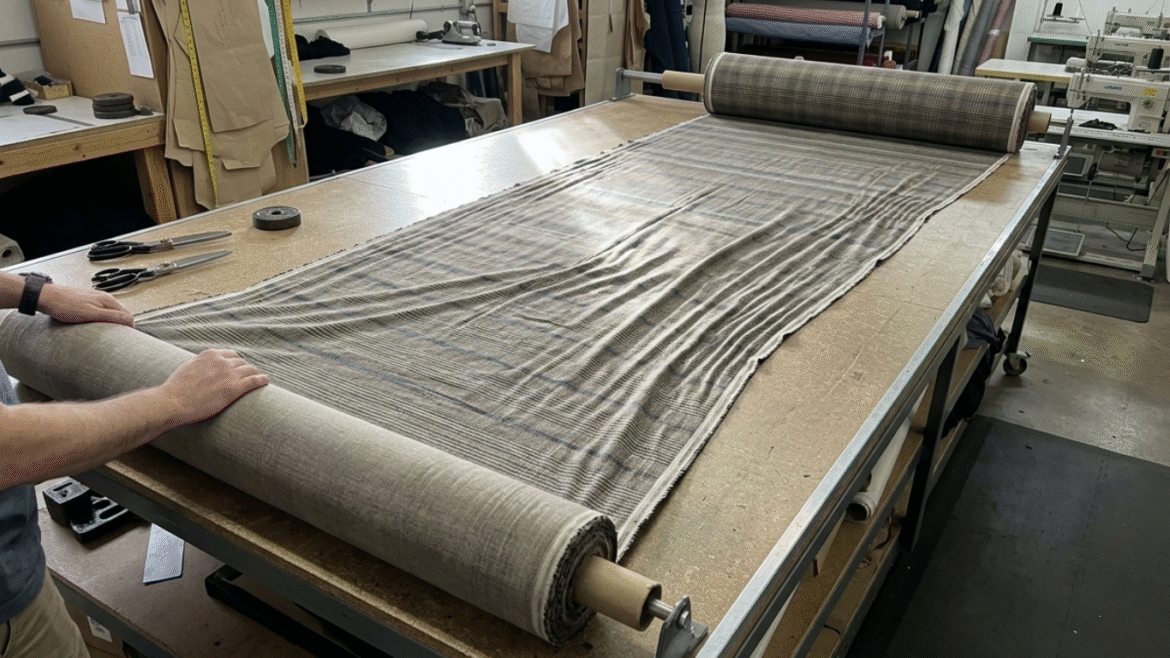
So how do garment manufacturers inspect fabric for defects? In short, operators run each roll across a lit inspection table, check it for flaws as it moves, mark every defect, and measure the roll’s true length. Most factories then grade each roll with a point system and decide whether to use it, return it, or cut around its flaws.
Key Takeaways
- Quiet-luxury garments rely on flawless fabric because there are no logos or prints to hide defects.
- Fabric inspection catches flaws before cutting, when they cost the least to fix.
- Much of the industry grades fabric with the four-point system in ASTM D5430.
- The right inspection machine depends on fabric width, speed, and where rolls go next.
Why Quiet Luxury Raises the Bar
Loud fashion has its uses. Bold prints, heavy embellishment, and large logos pull the eye away from the cloth underneath. Quiet luxury does the opposite. It strips a garment back to cut, colour, and material.
That shift puts pressure on every stage of production. A neutral coat or a pale knit shows every irregularity. Moreover, buyers of these pieces expect them to last for years, so they examine them closely before they pay. One visible flaw can turn a premium price into a return, a markdown, or a lost wholesale account.
For suppliers, the message is simple. If the brand promises perfection, the fabric must deliver it first.
The Cost of Finding Flaws Too Late
A defect costs the least while it is still on the roll. Once the fabric is spread and cut into panels, the same flaw can spoil several pieces at once. If it slips past sewing, the factory pays for labour, thread, and finishing on a garment that may never sell.
Late detection also hurts relationships. Many luxury buyers run their own checks when goods arrive. When they find defects, they may reject a whole shipment, not just the faulty pieces. As a result, a few missed flaws can delay an entire order and damage trust that took years to build.
Inspection before cutting turns unknown risks into known facts. The factory knows exactly what it has, where the flaws sit, and how much usable fabric remains.
How Garment Manufacturers Inspect Fabric for Defects
Most factories follow a similar routine:
- Load the roll onto a fabric inspection machine.
- Run the fabric over a lit inspection table at a steady, controlled speed.
- Check the full width for holes, stains, slubs, shade variation, and knitting or weaving faults.
- Mark each defect at the selvedge so cutters can avoid it.
- Record the true length and width of the roll.
- Grade the roll with an agreed point system.
The most widely used grading method is the four-point system, set out in ASTM D5430, the standard test methods for visually inspecting and grading fabrics. Inspectors give each defect one to four penalty points based on its size, then work out the total points per 100 square yards. Buyers and suppliers agree in advance how many points a roll may carry before it counts as second quality.
What Good Fabric Defect Detection Looks Like
Good fabric defect detection depends on three things: light, speed, and control.
First, the inspection area needs bright, even light, so faint shade bands and fine slubs stand out. Second, speed must suit the fabric. A plain cotton can move faster, while a fine silk or fine-gauge knit needs a slower pass. Finally, the fabric should move smoothly, without stretching or drifting to one side. Uneven tension can distort knits and hide flaws, and a wandering edge slows the operator down.
Accurate measuring matters too. Rolls do not always match the length on their labels. A reliable meter or yard counter shows what the factory really received, which protects both costing and supplier claims.
Choosing the Right Inspection Setup
Not every factory needs the same machine. Fabric width, daily volume, and the way rolls move to the next stage all shape the choice.
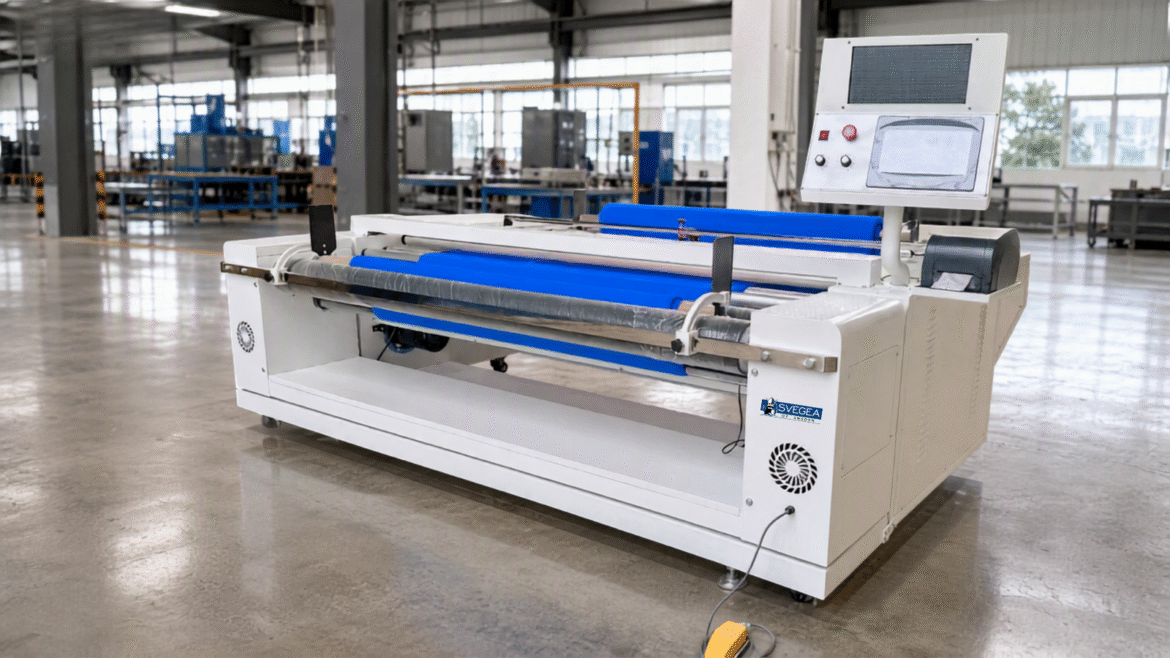
For standard widths, a compact roll-to-roll machine often covers daily needs. Svegea of Sweden’s CMI 180 and CMI 180E, for example, handle fabric up to 1800 mm wide at speeds of up to 45 m/min. For wider goods, the CMI 210 R and CMI 210 ZR take fabric up to 2100 mm and add photocell edge alignment, electronic tension adjustment, and an electronic meter counter. The CMI 210 ZR can also deliver fabric roll to roll or roll to flat, which helps when inspected fabric goes straight to spreading.
Whatever the model, the goal stays the same: know your fabric before you cut it. You can compare the full range on the fabric inspection machines page.
Quick Tips for Flawless Fabric
- Inspect every roll, not just samples. Premium buyers expect the same quality across the whole order.
- Slow down for delicate fabrics. Fine silks, wools, and knits reveal more flaws at lower speeds.
- Check shade from roll to roll. Compare a strip from each roll to catch colour differences between batches.
- Mark defects clearly. Use stickers or tags at the selvedge so cutters spot them at once.
- Relax knits first. Tension can stretch knitted fabric and hide its true width, so a fabric relaxing machine is a useful step before inspection.
Frequently Asked Questions
How do garment manufacturers inspect fabric for defects?
They run each roll through a fabric inspection machine, check it under bright light as it moves, mark every defect, measure the roll, and grade it, usually with the four-point system.
What is the four-point system in fabric inspection?
It is a grading method described in ASTM D5430. Inspectors give each defect one to four penalty points based on its size, then compare the total per 100 square yards with an agreed limit.
What defects does fabric inspection detect?
Common examples include holes, stains, slubs, broken yarns, shade variation, and differences in width or length.
Why is fabric inspection important for luxury brands?
Quiet-luxury garments rely on plain, premium fabric. With no logos or prints to distract the eye, even small flaws are visible, so inspection protects both the garment and the brand’s reputation.
Ready to Inspect Smarter?
Luxury starts long before a garment reaches the shop floor. It starts with the roll. To find the right fabric inspection machine for your production, contact Svegea of Sweden or email Hakan Steene at h.steene@svegea.se to book a product demo.

Every autumn, shoppers reach for sweaters, cardigans, and sweatshirts. Most of them judge a knit in seconds. They touch the fabric, check the fit, and tug at the cuff. That last move tells them more than any label.
A cuff that snaps back feels like quality. One that sags, twists, or ripples feels cheap, even when the body fabric is excellent. For knitwear manufacturers, the finishing details deserve as much attention as the yarn.
So how are rib cuffs and hems made in production? In short, factories start with tubular rib fabric and cut it into even bands on a collarette cutting machine. They then fold the bands, sew them to the sleeve or body, and finish them. The cleaner the first cut, the better the final garment looks and wears.
Key Takeaways
- Factories cut rib cuffs and hems from tubular rib fabric into bands of equal width.
- Even small differences in band width cause twisted cuffs and wavy hems.
- Uneven bands slow down sewing, raise reject rates, and waste fabric.
- The right level of cutting automation depends on volume, style changes, and staff.
Why the Cuff Makes or Breaks a Sweater
The cuff does a lot of work. It holds the sleeve in place, keeps warmth in, and frames the hand. The hem does the same job at the waist. Together, they give a sweater its shape.
Rib fabric stretches and recovers, which makes it comfortable to wear. Cutting it, however, is another story. Rib shifts under the blade, and even a small shift changes the band width. Cotton knits also relax and skew after knitting, an effect textile researchers call fabric spirality or torque. A band that is even slightly wider on one side will twist once it is sewn. Repeat that error across a winter order of thousands of sweaters, and a small flaw becomes a serious quality problem.
Moreover, today’s shoppers post reviews, and those reviews move sales. Research from Northwestern University’s Spiegel Research Center found that a product with five reviews is 270% more likely to be purchased than one with none. A single comment about a stretched-out cuff can hurt sales faster than any returns report. Brands know this, and they pass that pressure straight to their suppliers.
How Rib Cuffs and Hems Are Cut
Most knitwear factories follow the same basic process:
- Rib fabric is knitted in a continuous tube.
- An operator loads the tube onto a collarette cutter.
- The machine cuts the rotating tube into continuous bands at a set width.
- Sewing operators attach the bands to sleeves, bodies, or necklines.
The cutting step sounds simple. In practice, it decides whether the rest of the line runs smoothly or stalls.
The Hidden Cost of Uneven Bands
When bands vary in width, problems pile up quickly. Sewing operators slow down to ease uneven pieces into place. Finished cuffs pucker or roll. Quality control rejects more garments, and rework eats into already thin margins.
Hand cutting makes this worse. Scissors and rotary tools depend on the operator’s eye and energy, and both fade over a long shift. As a result, the first cuff of the day rarely matches the last.
Waste adds up too. A 2024 UC Santa Barbara study cites estimates that 10–15% of fabric is already discarded during cut-and-sew, and a study published by the U.S. National Institutes of Health puts the figure as high as 20%. Every off-width band that gets thrown away adds to that loss, and it is fabric the factory has already paid for. Over a full season, that loss can quietly erase the profit on an entire style.
Finding the Right Level of Automation
Once a factory sees these costs, the next question is how much automation it actually needs. The answer is rarely “as much as possible.”
Large plants that run the same basic tee for months often benefit from fully automatic lines. Many knitwear producers, though, work differently. They run medium volumes, change styles every few weeks, and bring in seasonal staff for the autumn rush. For them, a semi-automatic collarette cutter usually makes more sense.
With a semi-automatic setup, the machine handles the precision cutting, while the operator keeps control of loading and setup. Changeovers between band widths go faster, and the upfront investment stays lower. New operators also learn the process quickly, which matters when deadlines are tight.
Range matters as much as speed. A single machine should cover both slim cuffs on a fine merino sweater and deep hems on a heavy sweatshirt. Svegea of Sweden, which has built automatic collarette cutters for more than 70 years, offers semi-automatic models that cut bands from 16 to 140 mm and handle two bands at once as standard. That flexibility lets one cutter serve an entire autumn collection instead of a single style.
Quick Tips for Better Rib Bands This Season
- Relax the fabric first. Rib fabric fresh off the roll often holds tension, so let it settle before cutting to keep bands at their true width. Garment and textile manufacturing companies agree that relaxation is a key factor in a knit’s dimensional stability, and note that handling in the cutting room can cause further shrinkage.
- Match the band to the garment. Use narrower bands for fine-gauge knits and wider ones for heavy sweatshirts and outerwear.
- Check your knives daily. A dull blade drags rib fabric and leaves uneven edges.
- Test before you commit. Cut a short run, measure the bands, and adjust before you start the full order.
- Track your rejects. If cuff and hem defects keep rising, the cause often starts at the cutting table, not the sewing line.
Frequently Asked Questions
What is a collarette cutting machine? A collarette cutting machine cuts tubular knitted fabric into continuous bands of equal width. Factories use these bands for cuffs, hems, neckbands, and binding.
How are rib cuffs cut for sweaters? Factories cut rib cuffs from tubular rib fabric on a collarette cutter set to the required band width. Operators then fold the bands and sew them to the sleeves.
What is the difference between semi- and fully automatic collarette cutters? Semi-automatic cutters need more operator input during loading and setup, which suits medium volumes and frequent style changes. Fully automatic cutters need less manual work and suit high-volume production of the same styles.
Why do sweater cuffs twist after sewing? Twisted cuffs usually come from bands that vary in width or from fabric cut while still under tension. Relaxing the fabric and cutting with consistent equipment solves most cases.
Ready to Perfect Your Cuffs?
Sweater season rewards the details. If your team wants cleaner cuffs, steadier hems, and less waste, a short conversation can point you in the right direction. Contact Svegea of Sweden or email Hakan Steene at h.steene@svegea.se to book a product demo.
Sustainable Fabric Cutting Technology
Fabric relaxing is a pre-cutting step that lets rolled fabric rest under controlled, tension-free conditions before it reaches the cutting table. A fabric relaxing machine unwinds the roll, releases the internal stress built up during knitting, dyeing, or transport, and lets the material settle into its true dimensions. This one step cuts pattern distortion, lowers reject rates, and reduces textile waste in manufacturing. Heading into 2027, it’s one of the more practical sustainability upgrades a cutting room can make.
What causes fabric waste in cutting rooms?
Knitting, dyeing, and transport all put significant tension on rolled fabric. Winding a roll tightly, dyeing it under heat, or shipping it across the country all pull and stretch the material in ways the eye can’t see. The fabric holds this tension until something releases it. If nothing does, the release happens on the cutting table — or worse, after workers sew the garment.
Here’s the practical problem this creates. A cutter lays fabric flat and cuts it to a pattern while the material is still under tension. Once it’s off the table, the fabric relaxes and pulls back toward its natural shape. Panels that looked perfect during cutting shrink, skew, or twist. Seams no longer align. The finished garment may pucker, sag, or fit incorrectly after its first wash, and none of this shows up until it’s expensive to fix.
Knit fabrics and stretch wovens with spandex or Lycra content are especially prone to this problem, because their fibers hold tension longer than rigid wovens do. Circular knits add another layer of risk: cutting teams slit the tube open and spread it flat before cutting, and that extra handling step introduces skew on top of existing distortion.
The financial impact is larger than most cutting rooms assume. Fabric waste in cutting rooms typically runs 10% to 20% of total material, according to Lectra, and fabric alone often accounts for more than half of a garment’s total cost. Even a small improvement in fabric utilization translates directly into lower material spend and less waste headed to landfill or recycling.
How does fabric relaxing reduce waste?
A fabric relaxing machine addresses the problem at its source, before the fabric ever reaches the marker table. Instead of cutting a stressed, distorted roll and hoping for the best, the fabric first travels through a relaxing unit that unwinds it slowly, removes tension through mechanical rollers or controlled airflow, and lets the fibers settle back into their natural, balanced state.
Once the fabric relaxes, its true dimensions return, and cutters can follow the fabric’s actual grain instead of a stretched, temporary one. That single change has a ripple effect across the whole production line:
- Fewer distorted panels means fewer rejected pieces and less scrap fabric.
- Consistent dimensions mean tighter marker efficiency, so planners can nest patterns closer together without leaving a safety margin for shrinkage.
- Fewer post-wash surprises mean fewer returns and less rework, which saves fabric that would otherwise go into a second cut.
- Stable, tension-free feeding protects delicate or elastic fabrics from stretching, snagging, or fraying at the edges.
In short, fabric waste drops when cutting rooms remove tension before the fabric reaches the marker table, and manufacturers get more usable garment pieces out of every roll they buy. Operators feed a well-relaxed roll into the spreader without added stress, so what a planner sees on the marker is what the sewing line actually gets.
Which fabric relaxing machine fits my production volume?
Svegea builds fabric relaxing machines for a range of production volumes and fabric types, from standard knit-and-woven operations to high-speed, air-assisted lines handling delicate stretch textiles. The table below compares the current lineup so you can match a machine to your cutting room’s needs.
| Model | Best for | Relaxing method | Key feature | Learn more |
| CR210 | Standard-volume cutting rooms | Stepless electronic speed control with an oscillating fold system | Photocell loop control for smooth, tensionless feeding | svegea.se/product/cr210-fabric-relaxing-machine/ |
| CR210A | Higher-precision cutting rooms needing tighter edge control | Same tensionless feeding as the CR210, plus automatic edge alignment | Integrated automatic edge alignment device | svegea.se/product/cr210a-fabric-relaxing-machines/ |
| CRX Air Relaxing Series | High-speed lines and delicate stretch fabrics (jersey, lycra, technical textiles) | Dual independent air-flotation zones instead of mechanical rollers | PLC control, automatic width measurement, speeds up to 40 m/min | svegea.se/product/fabric-relaxing-machine-crx-air/ |
The CR210 suits standard-volume cutting rooms that need dependable, tensionless feeding without a large equipment footprint. The CR210A builds on that same platform and adds an automatic edge alignment device for manufacturers who need tighter tolerance control on wide or high-value fabric runs. The CRX Air Relaxing Series runs on controlled airflow instead of mechanical rollers, which makes it the better fit for lightweight knits, lycra blends, and other fabrics that stretch or curl easily under physical contact.
A quick note on model selection: Svegea’s current fabric relaxing lineup covers these three machines. If you were comparing a “CR205” model, double-check the spec sheet or brochure you’re working from — it doesn’t currently appear as an active model on svegea.se, and the closest equivalent for lighter, standard-volume applications is the CR210.
Sustainability impact
The stakes go beyond one cutting room. The fashion industry loses the equivalent of one garbage truck of textiles to landfill or incineration every second worldwide, and recyclers turn less than 1% of clothing back into new garments, according to the Ellen MacArthur Foundation. Preventing waste at the cutting stage keeps material out of that stream entirely.
Regulation is starting to reflect this. In Europe, manufacturers and retailers destroy an estimated 4% to 9% of the textile products they place on the market before anyone ever uses them, according to the European Environment Agency. That data helped shape the EU’s Ecodesign for Sustainable Products Regulation (ESPR), which bans large companies from destroying unsold textiles starting in July 2026. Manufacturers who cut waste upstream, at the cutting table, stand in a stronger position for this kind of policy shift than those relying on downstream fixes.
Fabric relaxing also supports a “cut it once” mindset. When pattern pieces hold their shape after cutting, fewer garments need rework, fewer rolls need re-ordering to cover shrinkage losses, and manufacturers waste less packaging, transport, and processing on fabric that never becomes a finished product. For a fashion industry under growing pressure to show measurable sustainability progress by 2027, this kind of upstream fix is one of the more cost-effective places to start.
Not inevitable
Cutting-room waste isn’t inevitable — it’s largely a tension problem, and tension is solvable before the fabric ever meets the blade. A fabric relaxing machine gives manufacturers a practical, proven way to stabilize material, protect pattern accuracy, and reduce textile waste in manufacturing without slowing down production.
To see the full fabric relaxing lineup, product brochures, and specifications, visit our Fabric Relaxing Series page. For more on fabric shrinkage and pre-cutting prep, read svegea.se/prevent-fabric-shrinkage/. Contact us for a product demo!
FAQ
What is fabric relaxing in textile manufacturing?
Fabric relaxing is a pre-cutting process that removes internal tension from rolled fabric so it can settle into its natural, stable dimensions before spreading and cutting.
Why does fabric shrink after cutting if it was measured correctly?
Most likely, the fabric went through cutting while still under tension from knitting, dyeing, or transport. Once it’s off the cutting table, that tension releases, and the material shrinks or shifts out of shape.
How much fabric waste can a relaxing machine actually prevent?
Results vary by fabric type and production setup, but since cutting-room waste typically runs 10% to 20% of total material (www.lectra.com), even a modest reduction in distortion-related waste can meaningfully lower material costs.
Do all fabric types need relaxing before cutting?
Knit fabrics and stretch wovens with spandex or Lycra content benefit the most, since their fibers hold tension longer. Rigid wovens still benefit, but usually need shorter relaxing cycles.
What’s the difference between fabric relaxing and pre-shrinking?
Pre-shrinking uses washing or steaming to shrink fabric before cutting, which works but takes time and adds cost. Relaxing lets the fabric settle naturally, without added moisture or heat, which is faster and gentler on delicate materials.
Garment factories are changing faster than most buyers realize. Machines now handle jobs that used to take several pairs of hands, and cutting rooms are quietly becoming the most technical part of the whole production line. For manufacturers planning capacity for 2027, that shift is worth understanding now.
The top textile manufacturing trends for 2027 are automation in trim and collarette production, gentler air-based fabric relaxing, waste reduction built into the cutting process, and modular machines that adapt to more than one job. Together, these trends point toward factories that produce more, waste less, and rely less on manual labor to stay consistent.
What Is Driving Automation in Textile Trims?
Labor costs are rising, and buyers expect tighter quality control than ever before. Because of this, semi-automatic trim machines are becoming standard rather than a premium upgrade. A machine like the EC50 Semi-Automaticlets one operator load fabric and start a cutting cycle that runs on its own, cutting labor time without cutting corners on precision.
The payoff shows up in the numbers. According to a 2026 garment manufacturing market report, automation in stitching and cutting has already improved productivity by 18% and reduced waste by 11% industry-wide. That kind of gain is hard to ignore for factories competing on both speed and cost.
High-precision collarette machines are following the same path. The EC300 Euro Collarette is built to hold consistent trim width across long runs, which matters more as brands demand uniform quality across bigger batches.
How Is Fabric Relaxing Getting Gentler?
Fabric that’s cut under tension often shrinks or distorts later, and that problem has quietly cost manufacturers money for years. In 2027, expect more factories to add a relaxing step before cutting, and to do it with less mechanical stress on the fabric.
Air-based relaxing is leading that change. The CRX Air Relaxing Series uses contact-free air technology instead of rollers, which reduces distortion in delicate knits. It’s a small step in the process, but it prevents costly rework further down the line.
Why Is Waste Reduction Now a Core Trend, Not an Afterthought?
Sustainability pressure isn’t new, but it’s becoming more concrete. Fabric waste is being treated as a production cost to eliminate, not just an environmental talking point. Systems that combine cutting, folding, and winding in one pass – like the Complete Bias System – cut down on offcuts and reduce the handling steps where fabric typically gets damaged or wasted.
This trend also connects back to relaxing and trim precision. A cleanly relaxed, evenly cut fabric produces fewer rejected panels, and fewer rejected panels means less fabric bought and discarded in the first place.
Why Are Modular, Accessory-Based Machines Gaining Ground?
Manufacturers no longer want a machine that does one job well. They want equipment that adapts as orders change. Accessory kits, like the ones now available for the EC200C, let a single collarette machine produce multiple trim widths and styles without buying separate equipment for each style.
This flexibility matters most for mid-size manufacturers, who need to serve varied customer demands without the capital cost of a large, specialized machine fleet.
What This Means for Your Production Line
None of these trends work in isolation. Automation improves speed, gentler relaxing protects fabric quality, waste reduction protects margins, and modular machines protect flexibility. Manufacturers who treat these as one connected strategy – rather than four separate purchases – will be better positioned heading into 2027.
If you’re mapping out equipment upgrades for the year ahead, contact the Svegea team to talk through which machines fit your production line.
FAQ
- What is the biggest textile manufacturing trend for 2027?
Automation in trim and cutting is the trend with the broadest impact, since it affects speed, labor cost, and consistency at once. - Does automation reduce fabric waste?
Yes. Automated, precision-cut trims and relaxed fabric both reduce the number of rejected panels, which lowers overall fabric waste. - What is fabric relaxing and why does it matter?
Fabric relaxing removes tension from a fabric roll before cutting. It’s important because fabric cut under tension tends to shrink or shift shape after cutting, causing quality issues later. - Are modular machines worth it for smaller manufacturers?
Often, yes. A modular machine with accessory kits can replace several single-purpose machines, which lowers equipment costs for manufacturers producing varied trim styles. - How can I prepare my factory for these 2027 trends?
Start by identifying where manual handling causes the most waste or inconsistency – usually trim cutting or fabric relaxing – and evaluate equipment built for that specific step.