
The short answer: The EU Digital Product Passport (DPP) is a digital record that will travel with each textile product sold in the European Union. The brand that sells the product owns the passport, but much of the data inside it comes from the factory: what the fabric is, where it came from and how it was checked. The EU switched on the DPP Registry in July 2026, and textile rules are expected toward the end of 2027. That leaves manufacturers a short window to get their data in order.
Key Takeaways
- The EU launched the Digital Product Passport Registry on 20 July 2026. Rules written specifically for textiles are expected toward the end of 2027.
- Brands register the passports, yet they will rely on their suppliers for the data.
- Fabric that is inspected, relaxed, and measured before cutting is far easier to document.
- Factories that build clean, digital records now will become the suppliers EU brands trust first.
Picture a plain white T-shirt on a shop shelf in Stockholm a few years from now. A shopper scans the small code on its label. In seconds, her phone shows what the shirt is made of, where it was produced and how long it should last. Behind that simple scan sits a long chain of facts, and many of those facts start on your cutting floor.
That scene is the promise of the EU Digital Product Passport. For garment and textile manufacturers, it is also a quiet change in what customers will expect from you.
What Is the EU Digital Product Passport?
The Digital Product Passport is a digital identity card for a product. It comes from the Ecodesign for Sustainable Products Regulation (ESPR), the EU law that aims to make products more durable, repairable and recyclable. Each passport holds key information about a product, and a central EU registry links that record to a unique product ID.
On 20 July 2026, the European Commission launched the DPP Registry along with a testing environment. Businesses can register passports through a simple web interface or connect their own systems through an API. Customs authorities will also be able to check electronically whether imported goods carry a valid, registered passport. Textiles sit among the priority groups, alongside furniture, tyres, steel and electronics.
When Will Textiles Need a Passport?
Not yet, but soon. The registry is live; however, it does not make every garment subject to a passport today. A separate textile act must first set the exact data fields, scope and timeline, and trade reports expect it toward the end of 2027.
That might sound far away. In practice, it is not. Brands plan their collections well ahead, and they will want supplier data in place before the first passport is due. As a result, your customers may start asking questions long before any legal deadline.
Why Should Garment and Textile Manufacturers Care?
Legally, the duty to create and register a passport falls on whoever places the product on the EU market, usually the brand or importer. Still, brands cannot invent the facts. They will turn to the mills, factories and cut-and-sew partners who actually handled the fabric.
Another rule adds weight to this shift. Since 19 July 2026, large companies in the EU can no longer destroy unsold clothing, footwear or accessories, and a standard reporting framework follows in February 2027. Together, these rules reward brands that know exactly what they made, how much they made and why. Suppliers who can answer those questions quickly will become preferred partners. Those who cannot will start to look like a risk.
The Cutting Room: Where Good Data Begins
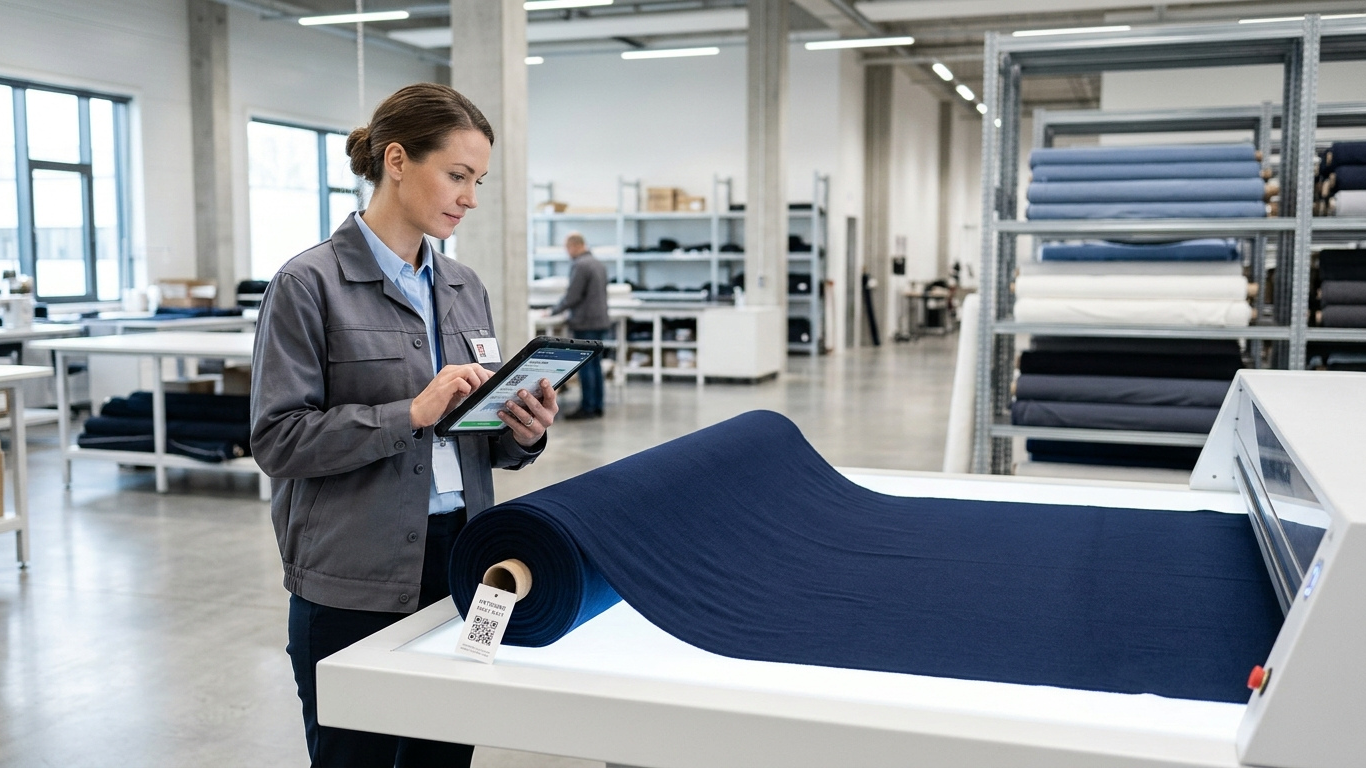
Every roll of fabric tells a story on its way to becoming a garment. It arrives, gets inspected, rests, gets measured and finally meets the blade. Each step creates useful facts, such as true length, real width, defects found and shrinkage after relaxing. Today, many of these facts live on paper or in a supervisor’s memory. Under the DPP, they become evidence.
Inspect before you cut
A recorded inspection gives every roll a history. Defects found at this stage stay out of finished garments, which means fewer rejects and less unsold stock. Just as important, the inspection log becomes proof of the care your team takes.
Measure what you actually received
Invoices state one width and length; the roll on your floor may tell a different story. Recording the real figures improves marker planning and gives brands accurate material data instead of estimates.
Relax first, then record
Knitted and stretch fabrics carry tension from knitting, dyeing and winding. Measure them too early, and the numbers drift once the fabric settles. Relaxing fabric before spreading gives you true measurements and garments that keep their size after washing. Svegea of Sweden’s CRX Air Relaxing Series, for example, measures fabric width automatically, controls length electronically and exports production data via USB, so the figures leave the machine already in digital form.
Five Steps to Get Passport-Ready Now
- Map your data. List what you already record for each roll and each order, and note where it lives.
- Give every roll an ID. Make sure that ID follows the fabric from receiving through inspection to cutting.
- Go digital at the source. Favour equipment that logs and exports data, so nobody has to retype numbers later.
- Talk to your EU customers. Ask what information they expect and in which format they want it.
- Watch for the textile act. Follow European Commission updates, since the final data fields will shape your records.
The Bottom Line
The Digital Product Passport is not just paperwork. It is proof. Factories that inspect, relax, measure and record fabric before the first cut will hand brands the data they need, and they will earn the trust that wins repeat orders. So when that shopper in Stockholm scans her white T-shirt, the story she reads could start in your cutting room.
Want to see how better fabric preparation fits your production line? Contact Svegea of Sweden or email Håkan Steene at h.steene@svegea.se to book a product demo.
Frequently Asked Questions
What is a Digital Product Passport for textiles?
It is a digital record linked to a garment or textile product through a unique ID, such as a QR code. Under the EU’s Ecodesign for Sustainable Products Regulation, it will store key product information to support transparency, repair, and recycling.
When will the Digital Product Passport become mandatory for textiles?
The EU Registry went live on 20 July 2026, but textiles still need their own delegated act. Trade reports expect it toward the end of 2027, and mandatory dates will follow from that act.
Who is responsible for the Digital Product Passport, the brand or the manufacturer?
The company that places the product on the EU market, usually the brand or importer, must create and register the passport. However, manufacturers supply much of the data, so brands will ask them for it.
How can garment factories prepare for the Digital Product Passport?
Start by recording roll-level data such as fabric type, true width, length and inspection results. Then assign each roll an ID, choose equipment that exports data digitally and agree on data formats with your EU customers.