
TL;DR
Garment manufacturers can significantly reduce textile waste and improve fabric utilization by implementing advanced material optimization strategies. Traditional methods often cause material distortion and feeding errors, leading to high downstream rejects. Upgrading to advanced slitting and cutting systems with synchronized feeding—such as the Svegea CMS 1800A2 and Euro-Collarette series—ensures precision fabric cutting and minimizes costly edge scrap.
Material costs are the largest single expenditure in garment manufacturing, often accounting for up to 60% of total production expenses. Despite this financial weight, typical cutting room operations still generate substantial amounts of fabric scrap. When factories mismanage fabric utilization in garment manufacturing, they face a dual penalty: tight profit margins shrink further, and environmental footprints expand.
To break this cycle, forward-thinking manufacturers are moving away from passive handling. They are adopting active material optimization strategies instead. This shift requires an understanding of how raw textiles behave under mechanical stress. It also requires deploying advanced precision fabric-cutting hardware to prevent waste before it happens.
The True Cost of Downstream Fabric Waste
Many factory managers view fabric waste as an inevitable byproduct of the cutting room floor. However, a significant portion of this waste stems from mechanical inaccuracies during initial processing. When raw fabric rolls are sliced into component strips or binding bands, traditional machinery often pulls the material unevenly.
This tension creates minor distortions across the textile web. While these imperfections may seem negligible at first glance, they manifest as major defects during downstream sewing. Stretched or misaligned fabric strips cause skewed seams, puckering, and uneven collars. Consequently, quality control teams must reject the finished garments.
By addressing material distortion at the source, manufacturers can prevent these costly errors. According to industry studies on sustainable manufacturing from organizations like the Ellen MacArthur Foundation, optimizing raw material processing is the most effective way to eliminate industrial textile waste.
The Role of Synchronized Feeding in Fabric Utilization
How do modern production facilities achieve perfect alignment without wasting valuable material? The answer lies in automated, synchronized feeding mechanisms.
When a cutting system pulls fabric from a roll or fold without precise speed regulation, the material stretches. Knitted fabrics are especially vulnerable to this tension, which alters their natural relaxation state. High-yield textile machinery solves this issue by matching the feeding speed exactly with the cutting mechanism speed.
[Fabric Roll Supply] —> (Automated Speed Sync) —> [Precision Cutting Blade] —> Zero-Tension StripSynchronized feeding ensures the textile remains completely relaxed as it meets the blade. This precision eliminates the traditional “buffer zone”—the extra material managers typically add to accommodate fabric shrinkage or shifting. By removing this buffer, factories achieve tighter nesting patterns and significantly improve overall fabric utilization.
Engineering Precision into the Cutting Room
Achieving high-yield textile production requires mechanical stability and smart automation. Manual cutting processes are simply too variable to meet modern tolerance requirements. To achieve repeatable precision, manufacturers rely on specialized systems designed for specific cutting challenges.
Roll Slitting and Strip Cutting Efficiency
For operations that process woven or synthetic rolls into binding strips, the stability of the blade and carriage is critical. Advanced units utilize automated Programmable Logic Controller (PLC) systems to manage the knife carriage movement. This technology allows operators to pre-program exact dimensions, ensuring that every cut remains identical from the first meter to the last.
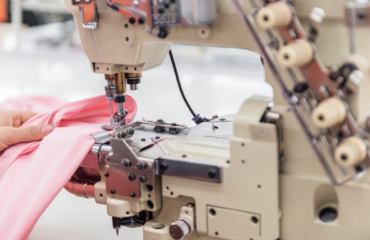
For example, equipment like the Svegea CMS 1800A2 Strip Cutter uses an enclosed knife carriage and digital settings to deliver clean cuts across widths ranging from 5 mm to 1800 mm. This versatility allows factories to maximize the use of every roll, converting edge scrap into usable product components.
Eliminating Waste in Tubular Knit Processing
Tubular knitted fabrics present unique handling challenges due to their inherent elasticity. Standard cutting methods often flatten and distort the tube, leading to uneven edges and wasted center sections.
Advanced options like the Svegea Euro-Collarette Series overcome this issue by utilizing specialized internal fabric guides and variable speed controls. Systems such as the fully automatic Euro-Collarette 200CS feature electronic soft start and stop functions. This feature prevents the initial fabric jerk that frequently ruins the first few meters of a run.
By maintaining uniform tension throughout the entire cutting cycle, these specialized collarette cutters allow manufacturers to extract maximum material value with virtually zero waste.
The Financial Impact of High-Yield Machinery
Upgrading to high-yield machinery alters the financial landscape of a garment factory. When you reduce textile waste by even a small percentage, the cumulative savings over a fiscal year can be substantial.
| Operational Metric | Legacy Cutting Systems | Advanced Optimized Machinery |
| Average Material Waste Rate | 8% – 12% | Less than 2% |
| Fabric Tension Control | Manual / Unsynchronized | Automated PLC / Speed Synchronized |
| Downstream Reject Rates | Moderate (due to strip distortion) | Exceptionally Low (consistent dimensions) |
| Setup and Changeover Time | High (manual scaling and resets) | Low (pre-programmed digital recipes) |
Minimizing waste also helps manufacturers comply with increasingly strict international environmental standards. The European Environment Agency continues to push for circularity and waste reduction within the textile sector. Adopting advanced cutting technology helps brands meet these regulatory demands while simultaneously lowering their raw material procurement costs.
Strategic Implementation for Factory Managers
Transitioning to an optimized, low-waste cutting room requires a systematic approach. Factory managers should begin by auditing their current waste streams to identify where the largest volume of scrap occurs. If the majority of scrap consists of uneven roll edges or distorted binding strips, the mechanical feeding system is likely the root cause.
Investing in machinery that features automated speed synchronization, robust blade guidance, and flexible width adjustments will solve these issues. Furthermore, choosing systems with intuitive digital interfaces ensures that operators can switch between different fabric profiles quickly and accurately, reducing human error during setup.
Optimize Your Production Yield
Reducing textile waste requires the right balance of mechanical precision and automated control. If you want to eliminate material distortion, improve your fabric utilization, and protect your manufacturing margins, upgrading your cutting room infrastructure is a critical next step.
For expert guidance on selecting the ideal slitting or collarette cutting configuration for your facility, contact Håkan Steene at h.steene@svegea.se to discuss your specific technical requirements.