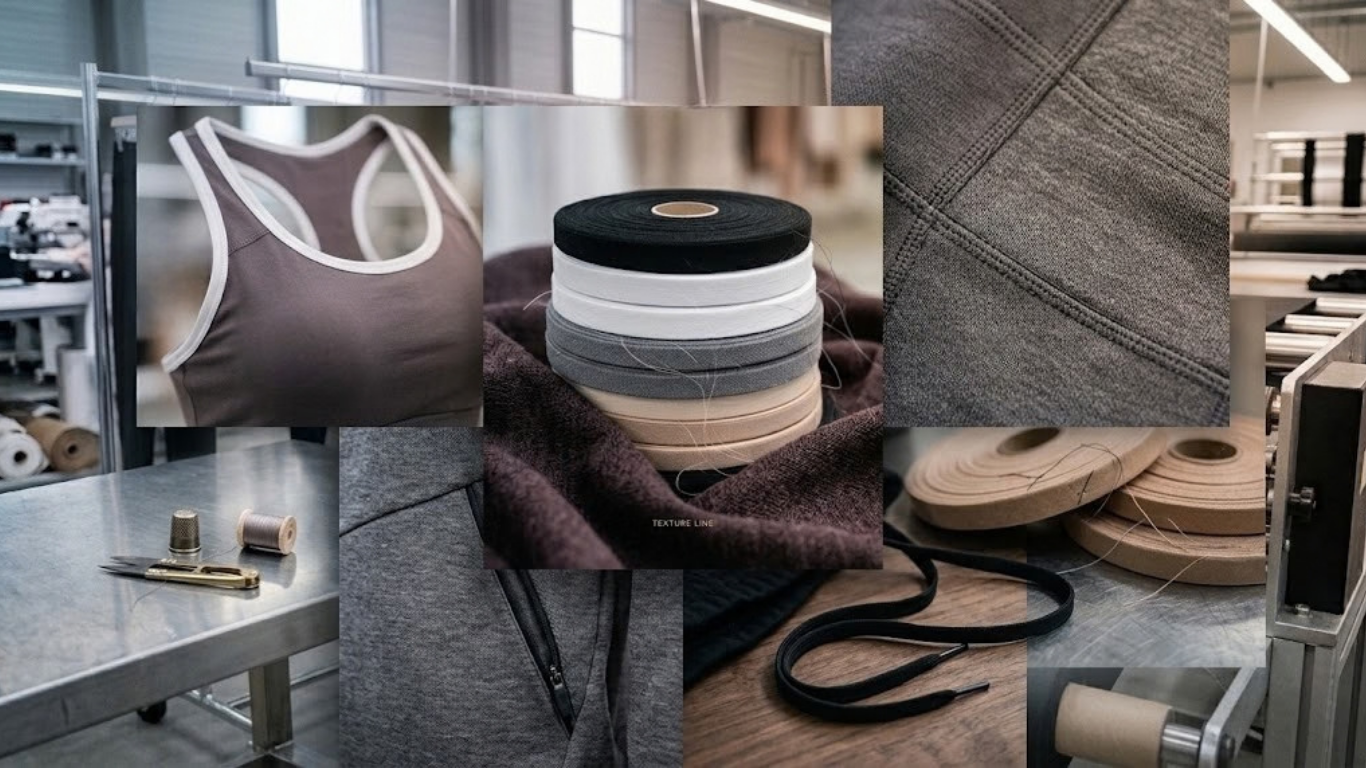
Look closely at any modern garment, and you will find strips everywhere. A soft waistband on joggers. Binding along a sports bra. Piping on a jacket pocket. Clean edging on a pair of leggings. These narrow components rarely get attention, yet they decide how a garment fits, feels, and lasts.
For 2027, that small detail is becoming a big production question. Brands want more stretch, more comfort, and more variety, and they want it faster. As a result, the strip cutting machine has moved from a back-room tool to a key part of the cutting floor.
So what is changing in strip cutting for 2027? In short, manufacturers now need to cut more trim widths, in shorter runs, from a wider mix of stretch and technical materials. Strip cutting technology is adapting with stored cut programs, servo-driven precision, automatic blade care, and enclosed cutting for operator safety. Factories that match the right machine to their volume can switch styles faster and waste less fabric.
Key Takeaways
- Demand for elastic and narrow trims keeps rising, driven by activewear, intimates, and medical textiles.
- Factories face more trim widths, more materials, and shorter production runs.
- Modern strip cutters answer with preset cut programs, ±0.01 mm accuracy, and automatic blade sharpening.
- The right machine depends on roll size, volume, and how often you change widths.
Why is elastic and trim demand shifting in 2027?
Comfort has become a buying habit, not a trend. Shoppers now expect stretch in almost everything, from office trousers to school uniforms. That expectation pulls elastic waistbands, stretch binding, and flexible edging into far more product lines than before.
The numbers support this. According to Research and Markets, the global elastic narrow fabric market is projected to grow from about USD 912 million in 2026 to USD 1.21 billion by 2032, a compound annual growth rate of 4.8%. The report links that growth to sportswear, medical products, automotive uses, and specialized industrial applications.
Several forces stand behind this shift:
- Activewear and athleisure keep growing. Leggings, sports bras, and joggers all rely on soft, even trims that move with the body.
- Intimates and shapewear demand precision. Narrow bindings and edgings must sit flat against the skin, with no rough or wavy edges.
- Medical and compression textiles are expanding. These products need consistent widths for both comfort and function.
- Brands order more styles in smaller batches. Each new style can bring a new trim width, colour, or material.
Moreover, sustainability pressure has changed how buyers view waste. Every off-width strip is fabric the factory paid for and cannot sell. Consequently, cutting accuracy now affects margins and environmental targets at the same time.
What’s the difference between the FA350, FA500 and CMS series?
Svegea of Sweden builds several strip cutters, each suited to a different production profile. The table below compares four models using the specifications listed on svegea.se.
| Model | Automation | Max. width | Max. roll diameter | Cut presets | Best for |
|---|---|---|---|---|---|
| FA 350 | Fully automatic, PLC controlled | 2000 mm | 300 mm | Up to 3 cut widths, 3 programs | Precision trims across mixed materials |
| FA 500 | Heavy-duty fully automatic, PLC servo (X & Y) | 2000 mm | 400 mm | Up to 6 cut widths with recipe storage | High-capacity runs on large rolls |
| CMS 1800 A3/A4 | Fully automatic blade forwarding and carriage | Wide-format rolls | On request | Multi-preset touchscreen with memory | Continuous, high-volume slitting with little operator input |
| CMS 1850A | Automatic, step-motor controlled | 1630 mm | 250 mm | Up to 5 preset widths | Small to mid-sized cutting rooms on a budget |
Specifications from svegea.se. Contact Svegea for full CMS 1800 A3/A4 dimensions.
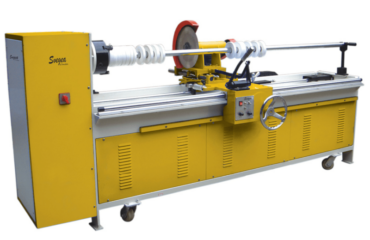
The FA 350 handles a wide range of materials, from open knits and wovens to PVC, vinyl, satin, and non-wovens. It cuts with ±0.01 mm accuracy, sharpens its own blade, and stays fully enclosed during each cut cycle.
The FA 500 takes the same idea further. Its larger 500 mm blade and 400 mm roll capacity suit factories that run long jobs on big rolls. PLC servo positioning and recipe storage let operators recall up to six cut widths for repeat orders, saving setup time on recurring jobs.
The CMS 1800 A3/A4 focuses on continuous output. Automatic blade forwarding and carriage positioning reduce manual work, while dual electronic speed control lets operators match blade and roll speeds to each material. A full safety hood covers the cutting area.
The CMS 1850A offers an economical entry into automatic strip cutting. It stores up to five preset widths and electronically adjusts blade and roll speeds, making changeovers simple for growing factories.
How do you choose the right strip cutting machine?
Start with your rolls, not the brochure. Roll diameter and width set the first limit. If your suppliers deliver large rolls of stretch fabric, a machine with a 400 mm roll capacity will reduce reloading and downtime.
Next, look at how often you change widths. A factory that cuts the same binding all week needs speed above everything else. In contrast, a factory that switches between six trim widths a day needs fast recall of stored presets.
Then consider your materials. Elastic and stretch fabrics shift under the blade, so precise speed control and a sharp, cool blade matter. Automatic sharpening keeps edges clean through long shifts, and an optional blade cooling system helps with heat-sensitive synthetics.
Finally, think about your people. Enclosed cutting cycles protect operators, and touchscreen controls shorten training for new or seasonal staff. Together, these features help a factory keep quality steady even when the team changes.
Get Ready for 2027 Demand
Elastic and trim demand will not slow down in 2027. Brands will keep asking for more comfort, more variety, and less waste, often on tighter deadlines. The factories that win those orders will be the ones that can cut any width, from any roll, with the same precision every time.
Ready to find the strip cutter that fits your production line? Explore Svegea’s roll slitting machines, contact Svegea of Sweden, or email Hakan Steene at h.steene@svegea.se to book a product demo.
Frequently Asked Questions
What is a strip cutting machine?
A strip cutting machine, also called a roll slitter, cuts a full roll of fabric into narrow strips of equal width while the roll turns. Factories use these strips for binding, piping, elastic trims, and other narrow components.
How is strip cutting changing for 2027?
Manufacturers want more trim widths, shorter runs, and less waste. As a result, strip cutters now focus on stored cut presets, servo precision, automatic blade care, and safer enclosed cutting.
What is the difference between the FA350 and FA500?
Both are fully automatic and cut rolls up to 2000 mm wide with ±0.01 mm accuracy. The FA500 is the heavy-duty model, with a 400 mm roll capacity, a larger 500 mm blade, PLC servo positioning, and up to six preset cut widths. The FA350 takes rolls up to 300 mm and stores up to three presets.
Which strip cutter suits a small or mid-sized factory?
The CMS1850A suits smaller cutting rooms. It is economically priced, works with rolls up to 1630 mm wide and 250 mm in diameter, and stores up to five preset cut widths.