
The Hidden Connection Between Plant Safety and Worker Retention
A busy garment factory floor depends entirely on the steady hands of its operators. Still, many plant managers face a familiar problem: high turnover and rising absenteeism. When output slows, managers usually check production schedules or operator training first. The real cause, though, often hides in plain sight. It is physical fatigue caused by poor workstation setup and repetitive strain.
Plant safety is not only about avoiding regulatory fines or checking compliance boxes. In modern apparel manufacturing, a safe floor is the foundation of employee retention.
According to the Occupational Safety and Health Administration (OSHA), musculoskeletal disorders (MSDs) remain a leading cause of lost or restricted work time across general industries. Workers who face daily physical strain eventually move on to less demanding jobs. By turning strenuous manual tasks into safer, smarter processes, manufacturers can stabilize their workforce and protect production quality.
Addressing the Strain of Material Transit and Fabric Preparation
Where do the highest physical risks occur on a textile production line? Most people point to the sewing floor first. Sewing does demand sustained focus, but the earlier stages of material preparation often require the heaviest physical exertion.
Moving heavy fabric rolls, bending over low cutting tables, and manually guiding material through slitting machines all place real stress on an operator’s back, neck, and shoulders. Industry insights from Textile School note that repetitive motions combined with awkward postures accelerate operator fatigue significantly.
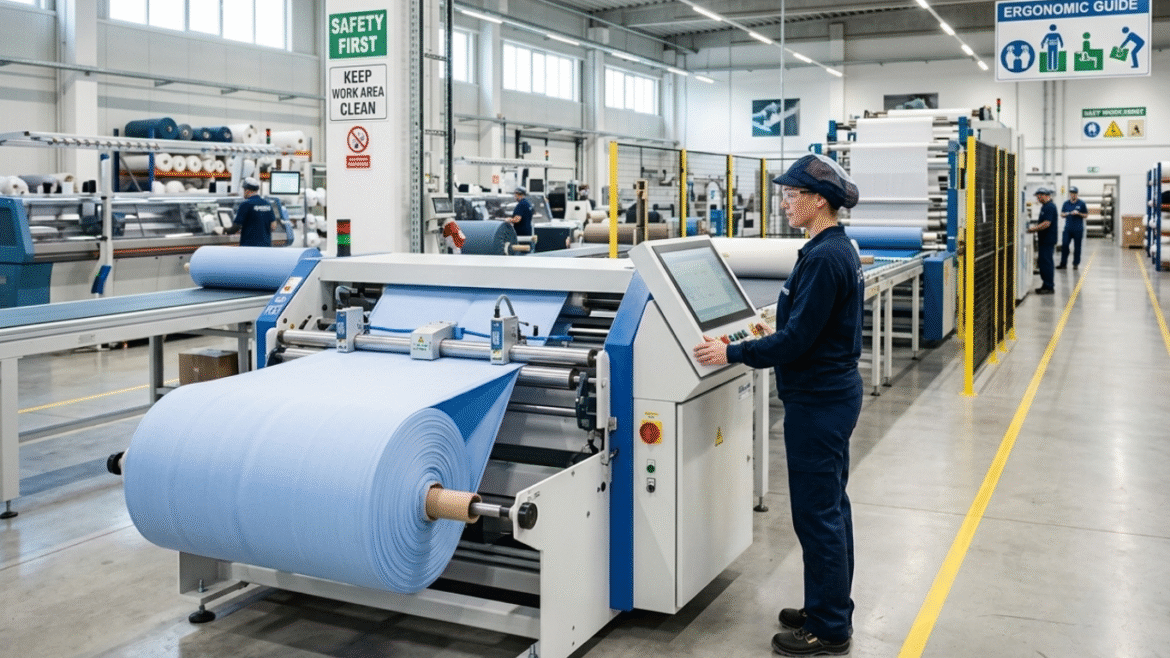
Picture a traditional manual roll-slitting process. Operators must load heavy rolls by hand, reach forward continually, and hold rigid postures to keep material aligned as it feeds through an open blade. Across an eight-hour shift, that repetitive strain wears down precision and raises the risk of an acute injury. When operators must physically fight the machine just to keep fabric straight, the floor environment is already working against basic safety principles.
Engineering Controls: The Smart Alternative to Manual Strain
Progressive manufacturers respond to these hazards with physical changes to the factory floor rather than relying only on training or personal protective equipment. Safety specialists call this approach “engineering controls.” Instead of managing risk around a hazard, engineering controls modify or replace the equipment, so the hazard is designed out entirely.
Enclosed cutting chambers are a clear example. When a machine fully encloses the blade during the cut cycle, operators no longer need to work near an exposed edge or brace against moving material. Automated roll loading takes this further, removing the need for an operator to manually lift, position, and feed heavy fabric rolls by hand.
This shifts the operator’s role from strenuous physical labor to safer system monitoring, without slowing down output.
Safety by Design: The Strip Cutter FA 500
Modern industrial machinery increasingly builds these ergonomic principles directly into the equipment. A clear example of this design philosophy is the Svegea Strip Cutter FA 500, a heavy-duty, fully automatic roll-slitting machine built to handle a wide range of materials, including open knits, woven fabric, PVC, vinyl, satin, polyester, non-wovens, and select paper products.
Rather than exposing operators to an open blade and manual roll handling, the FA 500 is totally enclosed during the cut cycle, keeping the cutting action fully contained while it runs. Pneumatic fabric loading support helps manage the transition between rolls, reducing the manual lifting and repositioning that typically strains an operator’s back and shoulders.
The machine also gives operators precise, low-effort control over the process itself. Up to three preset cut widths and cut counts can be programmed per cycle, with three standard programs run through a touch screen panel rather than manual adjustment. Blade penetration speed and material roll rotation are both adjustable, so the cut can be tuned to the material instead of forcing an operator to compensate by hand.

Automatic blade sharpening, with adjustable sharpening time, keeps performance consistent without a manual mid-shift intervention, and every function runs under PLC control for repeatable, predictable results. An optional automatic blade cooling device is also available for materials that need extra care during cutting.
Together, these features remove several of the manual strain points common to older slitting setups: exposed blades, manual roll loading, and hands-on speed adjustment. The result is a cutting station where the operator manages the process rather than physically wrestling with it.
A Simple Walkthrough for Your Floor Audit
Improving plant safety does not require an immediate, multi-million-dollar overhaul. A targeted assessment of your current layout is a reasonable place to start:
1. Observe Postures: Watch your cutting and slitting stations for thirty minutes. Do operators frequently bend past a 90-degree angle or reach above shoulder height?
2. Track Minor Absences: Cross-reference frequent, short-term operator absences with specific, high-effort workstations on your line.
3. Evaluate Material Loading: Measure how far an operator must manually carry or lift a fabric roll before it safely locks into the machine feed.
4. Check Blade Exposure: Note whether any part of your current slitting process leaves a blade or edge accessible to an operator during normal operation.
These observations will pinpoint exactly where manual strain and exposure risk threaten both your team’s health and your line’s productivity.
TL;DR: Plant safety directly shapes worker retention and factory output. Most safety conversations center on the sewing floor, but the heaviest physical strain often happens earlier, during material transit and fabric preparation. Engineering controls like fully enclosed, automated strip cutting reduce repetitive stress injuries and protect your bottom line.
Optimize Your Production Floor Safety
Every manufacturing facility handles fabric differently, and the right slitting setup depends on your specific volume, material types, and floor layout. If you would like to discuss practical ways to reduce material handling strain and improve safety on your cutting floor, Håkan Steene can walk you through the technical options for the Strip Cutter FA 500 and other Svegea solutions. Reach him directly at h.steene@svegea.se to schedule a consultation.
The textile and garment industry is evolving rapidly in 2026. While new fabrics and fashion trends capture headlines, manufacturers face a bigger challenge: how to boost garment production efficiency. Rising costs, sustainability demands, and global competition mean factories must rethink their processes. This article explores practical strategies for textile and garment manufacturers to streamline production, reduce waste, and stay competitive.
Why Efficiency Is the Key Trend in 2026
Efficiency is no longer just about speed—it’s about smart resource use. Manufacturers who optimize production benefit from:
- Lower material and energy costs
- Higher quality garments with fewer defects
- Faster turnaround times for global buyers
- Improved sustainability credentials
Core Strategies to Boost Garment Production
1. Lean Manufacturing Principles
Lean methods eliminate waste and streamline workflows. By mapping processes and removing non‑value steps, factories can cut production time by up to 30%.
2. Smart Factory Automation
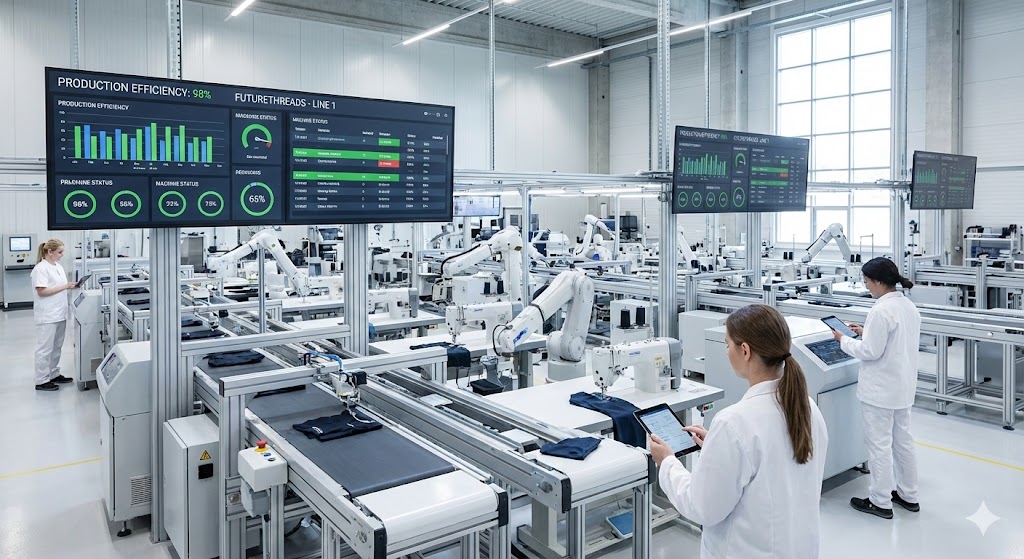
AI‑driven scheduling, robotics, and digital monitoring systems are becoming mainstream in 2026. These tools reduce human error and allow managers to adjust production in real time.
3. Workforce Upskilling
Training operators to handle advanced machinery ensures fewer mistakes and higher productivity. Continuous learning programs also improve employee retention.
4. Preventive Maintenance
Downtime is one of the biggest drains on efficiency. Regular machine checks and predictive maintenance systems keep production lines running smoothly.
5. Sustainable Resource Management
Efficient factories use less water, energy, and chemicals. This not only lowers costs but also meets growing buyer demands for eco‑friendly production.
Textile Trends That Shape Efficiency in 2026
| Trend (2026) | Efficiency Impact | Manufacturer Action |
| Regenerative fabrics | Higher costs initially | Invest in supplier partnerships |
| Smart textiles | Complex QC needs | Train staff, upgrade testing tools |
| Circular economy models | Requires recycling systems | Adopt waste-sorting technology |
| Digital automation | Upfront investment | Long-term savings, higher output |
Practical Steps for Manufacturers
- Audit current workflows: Identify bottlenecks and wasted motion.
- Adopt modular production lines: Flexible setups allow quick adaptation to new orders.
- Integrate digital dashboards: Real‑time visibility improves decision‑making.
- Collaborate with suppliers: Secure reliable sources of sustainable fabrics to avoid delays.
- Benchmark against leaders: Study efficiency models from top factories worldwide.
Efficiency and Sustainability Go Hand in Hand
Boosting garment production efficiency is not just about profit. It’s about aligning with global sustainability goals. Factories that reduce waste, energy use, and water consumption will gain a competitive edge in 2026 while meeting consumer expectations for responsible fashion.
Innovation and Sustainability
Textile trends in 2026 highlight innovation and sustainability, but the real opportunity lies in boosting garment production efficiency. By embracing lean manufacturing, smart automation, workforce training, and sustainable resource management, garment and textile manufacturers can thrive in a competitive global market.
Ready to Boost Garment Production?
If you’re looking to boost garment production efficiency in 2026, Svegea of Sweden offers advanced textile machinery designed to streamline operations and reduce waste.
Contact Håkan Steene at h.steene@svegea.se to discuss how their solutions can transform your production line. Or browse the full range of textile machinery and discover how innovation meets efficiency.
In the fast-paced world of textile manufacturing, the key to seamless operations and consistent quality lies in the proper maintenance of production machinery. Whether it’s cutting-edge equipment like Svegea’s innovative solutions or industry-standard machines, regular upkeep is essential to ensure optimal performance and longevity. Let’s dive into some expert tips on maintaining textile production machinery for peak efficiency.
Follow Manufacturer Guidelines
First and foremost, it’s crucial to follow the manufacturer’s guidelines for maintenance. This includes adhering to recommended maintenance schedules, using approved cleaning agents and lubricants, and following specific calibration and part replacement procedures. By following these guidelines diligently, you can prevent premature wear and tear and ensure the machinery operates at its best.
Regular Cleaning and Inspection
Keeping the machinery clean and well-maintained is key to preventing breakdowns and ensuring smooth operation. Regularly clean all components to remove dust, debris, and buildup that can affect performance. Conduct thorough inspections to identify any signs of wear, damage, or loose parts that may require attention. Addressing minor issues early can prevent them from escalating into major problems later on.
Lubrication and Calibration
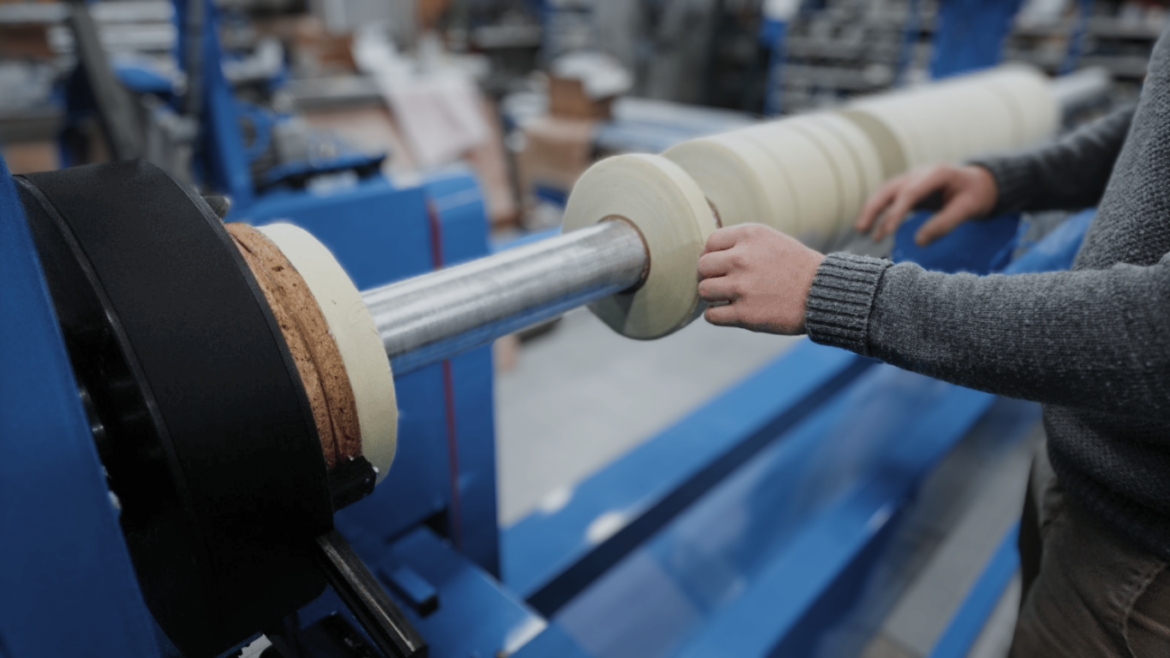
Proper lubrication is essential for reducing friction, preventing overheating, and prolonging the life of moving parts. Follow the recommended lubrication schedule and use the correct type and amount of lubricant for each component. Additionally, ensure that the machinery is calibrated regularly to maintain accuracy and consistency in performance, especially for cutting and sewing machines.
Training and Monitoring
Invest in training for machine operators to ensure they understand how to use the machinery correctly, follow maintenance procedures, and identify early signs of issues. Encourage them to monitor the machinery’s performance regularly, including production output, efficiency metrics, and any abnormal sounds or vibrations. Promptly addressing any anomalies can prevent downtime and costly repairs.
Implement Preventive Maintenance
Establish a proactive approach to maintenance by implementing a preventive maintenance schedule. This should include routine inspections, cleaning, lubrication, and minor adjustments as needed. Keep detailed records of maintenance activities to track maintenance history, identify recurring issues, and plan for future maintenance needs effectively.
Professional Assistance from Svegea
Don’t hesitate to seek professional assistance from Svegea’s team of experts for complex maintenance tasks or troubleshooting. They have the knowledge, experience, and resources to handle maintenance and repairs efficiently, ensuring your textile production machinery operates optimally. Contact Svegea’s team today to discuss your maintenance needs and maximize the performance of your machinery.
Proactive maintenance is the cornerstone of efficient and reliable textile production machinery. By following these tips and working with trusted professionals like Svegea, you can prolong the lifespan of your equipment, minimize downtime, and achieve consistent quality in your manufacturing processes. Schedule regular maintenance, train your operators, and partner with experts for a seamless production experience.