The Hidden Connection Between Plant Safety and Worker Retention
A busy garment factory floor depends entirely on the steady hands of its operators. Still, many plant managers face a familiar problem: high turnover and rising absenteeism. When output slows, managers usually check production schedules or operator training first. The real cause, though, often hides in plain sight. It is physical fatigue caused by poor workstation setup and repetitive strain.
Plant safety is not only about avoiding regulatory fines or checking compliance boxes. In modern apparel manufacturing, a safe floor is the foundation of employee retention.
According to the Occupational Safety and Health Administration (OSHA), musculoskeletal disorders (MSDs) remain a leading cause of lost or restricted work time across general industries. Workers who face daily physical strain eventually move on to less demanding jobs. By turning strenuous manual tasks into safer, smarter processes, manufacturers can stabilize their workforce and protect production quality.
Addressing the Strain of Material Transit and Fabric Preparation
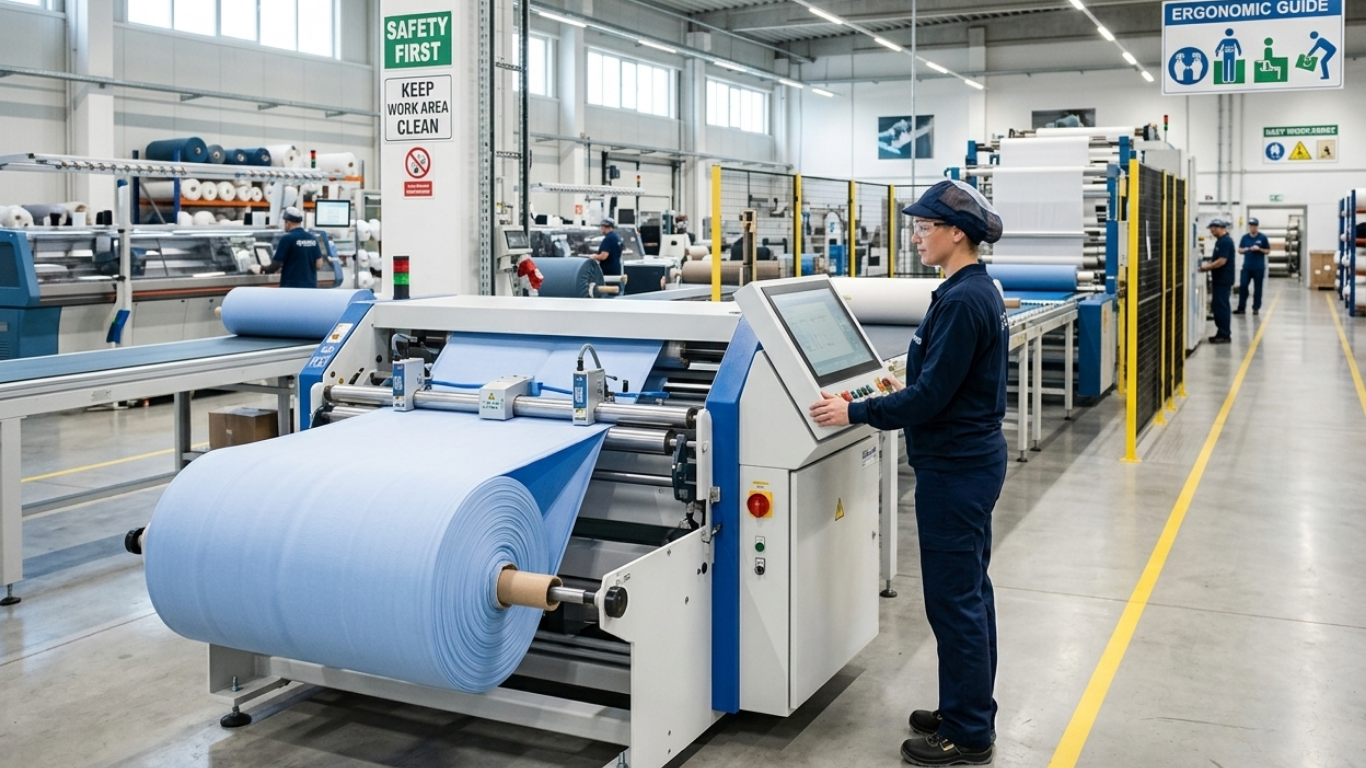
Where do the highest physical risks occur on a textile production line? Most people point to the sewing floor first. Sewing does demand sustained focus, but the earlier stages of material preparation often require the heaviest physical exertion.
Moving heavy fabric rolls, bending over low cutting tables, and manually guiding material through slitting machines all place real stress on an operator’s back, neck, and shoulders. Industry insights from Textile School note that repetitive motions combined with awkward postures accelerate operator fatigue significantly.
Picture a traditional manual roll-slitting process. Operators must load heavy rolls by hand, reach forward continually, and hold rigid postures to keep material aligned as it feeds through an open blade. Across an eight-hour shift, that repetitive strain wears down precision and raises the risk of an acute injury. When operators must physically fight the machine just to keep fabric straight, the floor environment is already working against basic safety principles.
Engineering Controls: The Smart Alternative to Manual Strain
Progressive manufacturers respond to these hazards with physical changes to the factory floor rather than relying only on training or personal protective equipment. Safety specialists call this approach “engineering controls.” Instead of managing risk around a hazard, engineering controls modify or replace the equipment, so the hazard is designed out entirely.
Enclosed cutting chambers are a clear example. When a machine fully encloses the blade during the cut cycle, operators no longer need to work near an exposed edge or brace against moving material. Automated roll loading takes this further, removing the need for an operator to manually lift, position, and feed heavy fabric rolls by hand.
This shifts the operator’s role from strenuous physical labor to safer system monitoring, without slowing down output.
Safety by Design: The Strip Cutter FA 500
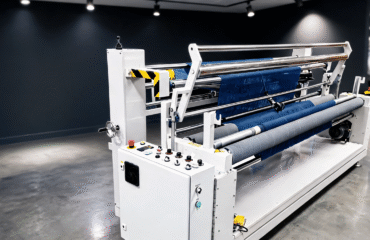
Modern industrial machinery increasingly builds these ergonomic principles directly into the equipment. A clear example of this design philosophy is the Svegea Strip Cutter FA 500, a heavy-duty, fully automatic roll-slitting machine built to handle a wide range of materials, including open knits, woven fabric, PVC, vinyl, satin, polyester, non-wovens, and select paper products.
Rather than exposing operators to an open blade and manual roll handling, the FA 500 is totally enclosed during the cut cycle, keeping the cutting action fully contained while it runs. Pneumatic fabric loading support helps manage the transition between rolls, reducing the manual lifting and repositioning that typically strains an operator’s back and shoulders.
The machine also gives operators precise, low-effort control over the process itself. Up to three preset cut widths and cut counts can be programmed per cycle, with three standard programs run through a touch screen panel rather than manual adjustment. Blade penetration speed and material roll rotation are both adjustable, so the cut can be tuned to the material instead of forcing an operator to compensate by hand.

Automatic blade sharpening, with adjustable sharpening time, keeps performance consistent without a manual mid-shift intervention, and every function runs under PLC control for repeatable, predictable results. An optional automatic blade cooling device is also available for materials that need extra care during cutting.
Together, these features remove several of the manual strain points common to older slitting setups: exposed blades, manual roll loading, and hands-on speed adjustment. The result is a cutting station where the operator manages the process rather than physically wrestling with it.
A Simple Walkthrough for Your Floor Audit
Improving plant safety does not require an immediate, multi-million-dollar overhaul. A targeted assessment of your current layout is a reasonable place to start:
1. Observe Postures: Watch your cutting and slitting stations for thirty minutes. Do operators frequently bend past a 90-degree angle or reach above shoulder height?
2. Track Minor Absences: Cross-reference frequent, short-term operator absences with specific, high-effort workstations on your line.
3. Evaluate Material Loading: Measure how far an operator must manually carry or lift a fabric roll before it safely locks into the machine feed.
4. Check Blade Exposure: Note whether any part of your current slitting process leaves a blade or edge accessible to an operator during normal operation.
These observations will pinpoint exactly where manual strain and exposure risk threaten both your team’s health and your line’s productivity.
TL;DR: Plant safety directly shapes worker retention and factory output. Most safety conversations center on the sewing floor, but the heaviest physical strain often happens earlier, during material transit and fabric preparation. Engineering controls like fully enclosed, automated strip cutting reduce repetitive stress injuries and protect your bottom line.
Optimize Your Production Floor Safety
Every manufacturing facility handles fabric differently, and the right slitting setup depends on your specific volume, material types, and floor layout. If you would like to discuss practical ways to reduce material handling strain and improve safety on your cutting floor, Håkan Steene can walk you through the technical options for the Strip Cutter FA 500 and other Svegea solutions. Reach him directly at h.steene@svegea.se to schedule a consultation.