Key insights:
- Digital twins are virtual models of machines or production lines, built from real-time data.
- The digital twin textile factory market was worth USD 1.42 billion in 2024 and is projected to reach USD 17.91 billion by 2033, according to Texpertise Network.
- Textile manufacturing sits below 30% adoption today, well behind aerospace and automotive, but the gap is closing.
- The cutting room is a practical starting point, since slitting and cutting machines already generate structured, usable data.
- New EU rules starting in 2027 will require Digital Product Passports. Manufacturers who track data early will be ahead of that curve.
For years, “digital twin” sounded like a term for car plants and jet engines. That is changing fast. In 2026, textile and garment manufacturers are asking a simpler question: could a virtual model of our own cutting room save us money? The answer is yes, and the technology required to try it is closer than most decision-makers think.
What a Digital Twin Actually Is
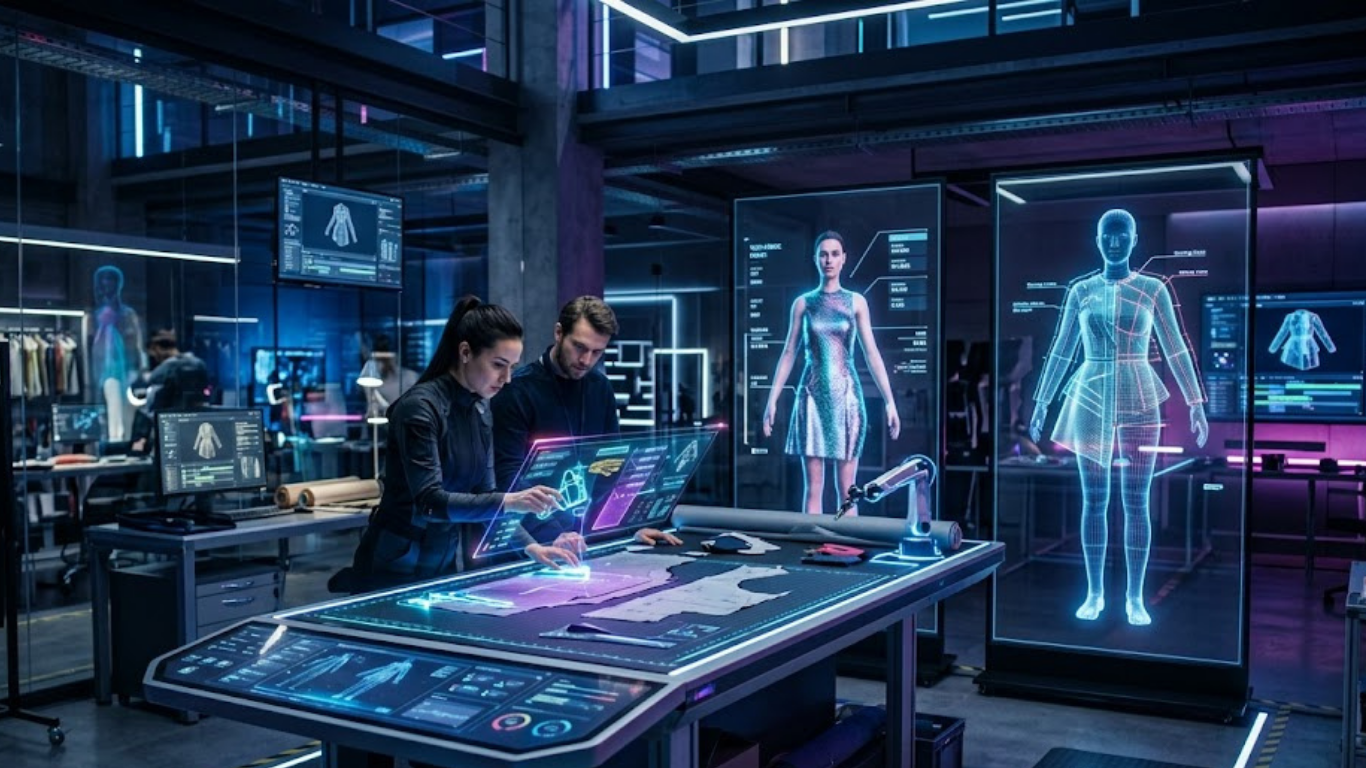
The term gets used loosely, so a clear definition helps. McKinsey describes a digital twin as a virtual model of a physical system. It connects to real data and updates in real time as the machine runs. There are three broad types. A plant twin mirrors an entire facility. A network model of the supply chain. An infrastructure twin covers things like buildings or roads.
Most textile manufacturers do not need a whole-factory twin right away. A smaller “process twin” works better as a starting point. It focuses on one line or one machine. This is also the version most relevant to the cutting room.
Why the Cutting Room Is a Logical Starting Point
The cutting room already runs on precision. Slitting and cutting machines track roll width, edge position, run speed, and material count every day. According to Texpertise Network, the trade publication run by Messe Frankfurt, a textile digital twin links physical machines to a virtual model through sensors, IoT devices, CAD/CAM data, and production software. Cutting and slitting lines already have several of these pieces in place.
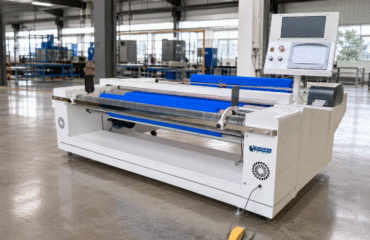
Take automatic edge guiding and adjustable cutting widths. Both features appear on fully automatic roll slitting machines, such as Svegea’s FA-series strip cutters. These features were not built for digital twins. They exist to keep materials straight and cuts accurate. But they generate the same data a twin model needs: edge position, width, and run speed. That data can feed a model that simulates output and flags drift before it wastes fabric. Machines that already collect this data sit closer to “twin-ready” than older, manually adjusted equipment.
From Sensors to Simulation
Once data starts flowing, a twin becomes useful in two main ways: maintenance and quality.
For maintenance, a 2026 study in the World Journal of Advanced Engineering Technology and Sciences proposed a predictive maintenance framework built on digital twins. It covers textile and mechanical equipment like spinning machines, looms, motors, bearings, gearboxes, and conveyors. The researchers note that the model can adapt as new data arrives, which makes it useful for older equipment, not just new machines.
For quality, a twin loaded with historical production data can flag where defects are likely to happen. That lets a plant act before a flaw turns into a customer return.
Quick Stat Check
-
-
- Market growth runs about 32% a year through 2033.
- Aerospace and automotive sit above 70% digital twin adoption; textiles sit below 30%, per PatSnap.
- Across all industries, McKinsey reports that 70% of C-suite tech leaders are already exploring or investing in digital twins.
- Some manufacturers have cut development time by up to half.
-
The Adoption Gap, and Why It’s Closing
Textiles trail other sectors for clear reasons. Research from PatSnap points to two main barriers: cost and legacy infrastructure. Many cutting room machines were not built with sensors or connectivity in mind. That gap is real, but it is closing. Patent filings for digital twin technology rose sharply between 2017 and 2025, a sign that the underlying tools are maturing and becoming more affordable for mid-sized manufacturers, not just large industrial players.
A Regulatory Push Is Coming
There is also a compliance angle worth watching closely. Starting in 2027, textile products sold in the EU will need Digital Product Passports, according to reporting from Shijin Fashion. A 2026 study in The International Journal of Advanced Manufacturing Technology proposes a textile-specific digital twin framework built for this exact need. It pairs IoT data with circular-economy tools, such as Life Cycle Assessment and Digital Product Passport reporting. Manufacturers who already track data at the machine level will be ahead when full traceability becomes mandatory rather than optional.
Getting Started Without Overbuilding
A full, factory-wide twin is not the right first step for most manufacturers. McKinsey’s own case studies describe a staged approach: build a small proof of concept, confirm the data feeds are solid, then expand to a bigger model. Applied to a cutting room, this could mean starting with one slitting line, connecting its existing sensor data to a simple dashboard, running it for a few weeks, and checking whether the model’s predictions match what actually happens on the floor.
Older, manually run machines may need retrofitting first. That cost should be part of any pilot budget. It is often the real barrier, not the modeling software itself.
Where This Leaves Manufacturers
Digital twin technology in textiles is no longer just a trade-show buzzword. The market data, the maintenance research, and the new EU rules all point in the same direction. Factories that start capturing clean, machine-level data now will have an easier path later, whether that means less downtime, less waste, or easier compliance reporting.
The cutting room is a sensible place to begin. Well-built cutting and slitting equipment already produces usable data on its own, without extra hardware. That makes it a lower-risk pilot than trying to model an entire production floor on the first attempt.
Svegea designs cutting, slitting, and bias systems for manufacturers exploring this kind of process visibility, and the team is happy to talk through what twin-readiness looks like for a given setup, no obligation attached. For manufacturers who want to discuss what a more connected cutting room could look like for their operations, Hakan Steene (h.steene@svegea.se) is a good place to start the conversation.