
The global textile industry is standing at a massive crossroads. For decades, “waste” was viewed merely as an unfortunate byproduct of the manufacturing process. It was a line item on a spreadsheet that most factory managers tried to ignore. However, as we move through 2026, the legislative landscape has shifted permanently. The European Union has introduced rigorous new standards. These laws transform every scrap of discarded fabric from a simple mess into a significant financial liability.
If you are a garment or textile manufacturer, the EU Textile Waste Directive 2026 is no longer a distant threat. It is your new operational reality. This guide explores how you can navigate these complex regulations. More importantly, we will show you how to use high-precision Swedish engineering to turn these rules into a distinct market advantage.
Understanding the 2026 Legislative Shift
The heart of the new regulation lies in the Extended Producer Responsibility (EPR) framework. Under these rules, manufacturers are financially responsible for the entire lifecycle of the textiles they produce. This includes the collection, sorting, and recycling of waste. The EU has implemented “eco-modulated” fees. Essentially, the more waste your production process generates, the higher the taxes you must pay to sell your goods in the European market.
This policy aims to accelerate the transition toward a circular economy. Global brands are now scrambling to find manufacturing partners who can prove their sustainability credentials. If your factory continues to operate with high-waste manual processes, you risk losing your most valuable contracts. Precision is no longer a luxury. It is now a requirement for market access.
The High Cost of the “Human Margin”
Many factories still rely on manual or semi-automated cutting systems. While these methods worked in the past, they carry a “human margin” of error. This error is now too expensive to maintain. When a small slip causes a tiny measurement error, that fabric is often discarded. Over a year of high-volume production, these tiny errors accumulate into tons of wasted material.
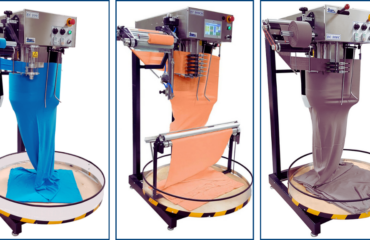
Under the new EPR rules, you are taxed on every gram of that waste. This is where Svegea’s automated cutting solutions provide a revolutionary answer. We have equipped our machinery with advanced hardware and software drive systems. This technology allows for extreme cutting accuracy that manual methods simply cannot match.
By digitizing the drive systems across our product range, we have eliminated the inconsistencies of manual intervention. Our machines ensure that every cut is identical. This level of precision reduces your material scrap rates to the absolute minimum. Consequently, your reported waste volume drops. Your eco-modulated fees will follow suit.
Achieving Zero-Waste in Fabric Processing
Processing specialized fabrics presents a unique challenge for waste management. Because many textiles are prone to stretching and tension variations, traditional cutters often produce uneven edges. To compensate, manufacturers often cut wider than necessary. This leads to significant “edge-trim” waste.
Svegea’s engineering philosophy was designed to solve this specific pain point. Our machinery utilizes sophisticated electronic speed synchronization. This ensures that the fabric is fed at a constant, relaxed tension throughout the entire cycle.
What is the result? You achieve zero-waste processing. Our systems allow you to cut precisely what you need without the “safety margins” that lead to scrap. In a world where every kilogram of waste increases your regulatory costs, the ability to process textiles with 100% efficiency is a game-changer. It transforms your facility from a “high-tax” waste generator into a low-tax precision leader.
Data: The Currency of the Circular Economy
The 2026 directives also introduce the Digital Product Passport (DPP). This initiative requires a transparent record of how a garment was made. Brands now need data to prove that their suppliers are minimizing environmental impact.
Utilizing PLC-controlled machinery provides clear insights into production metrics, making it simple to track material efficiency. This transparency allows you to share meaningful data with fashion labels, helping them reach their sustainability milestones. By providing this level of detail, you become more than a supplier; you become a trusted partner who offers consistency and confidence in every shipment.
Strategic Transition: How to Start
Transitioning your factory to meet 2026 standards does not happen overnight. However, the first step is identifying the “waste leaks” in your current production line.
1. Audit Your Scrap: Measure exactly how much fabric goes into the bin each week. Calculate the cost of that fabric plus the estimated EPR fees you will face.
2. Upgrade Critical Nodes: You don’t need to replace every machine at once. Start with high-volume areas where precision makes the biggest impact on your yield.
3. Train for Tech: Ensure your operators understand how to use digital touch screens and electronic synchronization to their full potential.
Leadership Through Precision
The 2026 EU Textile Waste Directive is a significant challenge. However, it is also a massive opportunity. Manufacturers who lean into automation and high-precision cutting will thrive. They will lower their costs. They will satisfy their regulators. Most importantly, they will win the trust of the world’s leading brands.
Don’t let waste eat your profits. Instead, use precision to build your future. Svegea is ready to be your partner in this new era of garment manufacturing. Whether you are aiming for zero-waste production or looking to integrate smarter software into your workflow, we have the tools you need to lead the market.
Do you have questions about how our textile machinery can help you stay compliant? We invite you to reach out directly to our expert for a personalized consultation. We are ready to assist with technical queries and ROI discussions.
Contact Hakan Steene today:
Email: h.steene@svegea.se