Cut a length of tubular knit fabric, lay the panels out, and something looks off. The pieces don’t quite sit on the grain. Sleeves twist slightly after the first wash. Quality control flags the batch, and nobody can point to one clear mistake.
This is fabric distortion, and it is one of the more common, least understood problems in cutting rooms that work with knits. The good news is that distortion is rarely random. It follows patterns, and those patterns can usually be traced back to tension, handling, and the cutting method itself.
|
TL;DR: Knit fabric distortion (bowing and skewing) usually starts before the fabric reaches the cutting table, in knitting, dyeing, or finishing. But the cutting method can make it worse or help contain it. Tubular knits are especially prone to skew once they are slit open and spread flat for cutting. Circumferential cutting, which works the fabric in the round, skips that extra handling step and helps the grain stay aligned. |
What Bowing and Skewing Actually Mean
Distortion in knit fabric usually shows up as one of two defects. Bowing happens when the courses, the horizontal rows of loops in a knit, curve into an arc across the fabric width instead of running straight. Skewing is different: the courses stay straight, but they tilt, so one side of the fabric runs ahead of the other. According to Textile Learner, both defects are graded by how far the courses deviate from a line perpendicular to the fabric’s selvage, and both get harder to spot on solid colors than on stripes or prints, where the distortion becomes visually obvious.
Where the Tension Really Starts
Most distortion is introduced long before a roll reaches the cutting table. The knitting machine’s take-up mechanism can pull fabric unevenly across its width, and that unevenness carries through to finishing. During dyeing and finishing, fabric is pulled through rollers and tenter frames under tension, and if that tension is not distributed evenly from edge to edge, bowing or skewing is the result, as Apparel Science and Textile Learner both document.
Handling at the cutting stage matters too. Fabric that is spread and cut under tension, straight off the roll, tends to relax back into a different shape once it is off the table. This is exactly why many cutting rooms build in a relaxation period, letting the fabric sit unrolled for a few hours before it is cut, particularly for stretch fabrics with spandex or Lycra content, where relaxation shrinkage is more pronounced.
Why Tubular Knits Are Especially Vulnerable
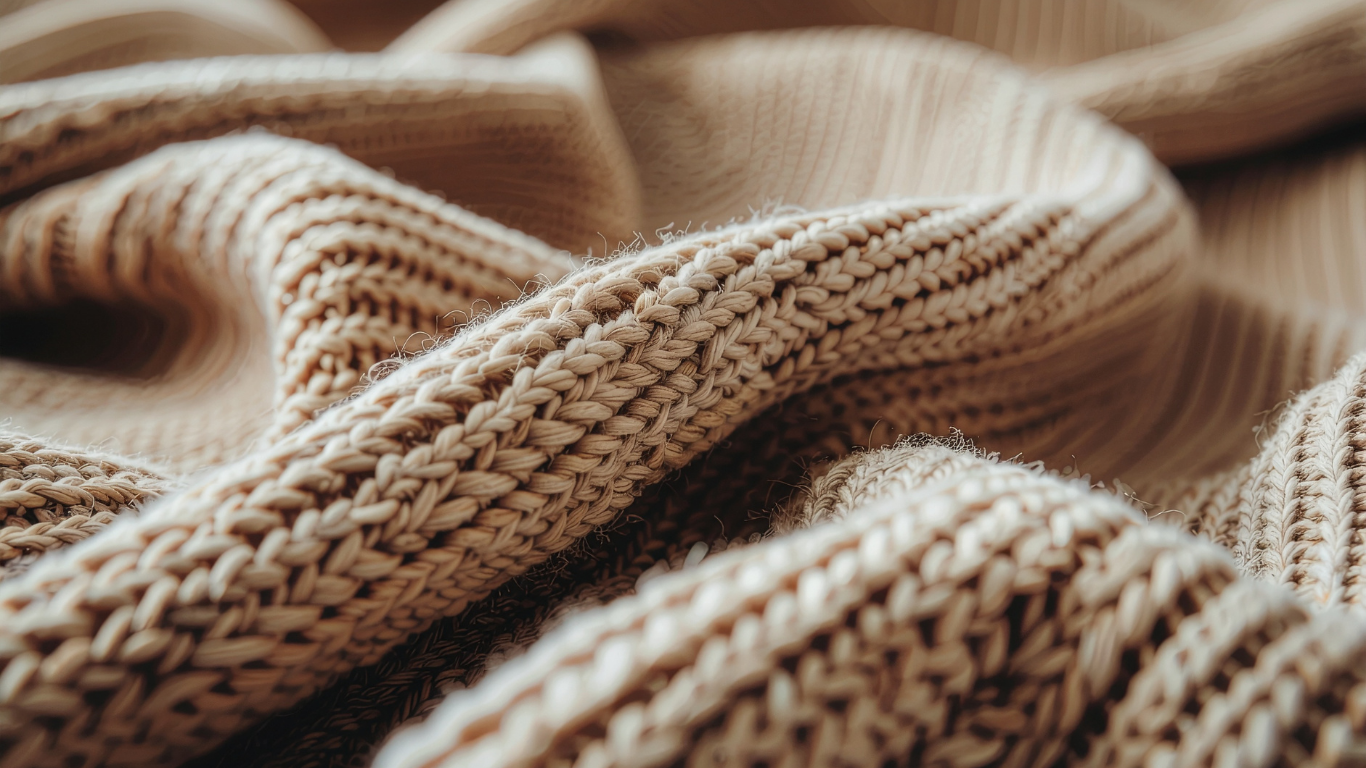
Circular knit fabric is produced as a seamless tube. For many cutting operations, this tube is slit open along one edge and spread flat. This extra step introduces skew by placing uneven tension across the fabric, adding to existing knitting or finishing distortions.
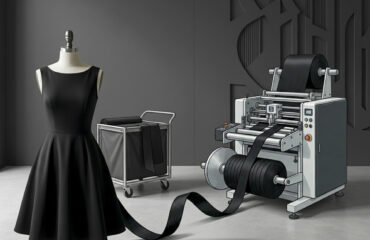
Processing fabric in the round avoids slitting and holds grain alignment much better. For example, Svegea’s Euro-Collarette range cuts bindings and collarette bands directly from tubular fabric without opening or flattening it first. While it can’t fix pre-existing fabric distortion, it eliminates a key handling step that often makes the problem worse.
How to Check Your Own Line for Distortion
Distortion is measured formally under ASTM D3882, the standard test method for bow and skew in woven and knitted fabrics. It works by comparing the actual path of a course (or a filling yarn, in woven fabric) against a straight line perpendicular to the selvage, and expressing the gap as a percentage of fabric width.
A quick in-house check does not need lab equipment. Make a small nick perpendicular to the selvage and tear the fabric across its width. On fabric that is square, the tear runs in a straight line. A curved tear points to bowing, and a diagonal tear points to skew. Because distortion can worsen along the length of a roll, it is worth repeating the check at several points, not just at the start.
What It Costs When Distortion Goes Unchecked
Unchecked distortion hits your bottom line downstream, long after fabric leaves the cutting table. When workers mark pattern pieces against a distorted grain line, the pieces twist out of alignment during sewing. Panels might look perfect on the table, but the finished garment pulls, warps, or sags after its first wash as the fabric relaxes into its true shape. For manufacturers running tight margins on knitwear, these flaws trigger costly rework, wasted fabric, and customer returns. None of these expenses surface on the cutting room floor until fixing them becomes far too expensive.
A Process Question First
Controlling distortion depends more on process discipline than on raw equipment power. Proper tension control, fabric relaxation, and minimal handling ensure fabric stability.Process matters. When working with tubular knits, manufacturers must evaluate whether their handling opens and flattens the tube more than necessary.
Bowing and skew can quickly disrupt a tubular knit line. If you are facing these issues or want to optimize your fabric preparation before cutting, reach out to Svegea. Håkan Steene can evaluate your setup and talk through solutions with you. Contact him directly at h.steene@svegea.se.