The textile and garment industry is evolving rapidly in 2026. While new fabrics and fashion trends capture headlines, manufacturers face a bigger challenge: how to boost garment production efficiency. Rising costs, sustainability demands, and global competition mean factories must rethink their processes. This article explores practical strategies for textile and garment manufacturers to streamline production, reduce waste, and stay competitive.
Why Efficiency Is the Key Trend in 2026
Efficiency is no longer just about speed—it’s about smart resource use. Manufacturers who optimize production benefit from:
- Lower material and energy costs
- Higher quality garments with fewer defects
- Faster turnaround times for global buyers
- Improved sustainability credentials
Core Strategies to Boost Garment Production
1. Lean Manufacturing Principles
Lean methods eliminate waste and streamline workflows. By mapping processes and removing non‑value steps, factories can cut production time by up to 30%.
2. Smart Factory Automation
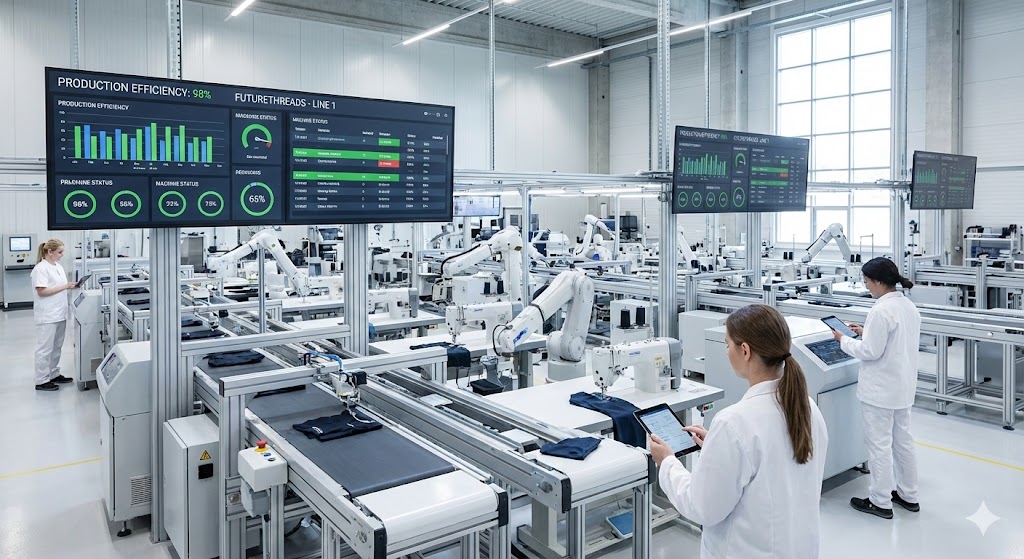
AI‑driven scheduling, robotics, and digital monitoring systems are becoming mainstream in 2026. These tools reduce human error and allow managers to adjust production in real time.
3. Workforce Upskilling
Training operators to handle advanced machinery ensures fewer mistakes and higher productivity. Continuous learning programs also improve employee retention.
4. Preventive Maintenance
Downtime is one of the biggest drains on efficiency. Regular machine checks and predictive maintenance systems keep production lines running smoothly.
5. Sustainable Resource Management
Efficient factories use less water, energy, and chemicals. This not only lowers costs but also meets growing buyer demands for eco‑friendly production.
Textile Trends That Shape Efficiency in 2026
| Trend (2026) | Efficiency Impact | Manufacturer Action |
| Regenerative fabrics | Higher costs initially | Invest in supplier partnerships |
| Smart textiles | Complex QC needs | Train staff, upgrade testing tools |
| Circular economy models | Requires recycling systems | Adopt waste-sorting technology |
| Digital automation | Upfront investment | Long-term savings, higher output |
Practical Steps for Manufacturers
- Audit current workflows: Identify bottlenecks and wasted motion.
- Adopt modular production lines: Flexible setups allow quick adaptation to new orders.
- Integrate digital dashboards: Real‑time visibility improves decision‑making.
- Collaborate with suppliers: Secure reliable sources of sustainable fabrics to avoid delays.
- Benchmark against leaders: Study efficiency models from top factories worldwide.
Efficiency and Sustainability Go Hand in Hand
Boosting garment production efficiency is not just about profit. It’s about aligning with global sustainability goals. Factories that reduce waste, energy use, and water consumption will gain a competitive edge in 2026 while meeting consumer expectations for responsible fashion.
Innovation and Sustainability
Textile trends in 2026 highlight innovation and sustainability, but the real opportunity lies in boosting garment production efficiency. By embracing lean manufacturing, smart automation, workforce training, and sustainable resource management, garment and textile manufacturers can thrive in a competitive global market.
Ready to Boost Garment Production?
If you’re looking to boost garment production efficiency in 2026, Svegea of Sweden offers advanced textile machinery designed to streamline operations and reduce waste.
Contact Håkan Steene at h.steene@svegea.se to discuss how their solutions can transform your production line. Or browse the full range of textile machinery and discover how innovation meets efficiency.