
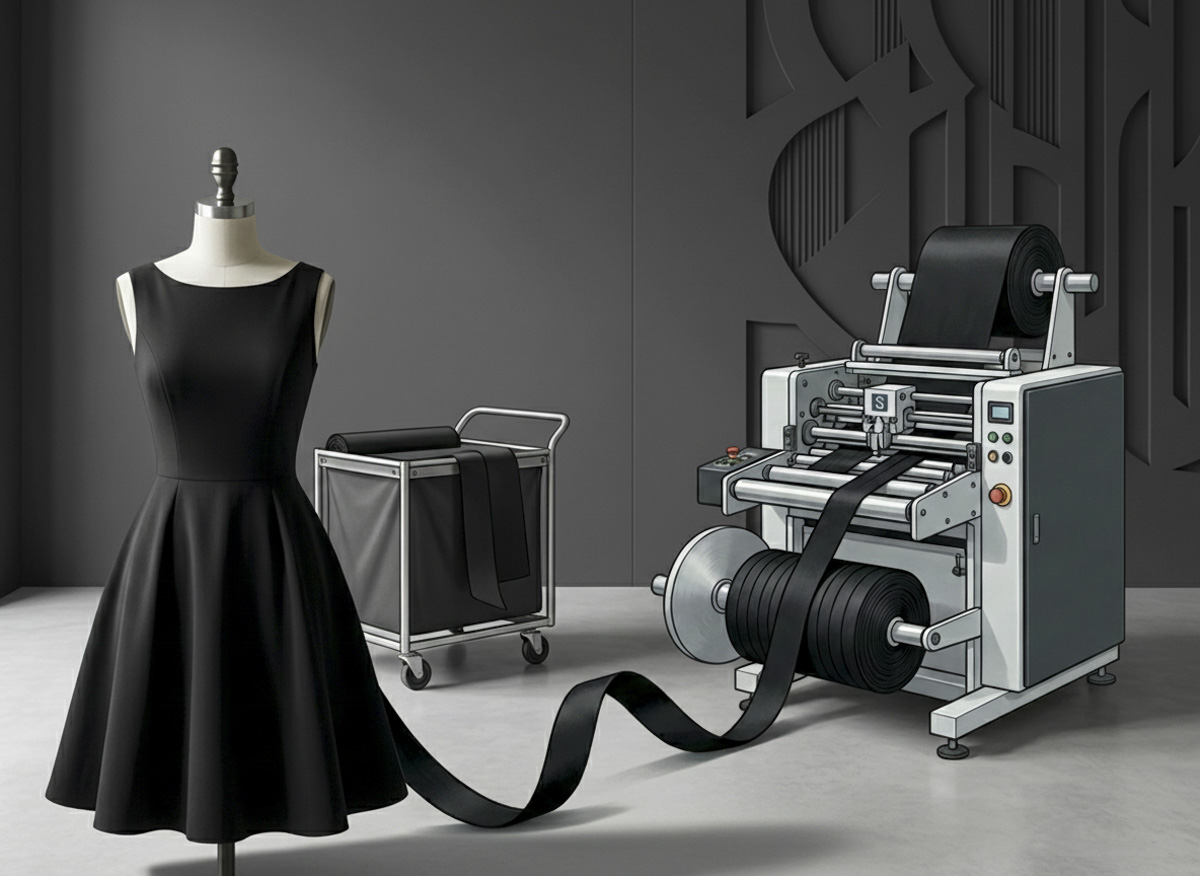
Little did Givenchy know that the little black dress he designed for Audrey Hepburn would become an essential piece in nearly every woman’s wardrobe, generations after Breakfast at Tiffany’s first hit the screen.
The Little Black Dress, or LBD, has since become fashion’s great equalizer — a single garment that flatters every shape, suits every occasion, and never goes out of style. It gets you through a chaotic morning, an unplanned dinner date, or a job interview with equal ease. Match it with a denim jacket and flats for class, add a statement necklace for a night out, or pair it with a tailored blazer to walk into an interview with confidence. Few garments do so much with so little.
But here’s what almost no one talks about when they praise the LBD’s timeless silhouette: why does a well-made black dress hold its shape, drape cleanly around the neckline, and outlast a decade of wear — while a cheaper version puckers, frays, and loses its form after a few washes?
The answer isn’t the fabric. It isn’t even the cut. It’s what happens at the edges.
The Finishing Technique You Never Notice — Until It’s Missing
Every curved seam, every clean neckline, every armhole that sits flat against the skin instead of gapping or rolling — all of it depends on a technique called bias binding.
Bias binding is a strip of fabric cut on the diagonal, or “bias,” of the material rather than along the straight grain. Cutting fabric this way gives the strip natural stretch and flexibility, which means it can wrap smoothly around curves — necklines, armholes, hems — without puckering or stretching out of shape. It’s the difference between a seam that looks handmade and one that looks engineered.
In garment manufacturing, bias binding does more than finish an edge. It:
- Reinforces stress points so seams don’t tear under movement
- Hides raw edges for a clean, professional interior finish
- Adds structure to curved lines that straight-grain fabric simply can’t follow
- Extends the garment’s lifespan, which is exactly why a well-made LBD from ten years ago can still look as sharp as the day you bought it
It’s a small detail with an outsized effect on perceived quality — the kind of thing a customer can’t always name, but instantly feels when they try on a dress that’s been finished properly.
From Sewing Room to Factory Floor
Home sewists can easily cut bias tape by hand. A simple fold, a quick press with an iron, and they’re done. But scale that up to a commercial factory. Imagine producing thousands of little black dresses every single season.
At that volume, manual cutting fails instantly. Speed drops. Fabric waste spikes. Consistency disappears completely. Manufacturers need a real engineered solution.
That’s where Svegea of Sweden enters the picture. We’ve spent decades perfecting industrial bias binding systems.
Engineers built Svegea’s Bias System specifically for garment manufacturing automation. At full production scale, it transforms massive fabric rolls into continuously sewn bias binding.
The process starts fast. First, the Tube Sewing Unit transforms open fabric into a continuous tubular piece. Next, the Bias Cutter and Winder opens and rewinds the material into an open-width roll. This prepares the fabric for precise slitting. The system handles everything smoothly, cutting delicate 6mm trims as easily as wide structural bindings for heavy fabrics.
The result? Perfect bias binding from the first meter to the ten-thousandth. No manual process can compete with that level of accuracy.
Why This Matters Beyond the LBD
Bias binding isn’t just for little black dresses. It shows up everywhere garments need clean, durable, curve-friendly finishes. You’ll find it on blouses, activewear, and children’s clothing. It even elevates non-apparel items like bags and home textiles.
Still, the classic LBD remains the ultimate quality test. Buyers expect to wear it for years. Its dark color exposes every single flaw in construction, leaving zero room for sloppy seams.
That’s what separates cheap clothing from true quality. One piece looks nice on a hanger. The other still looks pristine after fifty washes.
It all comes down to finishing. Top manufacturers rely on precision textile cutting systems to guarantee flawless results every time.
The same logic applies across the entire factory floor. Modern facilities deploy collarette cutters for waistbands and roll slitters for large fabric rolls. Precision machinery eliminates human error, keeps waste low, and guarantees consistent quality across every batch.
The Takeaway
The next time you slip into a little black dress that fits like a dream—just like the day you bought it—you’re rocking pure engineering genius. That pristine neckline and those crisp, fray-free seams surviving a decade in rotation don’t happen by accident. Every iconic silhouette relies on high-precision manufacturing, where seamless consistency turns basic threads into forever fashion.
Svegea’s Bias System and cutting machines give garment manufacturers a distinct competitive advantage through unmatched precision.