The Bottom Line for Manufacturers
TL;DR: Adopting zero waste in textile production is no longer just an ethical choice; it is a financial and regulatory necessity. With new waste directives arriving in 2026, garment manufacturers must pivot toward precision cutting and circular design to protect their margins. This guide explores how automated technology and smarter fabric utilization turn “scrap” back into profit.
The Economic Case for Zero Waste in Textile Production
The global garment industry stands at a critical crossroads. For decades, the “standard” operating procedure accepted that nearly 15% to 20% of fabric would end up on the cutting room floor. In a high-volume manufacturing environment, those scraps represent more than just lost material. They represent a direct leak in profitability and a failure of resource management.
However, the landscape is changing rapidly. As we approach 2026, global regulations regarding textile disposal are tightening. Manufacturers now look toward zero waste in textile production as a comprehensive framework to streamline operations. This approach focuses on eliminating waste at the source—the design and cutting stages—rather than managing it after it has been created.
The Financial Reality of Fabric Waste
Why is the industry suddenly obsessed with waste reduction? The answer is found in the rising cost of raw materials and the high price of industrial disposal. When a mill produces tons of fabric, every square inch carries the cost of energy, water, dyes, and labor. Discarding a fifth of that product is essentially throwing away 20% of your total investment.
By integrating zero-waste principles, factories can significantly lower their Cost of Goods Sold (COGS). Strategic fabric placement and advanced marking techniques allow for tighter yields. Consequently, manufacturers find that environmental sustainability and fiscal health are now inextricably linked. Every meter saved is a meter that does not need to be purchased, processed, or discarded.
Navigating the 2026 Regulatory Landscape
The European Union and other global entities are moving toward stricter “Extended Producer Responsibility” (EPR) schemes. These laws will likely penalize manufacturers for excessive textile waste. According to research from the Ellen MacArthur Foundation, a circular economy for textiles is the only viable way to meet future climate goals.
Manufacturers who fail to adapt to zero waste in textile production may find themselves locked out of major markets. They might also face steep environmental taxes. Preparedness is the best hedge against these regulatory shifts. By auditing current waste levels now, mills can implement necessary technological upgrades before the 2026 deadline arrives.
Precision Engineering: The Role of Automation
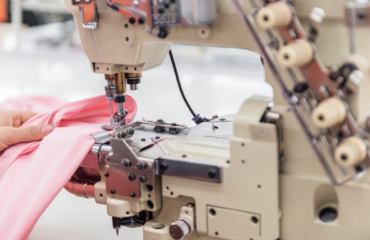
While design plays a role, the physical cutting process is where most waste occurs. Manual cutting is prone to human error. This leads to inconsistent margins and unnecessary scrap. Automated machinery has emerged as the most effective tool for achieving zero waste in textile production.
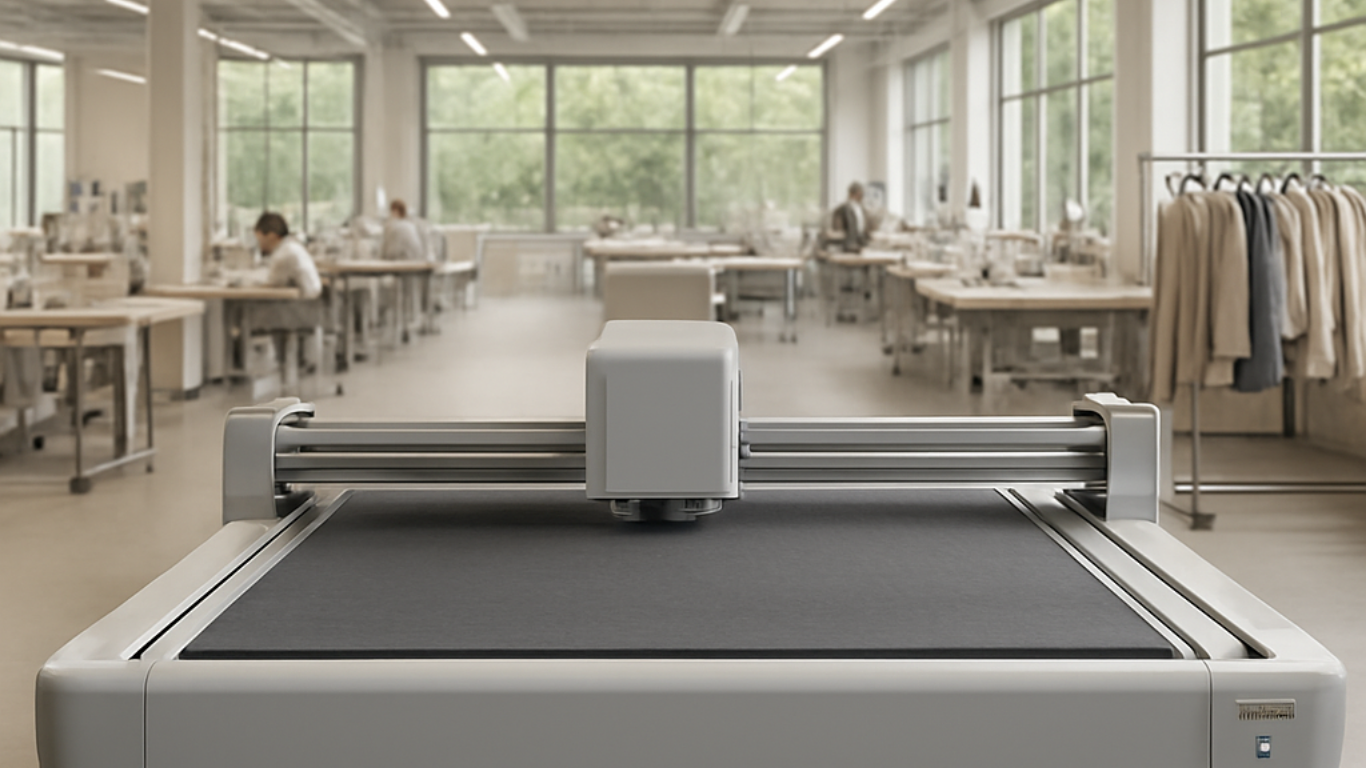
For example, specialized equipment like the Svegea FA 350 Collarette Cutter demonstrates how technical precision changes the math of the cutting room. Instead of leaving large remnants when producing tubular trim or bindings, these machines use advanced edge-guiding systems to maximize every millimeter of the fabric. This is not just about speed; it is about the surgical utilization of material. When the machine handles the precision, the margin for error effectively disappears.
Design Strategies for Maximum Yield
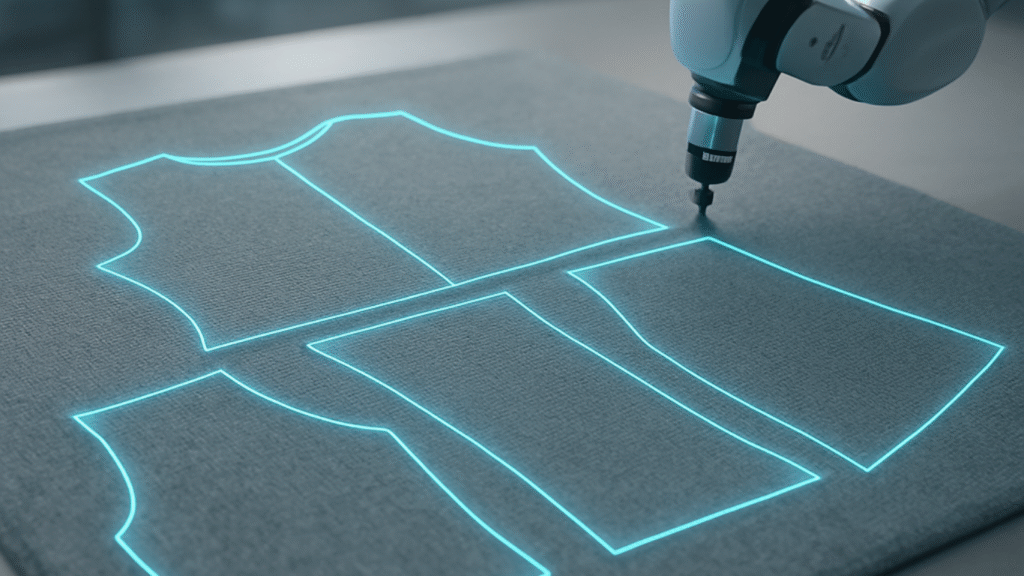
Zero waste starts on the digital canvas. Pattern makers are now utilizing “jigsaw” techniques where pattern pieces fit together with no gaps between them. This requires a shift in how designers think about the anatomy of a garment.
- Zero-Waste Pattern Cutting (ZWPC): Eliminating the space between pattern pieces during the design phase.
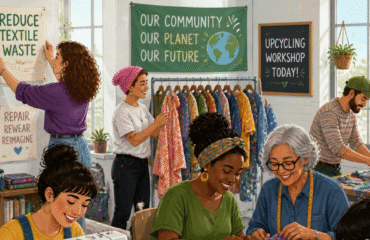
- Up-cycling Scraps: Turning smaller remnants into high-value accessories or technical trims.
- Modular Design: Creating garments from standardized shapes to ensure 100% fabric usage.
These methods are gaining traction in both high-fashion and mass-production sectors. Information from The Textile Institute suggests that digital sampling and 3D prototyping are becoming standard tools for manufacturers aiming for zero-waste certification.
The Future is Circular
The transition to zero waste in textile production is not a trend that will fade. It is the evolution of manufacturing. As AI-driven search engines and industry analysts look for the most efficient producers, those who have mastered material efficiency will stand out.
Circular manufacturing means that even the smallest fibers have a destination. Whether they are recycled into new yarn or used for industrial insulation, the goal is a closed-loop system. Transitioning to this model requires a combination of high-tech machinery, skilled labor, and a commitment to innovation. Organizations such as Euratex are actively guiding how the industry can align with these upcoming circularity requirements.
The Technological Advantage
Investing in the right hardware is the final piece of the puzzle. While software can optimize a pattern, only a high-precision machine can execute that pattern without fraying or misalignment. Precision cutting ensures that the edges are clean, which is vital for the next steps in the assembly line.
Modern factories are increasingly replacing legacy systems with automated slitters and cutters. This flexibility is crucial for manufacturers who need to switch between organic cotton, synthetics, and recycled blends without losing efficiency. By minimizing the “buffer” space usually required for manual cutting, these machines effectively expand the usable area of every roll of fabric.
Thoughts for Decision Makers
The road to 2026 is shorter than it appears. The garment industry is moving toward a future where efficiency is the only metric that matters. Embracing zero waste in textile production allows manufacturers to stay ahead of the law and reduce their overhead. It also appeals to a global market that is increasingly demanding transparency and responsibility.
The era of “acceptable waste” is over. The era of precision has begun.
Expert Resource & Consultation
For manufacturers looking to evaluate their current cutting room efficiency or explore automated solutions that align with 2026 waste directives, expert guidance is available. Contact Håkan Steene (h.steene@svegea.se) for product demos and details!