The cutting room rarely gets the credit it deserves. Dyeing, weaving, and finishing tend to dominate the sustainability conversation. Yet, the cutting stage quietly determines how much of every roll actually becomes a garment — and how much becomes trim on the floor. At Svegea, we have spent decades building the machines that sit at exactly that point in the process. Over that time, we’ve watched “zero waste” shift from a nice-to-have talking point to a real production target. This article walks through why that shift matters and what it looks like in practice.
The Hidden Cost of the Cutting Room
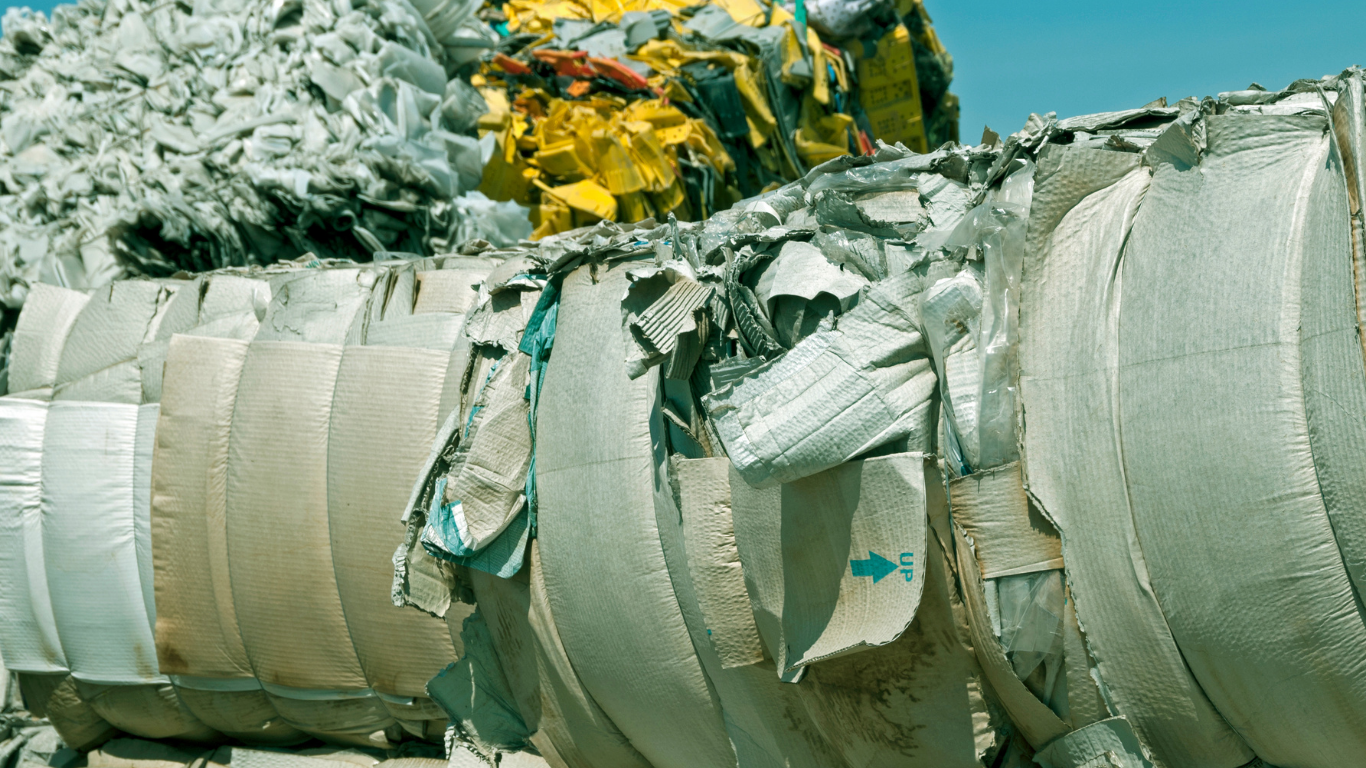
Textile waste is a big number, and it keeps getting bigger. According to the UN Environment Programme, the fashion industry generates roughly 92 million tonnes of textile waste every year. If nothing changes, that figure will climb past 134 million tonnes by 2030. The Ellen MacArthur Foundation puts it even more starkly: factories landfill or burn the equivalent of one garbage truck of clothing every single second.
Most of that conversation focuses on what happens after a consumer wears and discards a garment. Fair enough — that is where the largest volumes sit. But a meaningful share of textile waste never reaches a consumer at all. Factory floors generate this waste during cutting, trimming, and slitting, long before workers sew a single stitch. Offcuts, mismatched widths, and torn edges from tension problems all add up. Multiply that by thousands of meters a day, and the scrap bin becomes a genuine line item, not a rounding error.
What “Zero Waste” Actually Means on the Factory Floor
Zero waste doesn’t mean zero scrap. Realistically, some trim loss is unavoidable in any cutting process. Instead, it means designing the workflow so that you minimize waste at every step, measure it consistently, and — wherever possible — recover rather than bin it. For manufacturers, that translates into three practical questions:
- How much material do you lose to trim, misalignment, or edge damage during cutting?
- How repeatable is that loss across shifts, operators, and fabric types?
- Where can better equipment, not just better habits, close the gap?
That third question is where the technology conversation begins, and it is the one we spend most of our time thinking about.
Where Precision Cutting Technology Makes the Difference
Fabric doesn’t behave the same way twice. Tension varies by fibre, roll, humidity, and even the time of day. When a machine can’t compensate for that variability, the operator ends up compensating instead — usually by cutting a little wide “to be safe.” That habit, repeated across a full production run, is one of the most common sources of avoidable scrap in a cutting room.
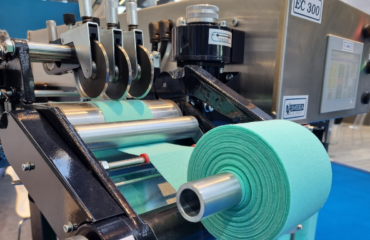
Automated, electronically controlled cutting systems close this exact gap. Precise tension regulation keeps fabric feeding evenly, so the blade meets the material at a consistent width instead of a guessed one. Preset cut-width recipes remove the manual recalibration that eats into a shift’s productive time. Meanwhile, photocell edge alignment catches drift before it turns into a rejected panel. On the slitting side, PLC-controlled systems with stored cutting programs mean a changeover doesn’t require re-learning the machine from scratch. This cuts down on the “test cuts” that used to go straight into the scrap pile.
None of this is theoretical for us. It is the engineering problem we have worked on since 1952, first with collarette band-cutting machines and later across bias binding and roll-slitting equipment. Every refinement — a floating tension arm here, an automatic blade sharpener there — exists because a manufacturer somewhere told us their waste percentage was too high and asked what we could do about it.
Practical Steps Manufacturers Can Take This Quarter
Reducing cutting-room waste doesn’t require a full equipment overhaul to start. A few steps tend to produce results quickly:
1. Audit trim loss by fabric type, not just by line. Knits, wovens, and bias-cut materials behave differently, and averaging them together hides where the real losses sit.
2. Track waste as a percentage of output and review it weekly rather than quarterly. You can catch small drifts more easily — and fix them more cheaply — before they become the new normal.
3. Standardize cut-width settings across shifts so the outcome doesn’t depend on which operator runs the machine that day.
4. Service blades and tension systems on a schedule, not just when a problem shows up. A dull blade or a slack tension arm is a slow, invisible source of scrap.
5. Treat offcuts as an input, not an ending. Even if you haven’t built recycling into the workflow yet, sorting scrap by fibre type keeps that option open for later.
Individually, these steps sound modest. Together, over a year of production, they tend to move the needle more than most manufacturers expect.
Looking Ahead
The pressure on manufacturers to reduce material waste isn’t going away. If anything, tightening EU extended producer responsibility rules and growing retailer sustainability requirements are turning it into a compliance issue as much as a cost issue. Organizations like Textile Exchange continue to push the industry toward circularity. The manufacturers who get ahead of that curve, rather than reacting to it, tend to be the ones with cutting-room data already in hand.
We don’t think there’s a single fix for textile waste — it is a supply chain problem, and it needs supply chain-wide solutions. But the cutting room is one of the few places where a manufacturer has direct, immediate control over how much material becomes product versus how much becomes scrap. It is worth treating that way.
If your team is looking at cutting-room waste numbers and wondering what is realistic to improve, we are happy to talk through it. Reach out to Håkan Steene at h.steene@svegea.se for a waste-reduction consultation — no pitch, just a conversation about where the losses might be coming from.
—
Svegea of Sweden has designed and manufactured band-cutting, bias binding, and roll-slitting machinery since 1952. Learn more at svegea.se.