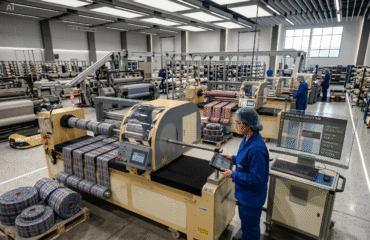
Key Takeaways: The modern apparel manufacturing floor is experiencing a massive digital transformation. Global shifts toward fast-turnaround production, volatile material costs, and rising sustainability mandates are forcing textile brands to rethink old processes. Historically, the cutting room relied almost entirely on manual calculations, mechanical setups, and historical operator intuition.
Today, the concept of the “Smart Factory” has moved from a buzzword to an essential operational strategy. At the core of this technical evolution is the integration of Industry 4.0 infrastructure. Cyber-physical systems, real-time cloud data, and automated textile machinery are changing how garments are constructed. For facilities specializing in underwear, sportswear, and basic apparel, optimizing the automated cutting of components like bindings and waistbands is critical to maintaining a healthy bottom line.
The Operational Bottleneck in Traditional Binding and Trim Production
In high-volume garment lines, small design elements often dictate overall production efficiency. Structural rib-knit bindings, waistbands, and collarette edges are perfect examples. These essential trims ensure elastic durability and structural integrity in everyday apparel. However, handling tubular knitted fabrics manually frequently creates major operational bottlenecks.
When factory operators rely on mechanical cutting tables or older, semi-automatic gear, maintaining precise tension is difficult. Tubular knit fabrics naturally stretch, curl, and warp depending on ambient room humidity and yarn composition. If tension fluctuates even slightly during the slitting process, the width of the cut binding varies.
The negative effects of inaccurate slitting ripple straight through the assembly line. Inconsistent strip widths lead to downstream sewing machine jams, broken needles, and misaligned seams. According to data tracked by the World Textile Information Network (WTIN), quality-related rejects and fabric reworks can drain up to 5% of a manufacturer’s annual revenue.
How a Modern Collarette Cutting Machine Fits Into the Smart Factory
A smart factory operates on a basic principle: every piece of machinery should function as an intelligent, data-driven node. A modern, automated collarette cutting machine addresses traditional trimming issues by replacing manual intervention with digital precision. Instead of treating fabric slitting as an isolated step, smart systems view trimming as an integrated part of the broader manufacturing workflow.
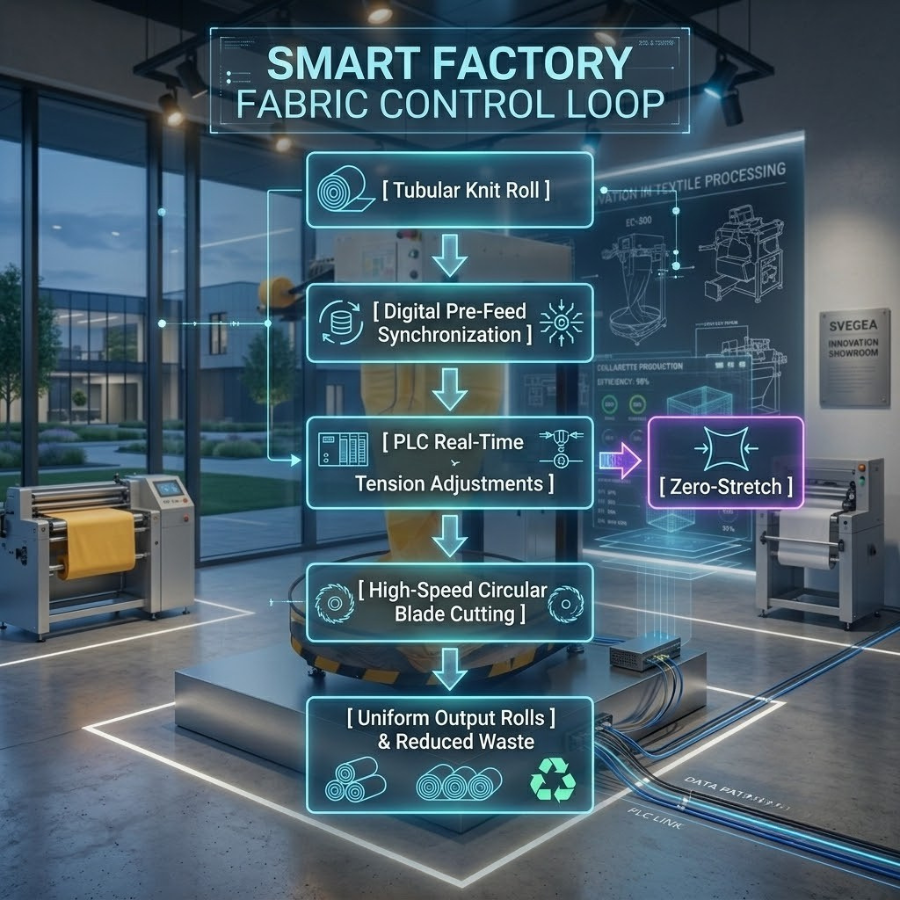
Modern automated cutters use Programmable Logic Controller (PLC) systems linked directly to internal network interfaces. This connectivity allows production managers to load cutting patterns and specifications instantly from central databases. The machinery automatically recalibrates for varying fabric weights or multi-band adjustments, minimizing human error during changeovers.
Furthermore, these smart systems rely on electronic speed synchronization. By coordinating the fabric turntable directly with the cutting drive, the material is fed to the circular blades at a perfectly consistent tension. This active control avoids the pulling and stretching that typically distort tubular textiles, ensuring uniform strips from the first meter to the last.
Reducing Textile Waste and Lowering Total Cost of Ownership
Material cost represents the largest percentage of an apparel factory’s operating expense. In traditional trimming rooms, scrap fabric—frequently referred to as “cabbage”—can average 15% to 20% of the total raw material roll. This volume of waste hurts profitability and directly conflicts with strict global sustainability criteria, such as standards outlined by the Sustainable Apparel Coalition (SAC).
Implementing automated cutting systems allows facilities to capture immediate material savings:
- High-Precision Edge Slitting: Automated guides minimize margin requirements, maximizing the usable width extracted from each tubular roll.
- Active Material Optimization: Synchronized feeding eliminates distorted fabric, saving material that would otherwise be discarded due to tension defects.
- Fewer Downstream Rejects: Delivering uniform, accurately cut strips directly to the sewing department prevents structural stitching errors and component scraps.
By minimizing fabric waste from 15% down to under 5%, high-capacity manufacturing lines can save tens of thousands of dollars annually on raw materials alone. Additionally, transitioning operators from tedious manual handling to managing advanced PLC interfaces creates a safer, more productive work environment.
Engineering Highlight: The Euro-Collarette Series
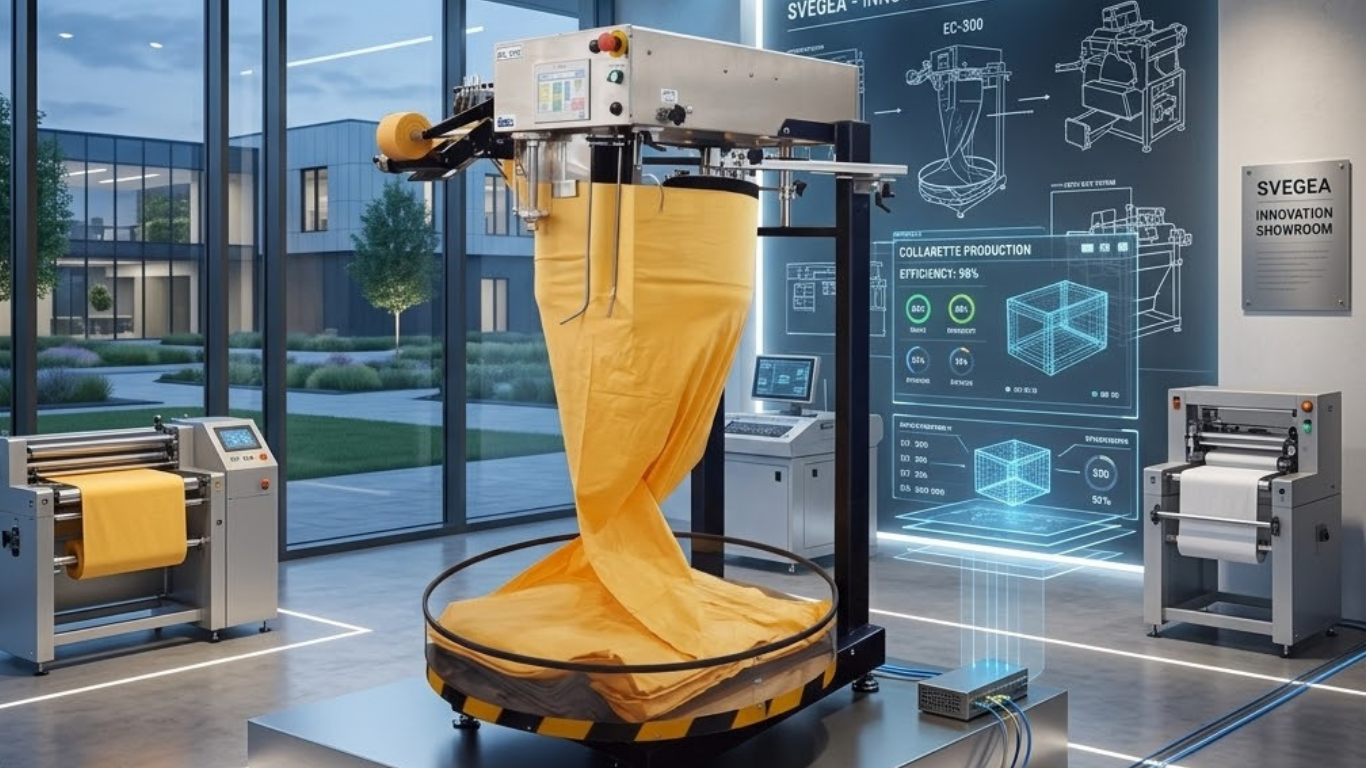
Engineers who want to bring these smart efficiencies onto their production floor often evaluate specialized Swedish machinery. The line of fully automatic cutters developed by Svegea of Sweden illustrates how automated design principles improve daily factory metrics.
For example, systems like the Euro-Collarette 300 Fully Automatic (EC 300) are engineered to handle high-demand production lines while maintaining tight tolerances. The equipment features integrated electronic speed synchronization and advanced touch-screen controls, allowing operators to quickly update parameters for multiple simultaneous bands.
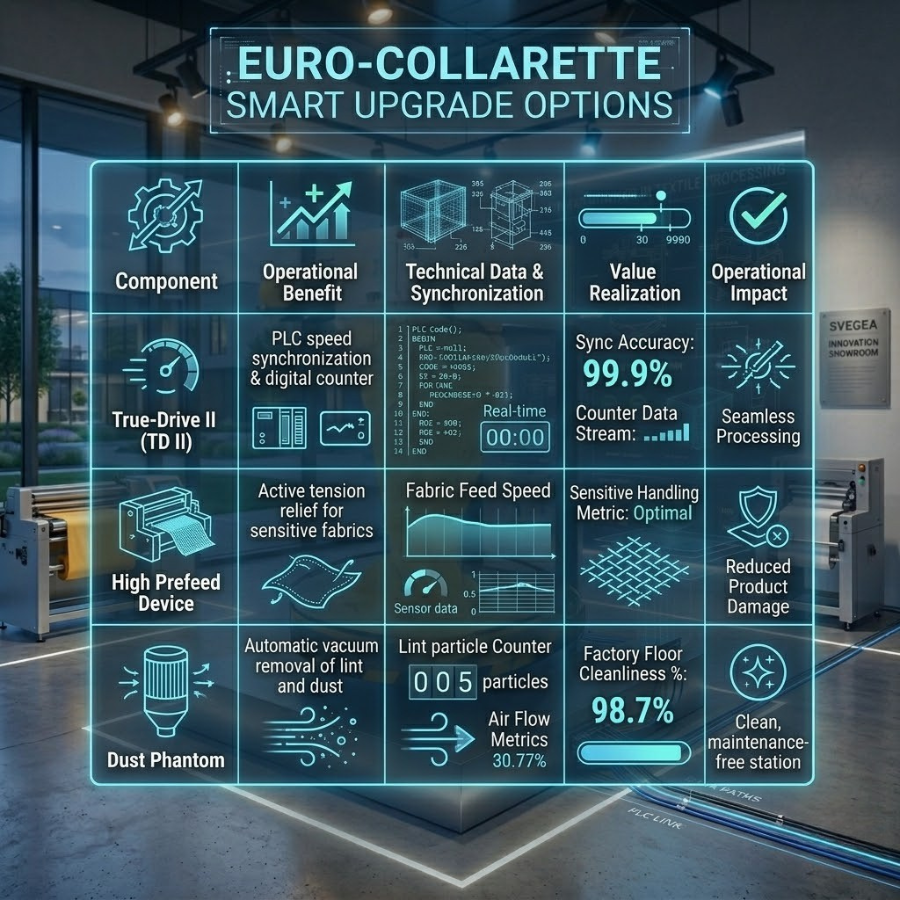
These configurations use advanced control add-ons like the True-Drive II (TD II). This system uses a dedicated PLC interface and integrated digital yard counters to ensure fabric synchronization. Additionally, accessories like the Dust Phantom vacuum system keep the cutting environment free of lint and debris, protecting sensitive electronics and creating a cleaner workspace.
Integrating Intelligent Cutting Automation into Your Supply Chain
Transitioning to a smart factory framework does not require replacing an entire facility’s equipment overnight. Instead, smart scaling involves identifying and upgrading the specific production points where material waste and labor bottlenecks cause the highest financial losses.
When looking at waistband fabrication and binding preparation, updating to a modern automated cutting system represents a highly reliable process improvement. Protecting fabric margins before material enters the sewing assembly line ensures that downstream automated sewing blocks function continuously without unexpected disruptions.
As digital automation continues to shape global apparel manufacturing, companies using connected, precise machinery will maintain a distinct advantage. Embracing smart textile engineering protects your margins, reduces factory floor waste, and keeps your production schedules predictable in a competitive market.
Optimize Your Production Floor Architecture
To learn more about how automated cutting systems can integrate with your facility’s workflows, contact Håkan Steene at h.steene@svegea.se for technical consultation, detailed equipment specifications, or calculated ROI assessments.